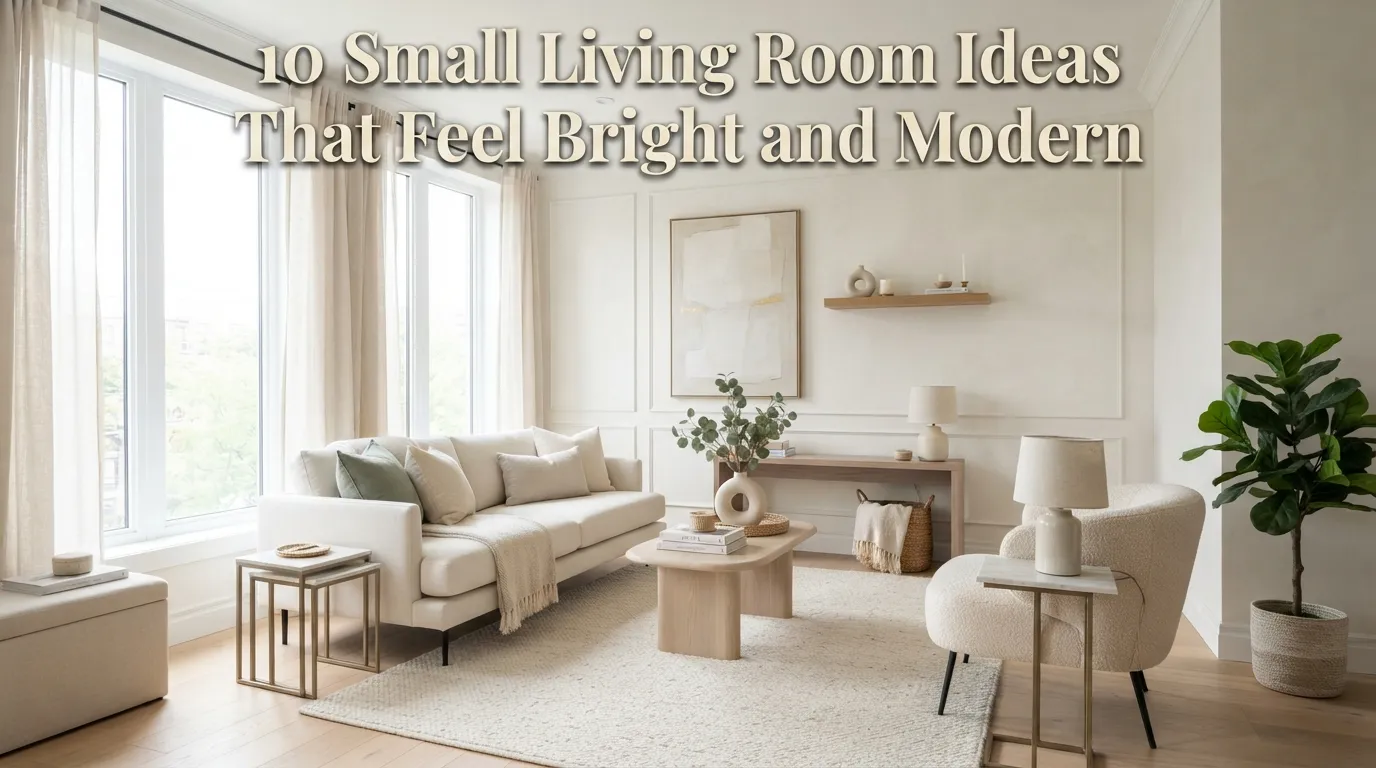
10 Small Living Room Ideas That Feel Bright and Modern
A small living room can feel bright, spacious, and genuinely modern without requiring a major renovation.
The secret is less about adding more and more about choosing the right proportions, colors, lighting, and furniture. In a compact room, every piece has a visual impact, so a bulky sofa or overcrowded coffee table can quickly make the space feel smaller.
In my experience, the most successful small living rooms have a simple foundation: a light color palette, furniture that fits the room, plenty of visible floor space, and a few carefully chosen decorative details.
You don’t have to create a completely minimalist room, either. Warm textures, artwork, greenery, books, and layered lighting can make a small space feel personal without making it look crowded.
The goal is to create a room where the eye can move easily from one area to another.
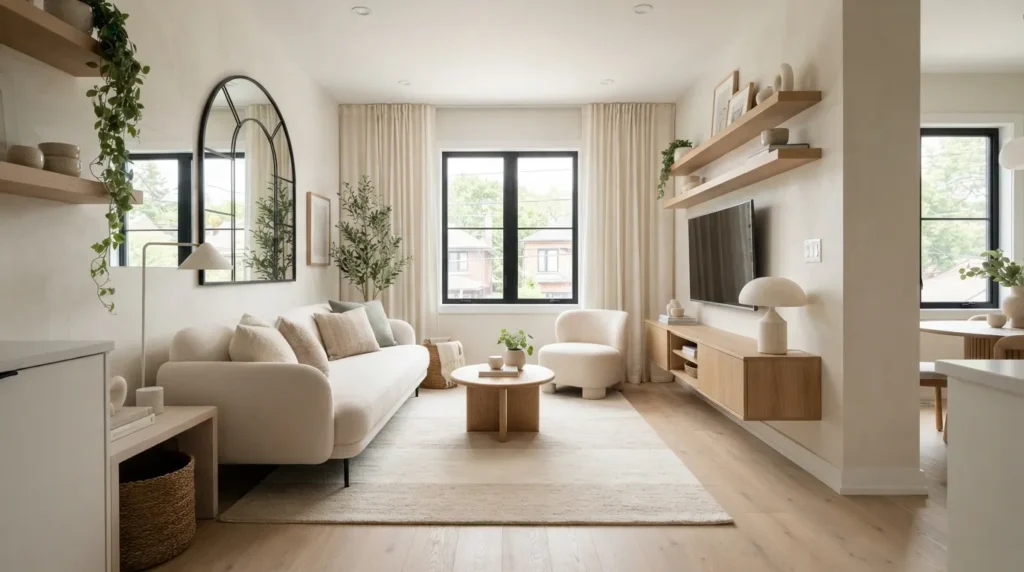
Light walls can help reflect daylight. Mirrors can add depth. Furniture with visible legs can make more floor area visible. Curtains hung thoughtfully can emphasize ceiling height, while a carefully positioned rug can make the seating area feel intentional.
Whether you’re decorating a small apartment, townhouse, condo, or compact family home, these ideas can help you create a living room that feels fresh, comfortable, and polished.
Table of Contents
- Choose a Light Palette
- Use a Compact Sofa
- Add a Large Mirror
- Keep Windows Open
- Choose Leggy Furniture
- Layer Soft Lighting
- Use One Large Rug
- Add Vertical Decor
- Simplify the Coffee Table
- Repeat Natural Materials
1. Choose a Light Palette
Quick Benefits
- Makes the room feel brighter
- Reflects available light
- Creates visual continuity
- Works with modern furniture
- Makes decorating easier
Why It Works
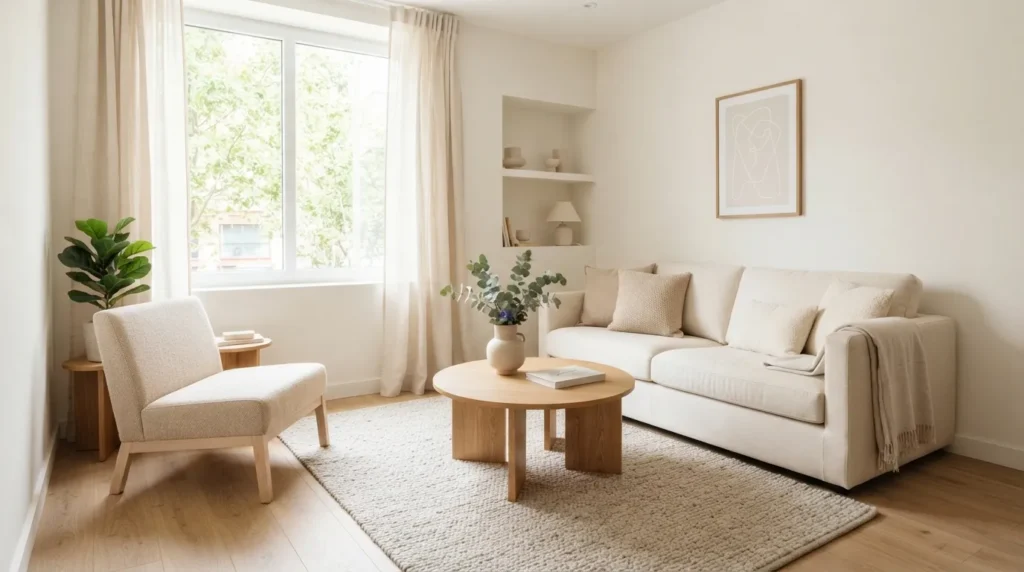
Light colors can make a compact living room feel more open by reducing strong visual boundaries.
Warm white, ivory, pale beige, soft gray, and light taupe are especially versatile. They create a calm foundation while still allowing furniture and accessories to add personality.
The goal isn’t necessarily to make everything white.
A layered neutral palette can feel much warmer and more sophisticated.
How To Style It
Start with light walls if possible.
Then introduce cream upholstery, beige curtains, pale wood, and a soft neutral rug.
Add contrast through artwork, black accents, greenery, or darker wood in small amounts.
Keep the largest surfaces within a similar tonal range.
2. Use a Compact Sofa
Quick Benefits
- Preserves floor space
- Improves circulation
- Prevents visual heaviness
- Makes the room easier to arrange
- Creates a cleaner appearance
Why It Works
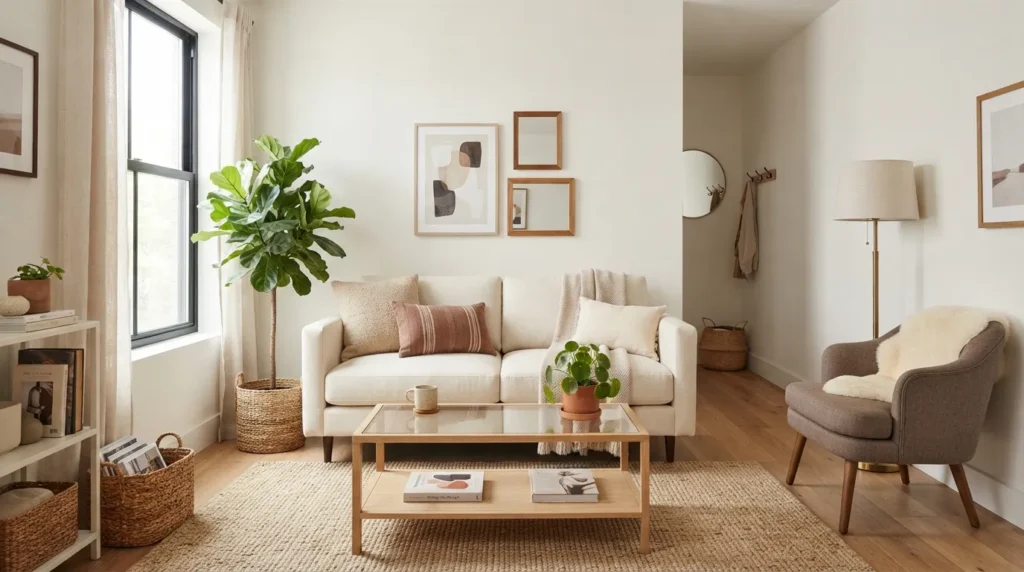
The sofa is usually the largest piece of furniture in a living room.
Choosing one that’s too deep or wide can overwhelm a small space, even when the rest of the room is beautifully decorated.
How To Style It
Measure your available wall and floor space before choosing a sofa.
Look for a streamlined silhouette with comfortable but proportionate depth.
A sofa in cream, light gray, beige, or another soft neutral can visually blend into the room.
Add a few pillows and one textured throw rather than covering the entire sofa with accessories.
3. Add a Large Mirror
Quick Benefits
- Reflects light
- Creates visual depth
- Makes walls feel larger
- Adds decorative interest
- Works with modern styles
Why It Works
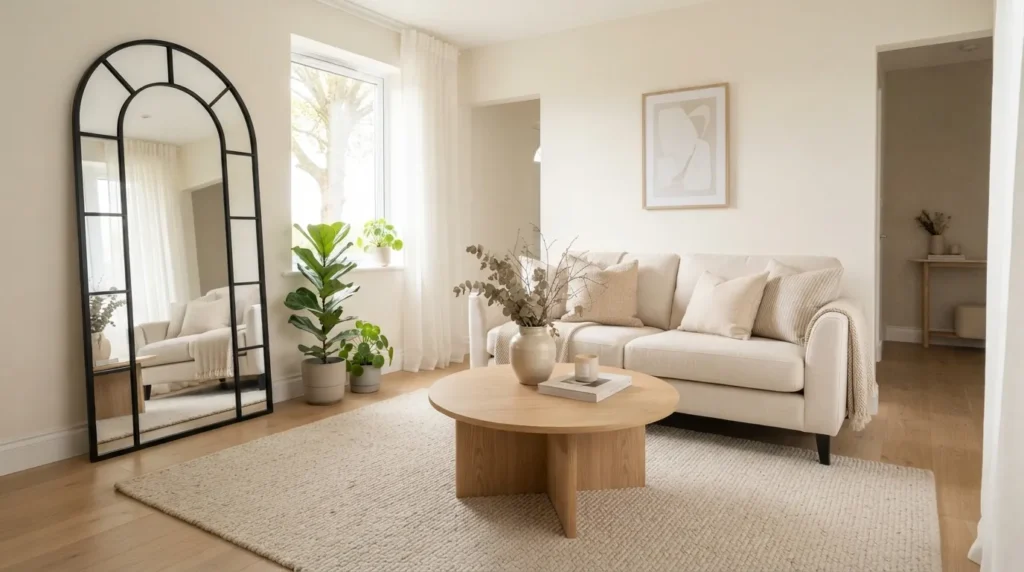
A mirror can visually extend the room by reflecting another part of the space.
It works particularly well when positioned to capture natural daylight or reflect an attractive architectural feature.
How To Style It
Choose one substantial mirror rather than covering the wall with many small pieces.
A simple round, arched, or rectangular frame can work beautifully.
Position it intentionally rather than automatically placing it above the sofa.
Avoid reflecting cluttered areas.
4. Keep Windows Open
Quick Benefits
- Maximizes natural light
- Makes the room feel airy
- Emphasizes window height
- Reduces visual heaviness
- Creates a fresher atmosphere
Why It Works
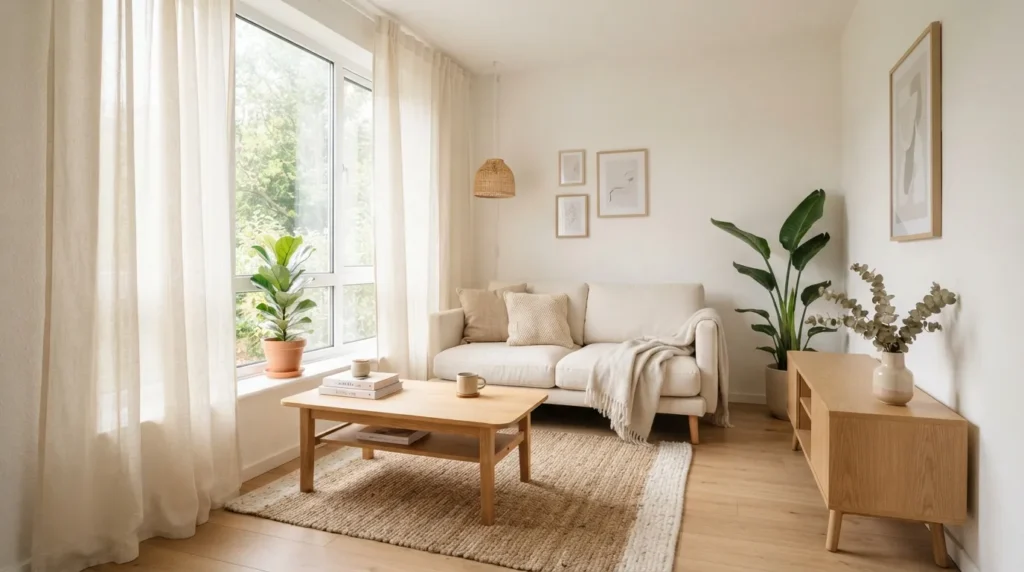
Natural light is one of the most effective ways to make a small room feel brighter.
Heavy furniture or dark window treatments can visually close off the window.
How To Style It
Use lightweight curtains in ivory, cream, linen, or another pale neutral.
When practical, install the curtain rod slightly higher and wider than the window.
Keep window sills relatively clear.
Let daylight become one of the room’s main decorative features.
5. Choose Leggy Furniture
Quick Benefits
- Reveals more floor
- Makes furniture feel lighter
- Improves visual flow
- Creates a modern appearance
- Helps the room feel less crowded
Why It Works
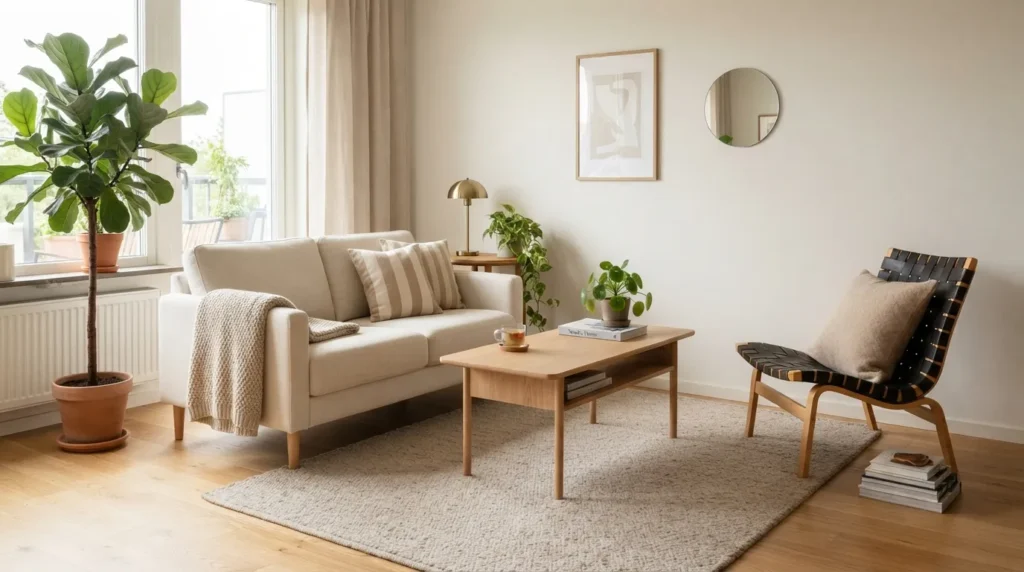
Furniture that sits directly on the floor can look visually heavy.
Pieces with visible legs allow more of the flooring to remain visible, creating a subtle sense of openness.
How To Style It
Look for sofas, chairs, consoles, and occasional tables with elevated bases.
Pair them with a light rug so the floor and furniture visually connect.
Avoid filling every open area with storage pieces.
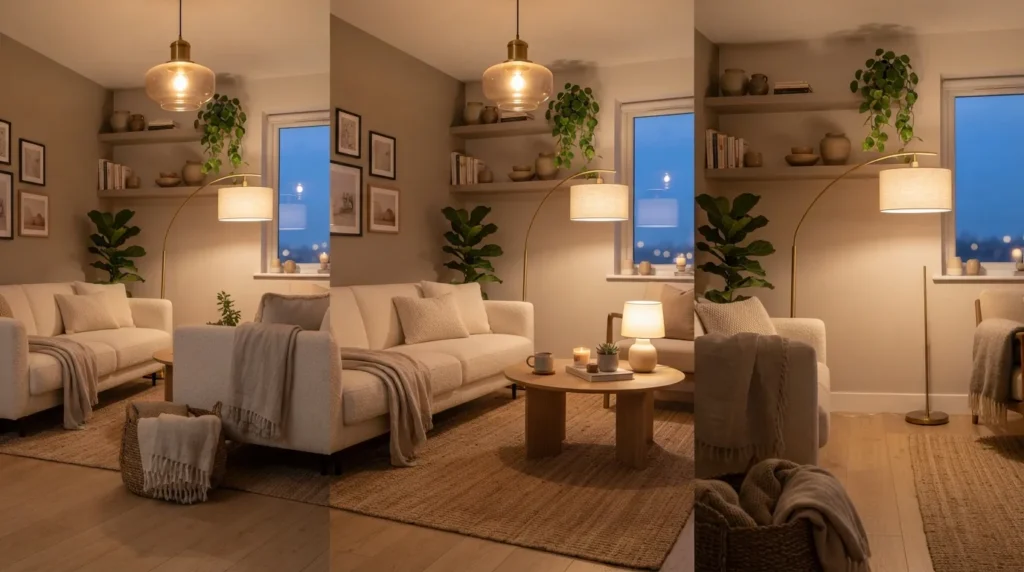
6. Layer Soft Lighting
Quick Benefits
- Creates warmth
- Makes the room feel sophisticated
- Improves evening atmosphere
- Adds visual depth
- Reduces reliance on one overhead fixture
Why It Works
A single ceiling light can make a small living room feel flat.
Multiple light sources create layers and allow you to adjust the mood throughout the day.
How To Style It
Combine a ceiling fixture with a floor lamp, table lamp, or suitable accent lighting.
Place lights near seating areas.
Use warm-toned illumination for a relaxed atmosphere.
Choose fixtures that complement the room rather than becoming oversized focal points.
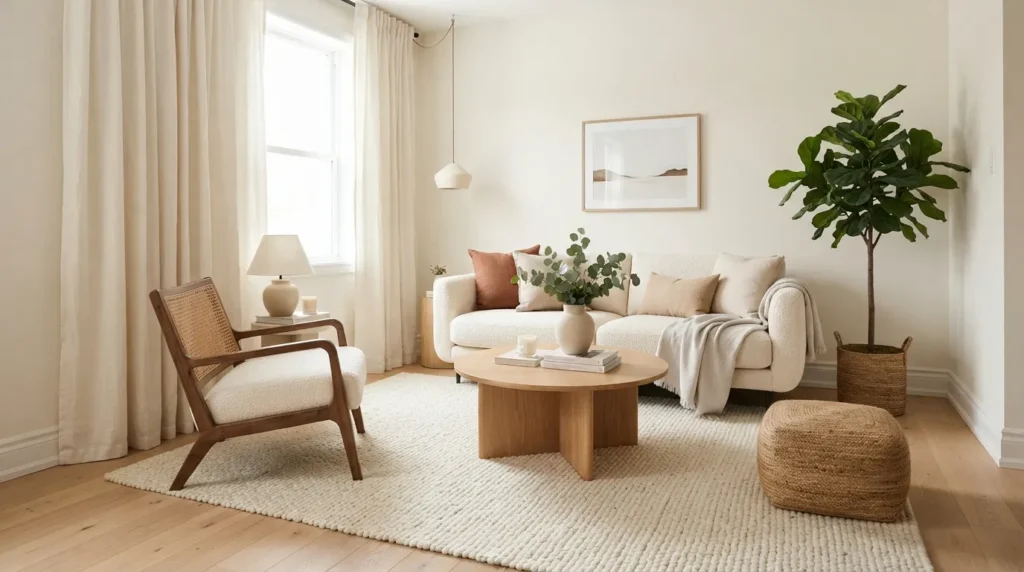
7. Use One Large Rug
Quick Benefits
- Defines the seating area
- Creates visual cohesion
- Makes furniture feel connected
- Adds softness
- Prevents a fragmented layout
Why It Works
Several small rugs can visually divide a compact living room into disconnected sections.
One appropriately scaled rug often makes the seating area feel larger and more intentional.
How To Style It
Choose a rug large enough to visually connect the main seating pieces.
Light neutrals and subtle patterns work particularly well in bright modern rooms.
Don’t choose a rug so small that all furniture appears stranded around it.
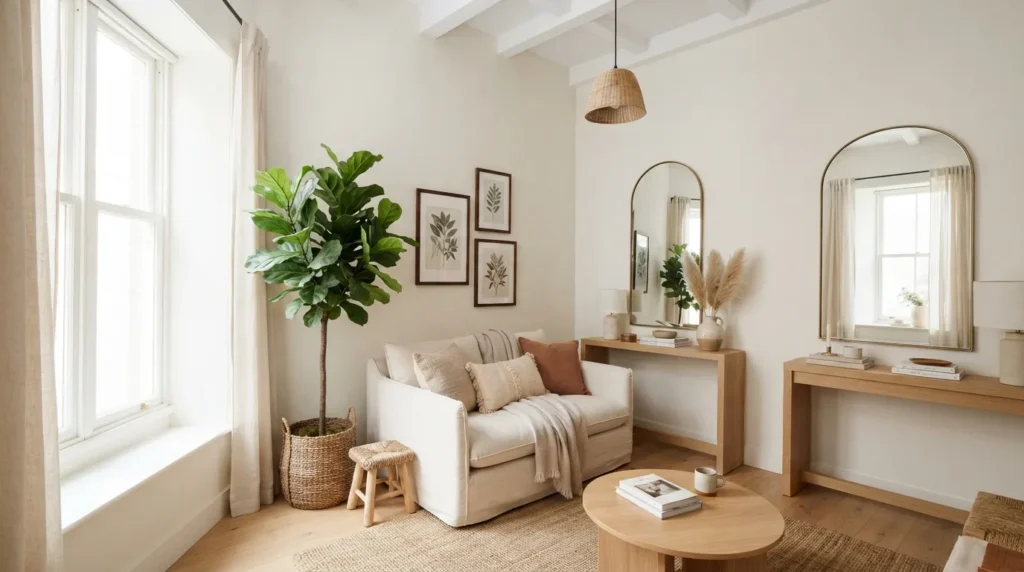
8. Add Vertical Decor
Quick Benefits
- Draws the eye upward
- Makes ceilings feel taller
- Uses wall space
- Adds personality
- Saves floor space
Why It Works
When floor space is limited, walls become valuable decorating real estate.
Vertical artwork, tall plants, narrow shelving, and elongated mirrors can emphasize height rather than width.
How To Style It
Hang artwork slightly higher when appropriate.
Use one tall plant in an open corner.
Choose vertically oriented artwork or a tall mirror.
Keep wall arrangements simple so they don’t create visual clutter.
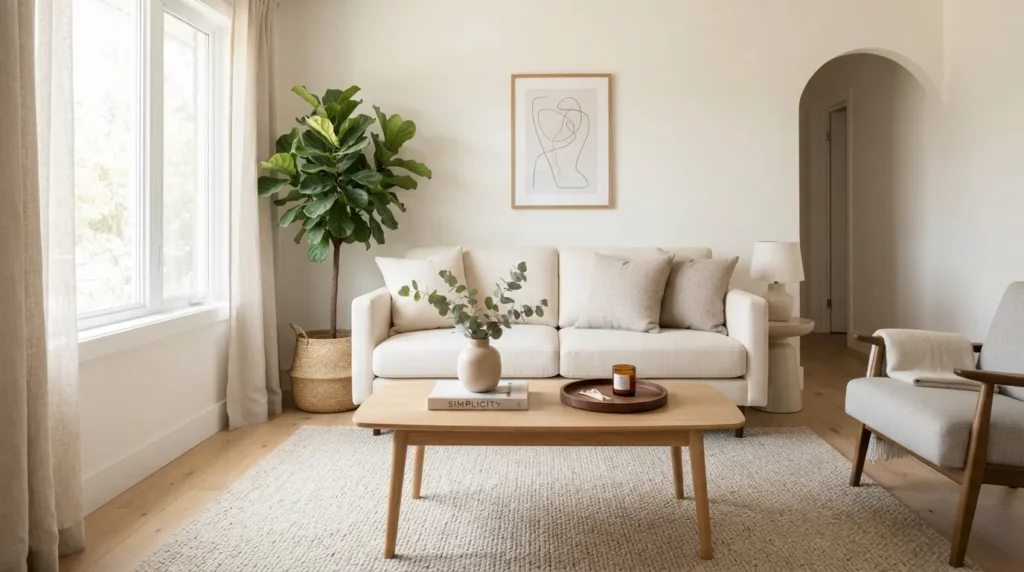
9. Simplify the Coffee Table
Quick Benefits
- Keeps the room tidy
- Creates usable space
- Reduces visual clutter
- Makes cleaning easier
- Maintains a modern look
Why It Works
Coffee tables sit in the center of the room, so clutter there is immediately noticeable.
A small living room benefits from an edited centerpiece.
How To Style It
Choose a coffee table that fits the sofa and walking paths.
Display only a few intentional items.
Try a small tray, one stack of books, a ceramic object, or a simple vase.
Leave plenty of empty surface area for everyday use.
10. Repeat Natural Materials
Quick Benefits
- Adds warmth
- Creates cohesion
- Prevents sterile styling
- Works with modern interiors
- Adds subtle texture
Why It Works
A bright modern room can sometimes feel too cold when everything is smooth, glossy, and monochromatic.
Natural materials add warmth without requiring strong colors.
How To Style It
Repeat materials such as:
- Light wood
- Woven fibers
- Linen
- Cotton
- Stone
- Ceramic
- Natural greenery
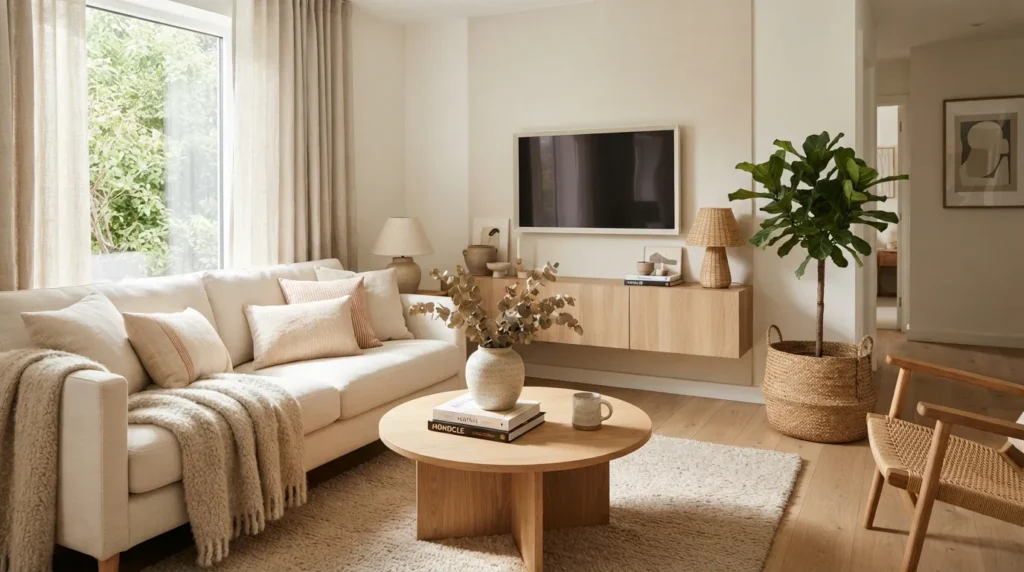
For example, combine a light oak coffee table with a woven basket, linen curtains, and a ceramic vase.
How To Make a Small Living Room Look Bigger
Start by reducing unnecessary furniture.
Then create clear walking paths.
Keep major surfaces light.
Use mirrors thoughtfully.
Let natural light in.
Choose furniture that matches the room’s proportions.
Keep decorative objects edited.
The biggest mistake is trying to make a small room feel bigger by adding too many “space-saving” products.
Sometimes removing one unnecessary piece of furniture creates more impact than buying several organizing accessories.
Best Colors for a Bright Modern Living Room
Warm White
Clean and versatile.
Soft Beige
Adds warmth without visual heaviness.
Ivory
Creates a gentle, elegant foundation.
Pale Gray
Works beautifully with contemporary furniture.
Light Taupe
Adds sophistication.
Soft Sage
Introduces subtle natural color.
Pale Wood
Provides warmth while maintaining brightness.
Small Living Room Layout Tips
Keep the Main Path Open
Avoid placing furniture directly in the primary walking route.
Float Furniture When Possible
Don’t automatically push every piece against a wall.
Use the Corners
A tall plant or slim floor lamp can make an empty corner useful without overwhelming it.
Avoid Oversized Accessories
Scale matters as much as quantity.
Create One Focal Point
A beautiful artwork, fireplace, window, or statement mirror can anchor the room.
Common Mistakes
Choosing an Oversized Sofa
Comfort matters, but proportion matters too.
Using Too Many Small Rugs
They can make the room feel fragmented.
Blocking Windows
Keep natural light accessible.
Overdecorating the Coffee Table
Leave functional space.
Filling Every Wall
Negative space can make a small room feel more sophisticated.
Using Only One Light Source
Layered lighting creates much better atmosphere.
FAQ
How do I make a small living room look bright?
Use light wall colors, pale upholstery, lightweight curtains, reflective surfaces, and multiple sources of lighting. Keeping windows unobstructed also helps maximize available daylight.
What color is best for a small living room?
Warm white, cream, ivory, pale beige, and soft gray are excellent foundations. You can add small amounts of sage, natural wood, or darker accents for contrast.
Should a small living room have a large rug?
A properly scaled larger rug can actually make the seating area feel more cohesive. Avoid rugs that are so small that the furniture appears disconnected.
Does a mirror make a living room look bigger?
A strategically placed mirror can create visual depth and reflect natural or artificial light, helping the room feel more open.
What type of sofa works best in a small living room?
Choose a sofa that fits the room’s measurements and leaves comfortable walking space. Streamlined designs with visible legs can feel lighter visually.
How can I decorate a small living room without making it cluttered?
Limit decorative objects, use vertical wall space, keep the coffee table edited, and choose furniture that provides enough function without overwhelming the room.
How do I make a modern living room feel cozy?
Add soft textiles, warm lighting, natural wood, woven materials, greenery, and comfortable cushions while keeping the overall palette restrained.
Conclusion
A small living room doesn’t have to sacrifice style.
With the right palette, appropriately scaled furniture, thoughtful lighting, and a few well-chosen details, even a compact space can feel bright, modern, and welcoming.
Start with light colors.
Choose a sofa that fits.
Keep the windows open.
Use one well-scaled rug.
Bring in a mirror.
Add vertical elements.
And remember that empty space is part of the design.
The goal isn’t to make the room look enormous.
It’s to make every square foot feel intentional, comfortable, and easy to live in.