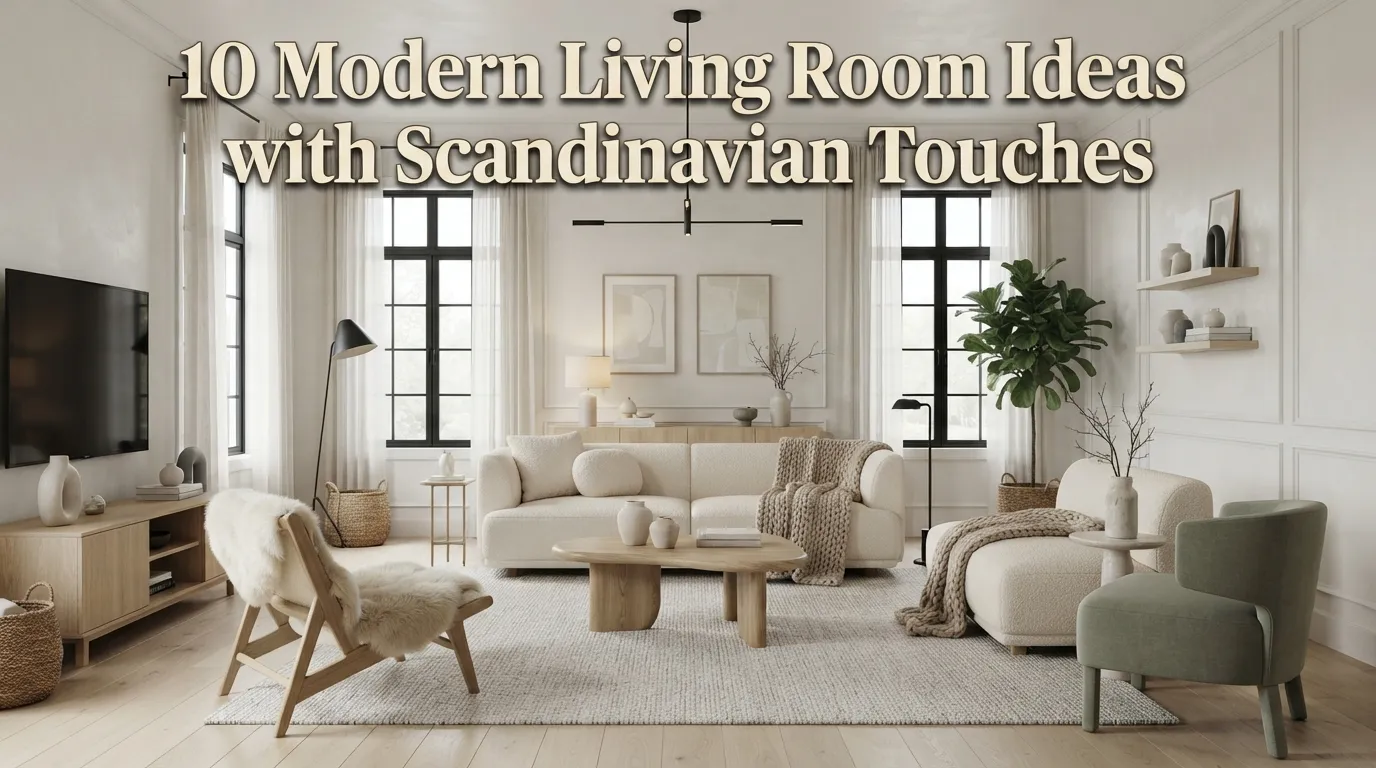
10 Modern Living Room Ideas with Scandinavian Touches
Scandinavian-inspired living rooms have a way of feeling both polished and incredibly comfortable.
The style is known for clean lines, natural materials, soft colors, functional furniture, and plenty of light. But the best Scandinavian-inspired rooms don’t feel cold or overly minimal. They balance simplicity with warmth, creating spaces that are easy to live in and beautiful to look at.
You don’t need to completely redesign your living room to bring in this look.
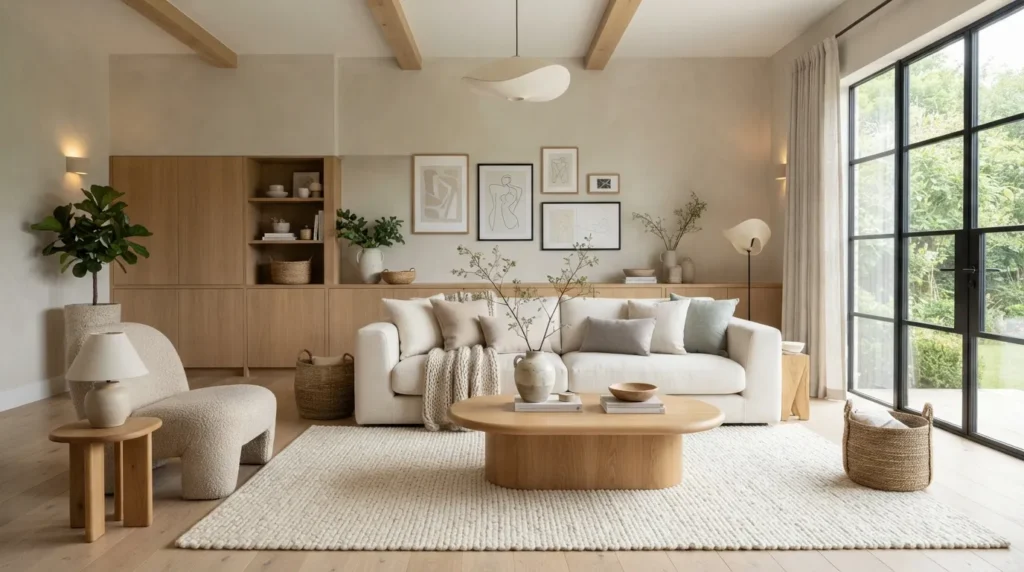
A cream sofa, pale wood coffee table, woven basket, soft rug, simple artwork, and warm lighting can already move a room in the right direction.
In my experience, the most successful Scandinavian spaces focus on fewer, better-coordinated elements rather than filling the room with decorations.
The color palette is usually restrained, but texture keeps it interesting. Linen, wool, cotton, wood, ceramic, and woven materials can create plenty of visual depth without relying on bold patterns.
These ideas can work in apartments, small homes, open-concept spaces, and larger living rooms. Whether you want a completely Scandinavian-inspired makeover or simply a few Nordic touches, these approaches can help you create a living room that feels bright, calm, functional, and timeless.
Table of Contents
- Warm Neutral Palette
- Light Wood Furniture
- Cozy Layered Textures
- Simple Functional Furniture
- Minimalist Artwork
- Soft Natural Lighting
- Indoor Greenery
- Woven Storage
- Scandinavian Contrast
- Comfortable Open Layout
1. Warm Neutral Palette
Quick Benefits
- Creates visual calm
- Makes rooms feel brighter
- Works year-round
- Coordinates easily
- Feels timeless
Why It Works
Scandinavian interiors often begin with a restrained color palette.
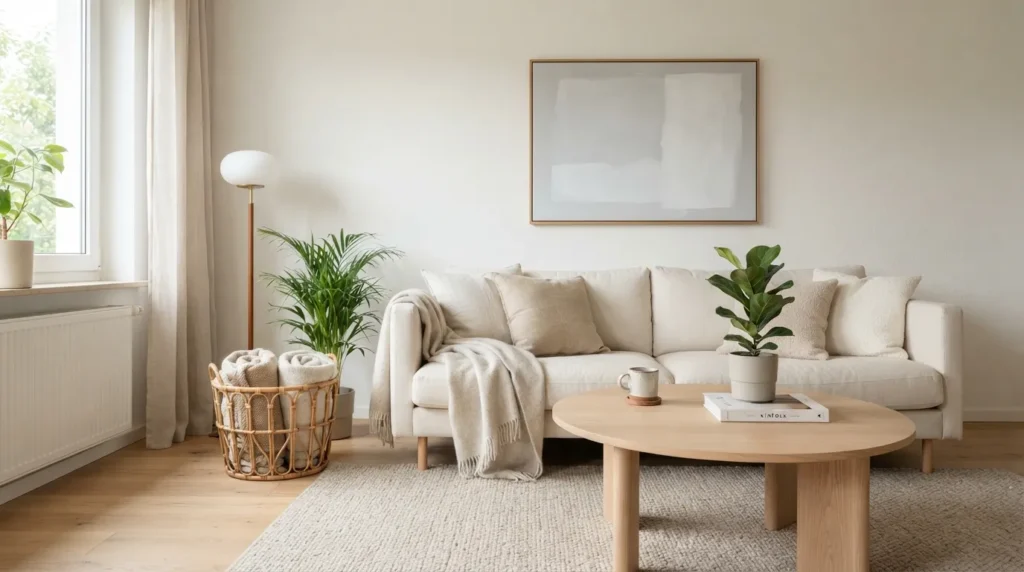
Warm white, cream, beige, soft gray, and pale taupe provide a quiet backdrop that allows natural materials and textures to stand out.
The result is clean without feeling sterile.
How To Style It
Start with warm white or light neutral walls.
Add a cream sofa, beige rug, and soft gray or oatmeal cushions.
Use small amounts of darker color through artwork, furniture legs, or accessories.
Keep strong colors limited so the room maintains a calm visual rhythm.
2. Light Wood Furniture
Quick Benefits
- Adds warmth
- Creates natural character
- Balances pale colors
- Feels timeless
- Works with modern furniture
Why It Works
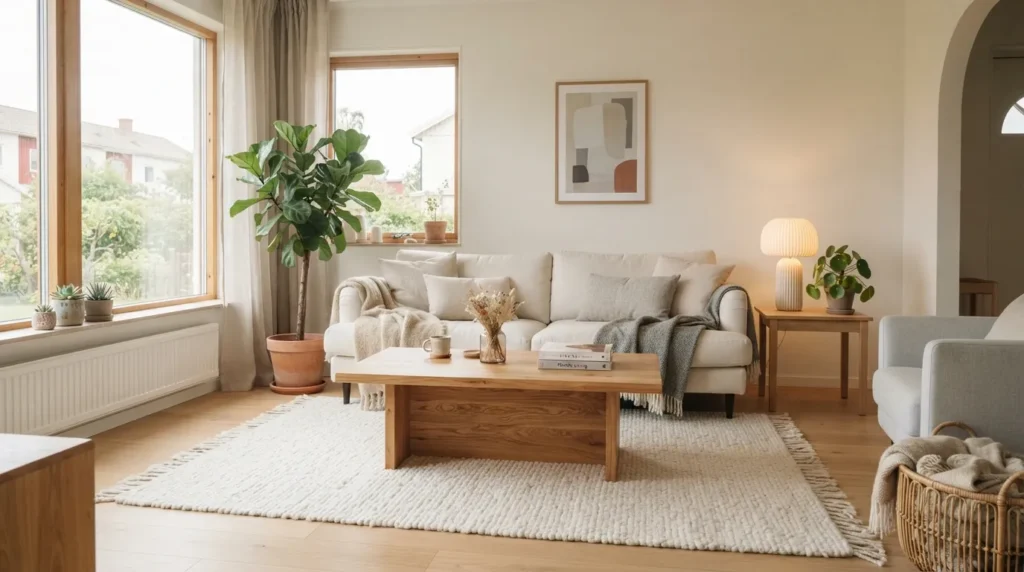
Natural wood is one of the easiest ways to make a neutral living room feel warm.
Pale oak, ash, birch, and similar finishes work particularly well with Scandinavian-inspired palettes.
How To Style It
Use light wood for the coffee table, side tables, shelving, or media console.
Repeat similar wood tones throughout the room.
Pair the wood with soft textiles and simple silhouettes.
Avoid mixing too many unrelated wood finishes.
3. Cozy Layered Textures
Quick Benefits
- Prevents a plain appearance
- Adds warmth
- Makes seating inviting
- Creates visual depth
- Works with neutral colors
Why It Works
A Scandinavian room may use very few colors, but that doesn’t mean it lacks texture.
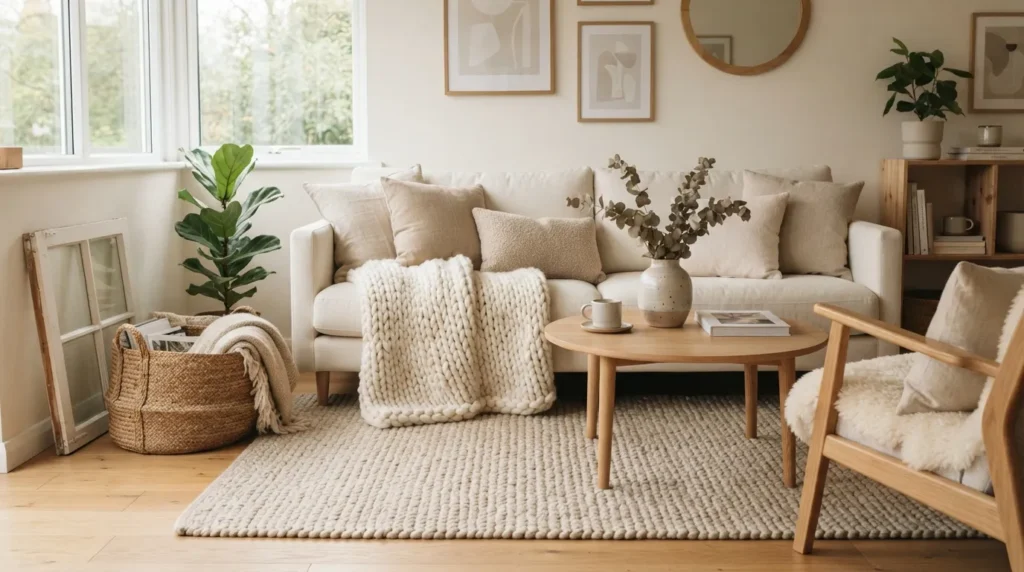
The combination of wool, linen, cotton, boucle, woven fibers, and natural wood gives the room dimension.
How To Style It
Layer a soft rug with a textured throw and linen or cotton cushions.
Add a woven basket beside the sofa.
Introduce ceramic accessories for a subtle contrast.
Keep the colors similar while varying the textures.
4. Simple Functional Furniture
Quick Benefits
- Reduces clutter
- Improves movement
- Feels modern
- Makes cleaning easier
- Supports everyday living
Why It Works
Scandinavian design traditionally values function as much as appearance.
Furniture should have a purpose and fit naturally into the room.
How To Style It
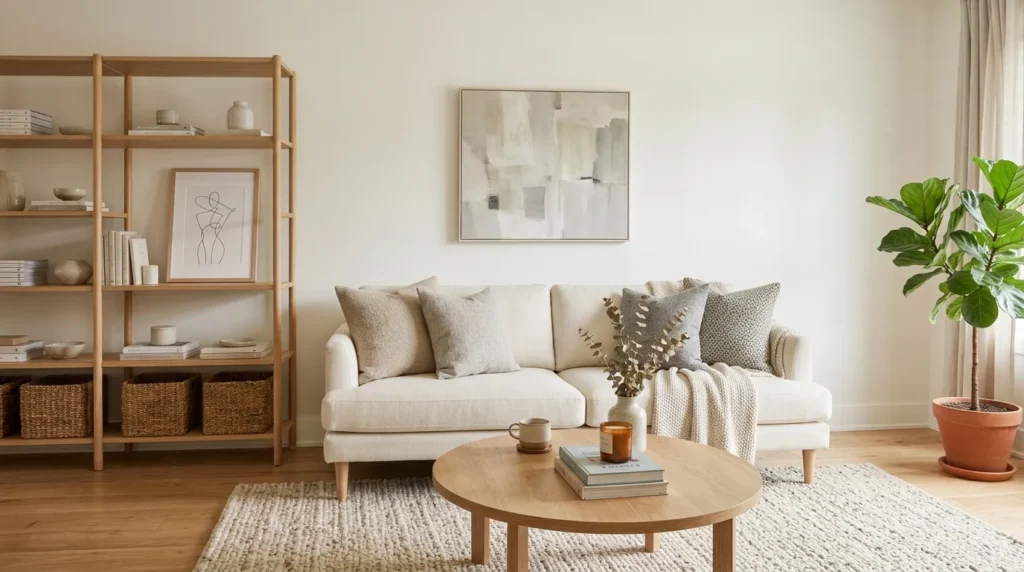
Choose furniture with clean silhouettes.
Avoid oversized decorative pieces that take up valuable floor space.
Look for storage furniture that combines practicality with simple design.
Prioritize comfortable seating rather than choosing pieces based purely on appearance.
5. Minimalist Artwork
Quick Benefits
- Adds personality
- Creates focal points
- Avoids visual clutter
- Works with neutral interiors
- Complements clean furniture
Why It Works
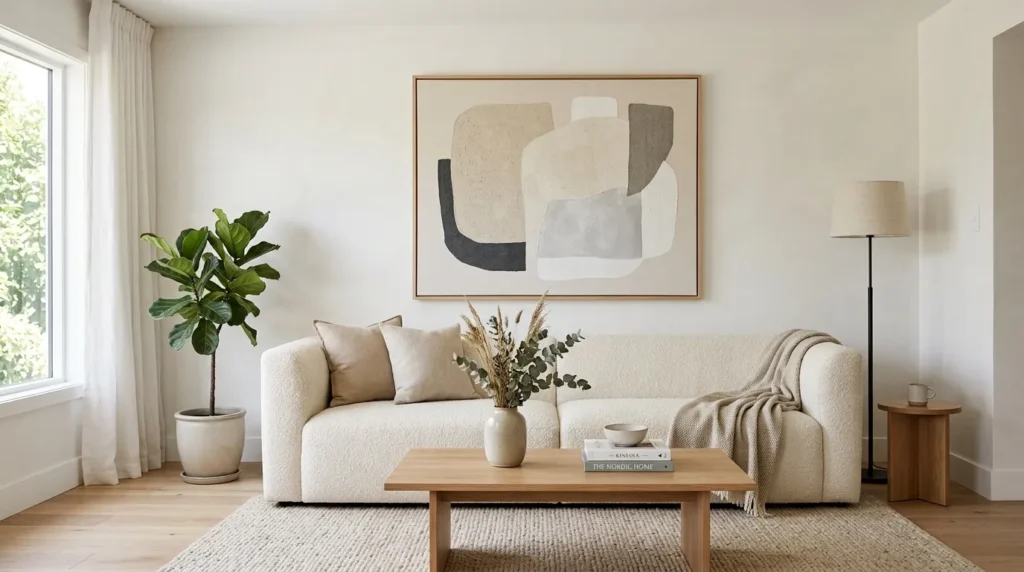
Blank walls aren’t always necessary for minimalist interiors.
A carefully chosen artwork can add character while preserving the room’s simplicity.
How To Style It
Choose abstract, botanical, line-art, landscape, or graphic artwork in restrained colors.
One oversized piece can often make a stronger statement than a crowded gallery wall.
Use frames in natural wood, black, white, or another finish already present in the room.
6. Soft Natural Lighting
Quick Benefits
- Creates warmth
- Enhances textures
- Makes evenings relaxing
- Adds atmosphere
- Supports Scandinavian coziness
Why It Works
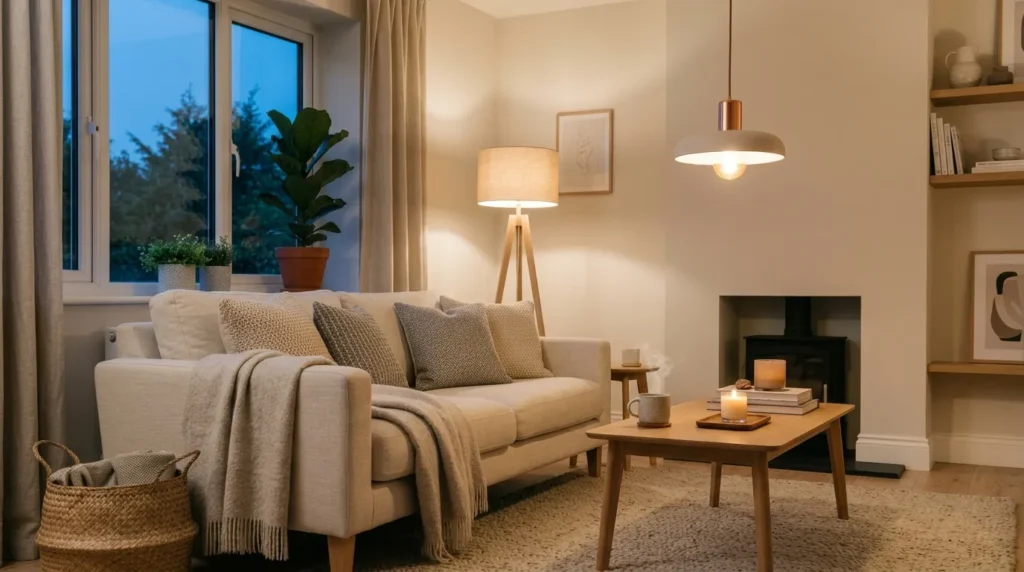
Lighting is essential to the cozy side of Scandinavian design.
A room can have beautiful furniture but still feel flat if it relies entirely on one bright overhead fixture.
How To Style It
Combine ceiling lighting with floor lamps and table lamps.
Choose fixtures with simple silhouettes.
Use warm illumination for evening relaxation.
Place lamps near seating areas and darker corners.
7. Indoor Greenery
Quick Benefits
- Adds natural color
- Freshens the room visually
- Works with neutrals
- Adds height
- Creates organic texture
Why It Works
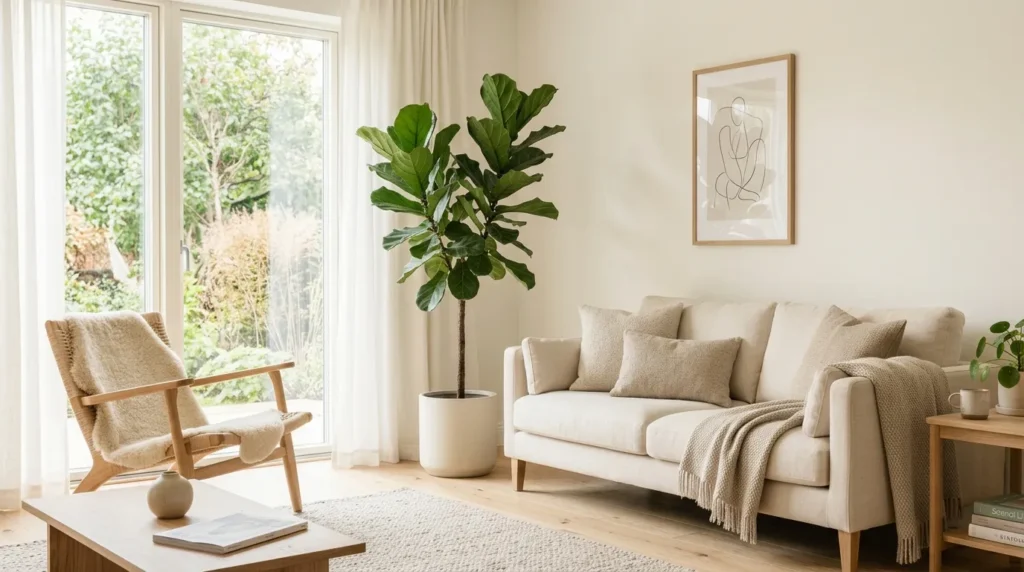
Plants bring a natural element into an otherwise restrained interior.
Their organic shapes provide contrast against the clean lines of Scandinavian furniture.
How To Style It
Use one larger plant in an empty corner.
Add a smaller plant on a shelf or side table.
Choose simple ceramic, stone, or neutral planters.
Don’t overcrowd the room with plants.
8. Woven Storage
Quick Benefits
- Hides clutter
- Adds texture
- Provides practical storage
- Feels natural
- Works in small spaces
Why It Works
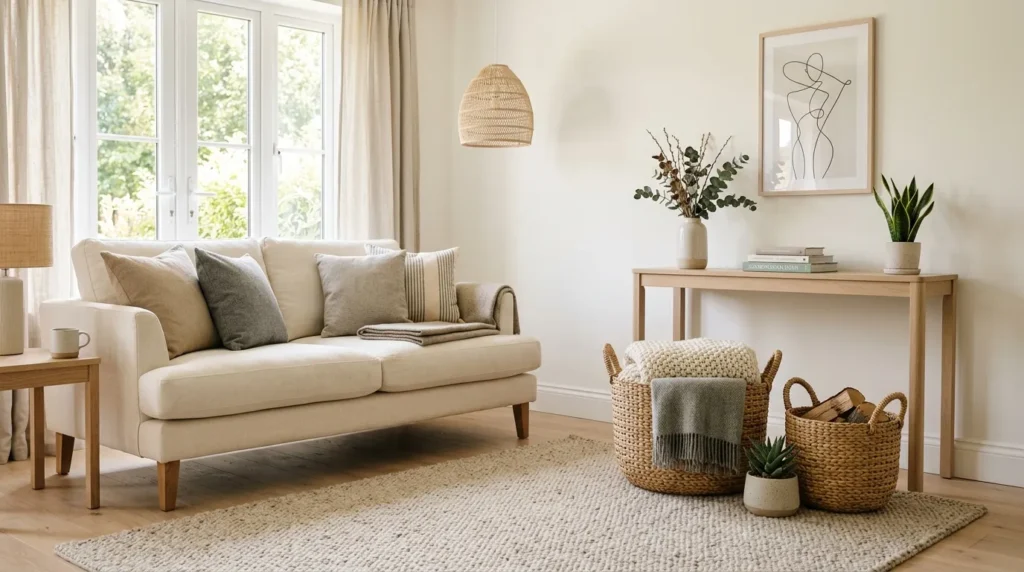
Open storage can quickly make a living room look messy.
Woven baskets provide a simple way to contain blankets, toys, magazines, or other everyday items.
How To Style It
Place a large basket beside the sofa for throws.
Use smaller baskets on shelves or underneath consoles.
Choose natural woven finishes that complement your wood furniture.
Keep baskets functional rather than using them purely as decoration.
9. Scandinavian Contrast
Quick Benefits
- Adds definition
- Prevents the room from looking flat
- Creates modern character
- Highlights architectural details
- Works with neutral palettes
Why It Works
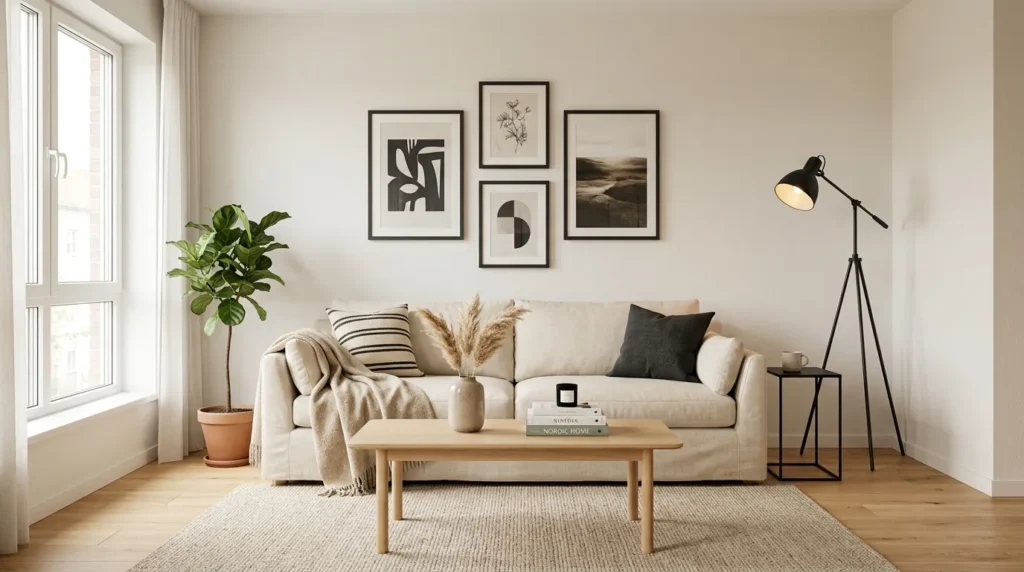
Scandinavian interiors aren’t always completely pale.
Small amounts of black, charcoal, deep brown, or muted green can create visual structure.
How To Style It
Use dark accents selectively.
Try a black floor lamp, dark picture frame, charcoal cushion, or deeper wood tone.
Keep the majority of the room light so the contrast remains intentional.
10. Comfortable Open Layout
Quick Benefits
- Improves movement
- Creates visual breathing room
- Makes furniture feel intentional
- Supports entertaining
- Works especially well in small rooms
Why It Works
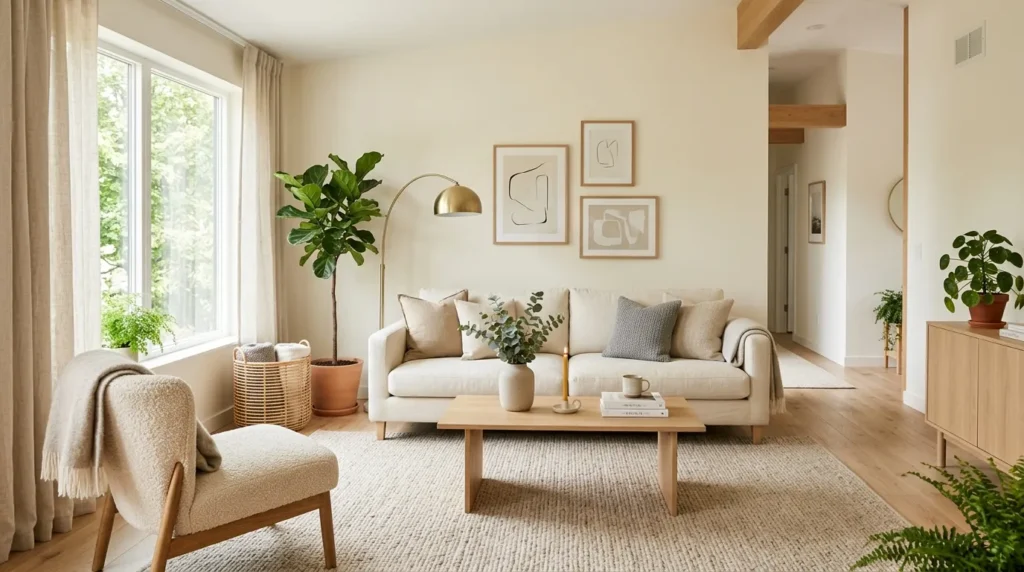
An open layout helps the simplicity of Scandinavian design become noticeable.
Furniture should feel connected without blocking pathways.
How To Style It
Position the sofa as the main anchor.
Add a coffee table within comfortable reach.
Place accent seating where it supports conversation.
Leave enough space to move naturally around the room.
Avoid filling every empty corner.
How To Make Scandinavian Style Feel Warm
The easiest way is to focus on texture and lighting.
Use warm white rather than harsh white.
Choose natural wood rather than excessive glossy finishes.
Layer rugs, cushions, and throws.
Add woven baskets.
Use warm lamps.
Bring in a little greenery.
And leave enough empty space for the room to breathe.
Scandinavian style is less about having a specific number of decorative objects and more about creating a balanced environment.
Best Scandinavian Living Room Colors
Warm White
A classic bright foundation.
Oatmeal
Soft and cozy.
Light Beige
Adds warmth.
Pale Gray
Creates subtle modern contrast.
Sage Green
Brings in a natural accent.
Charcoal
Useful for small amounts of definition.
Natural Wood
Adds organic warmth without overwhelming the palette.
Common Scandinavian Decorating Mistakes
Making Everything White
Too much white without texture can feel cold.
Adding Too Many Decorations
Simplicity is part of the style.
Ignoring Comfort
Functional design should still feel inviting.
Mixing Too Many Wood Tones
A restrained material palette usually looks more cohesive.
Using Harsh Lighting
Warm layered lighting creates a much more welcoming atmosphere.
FAQ
What makes a living room Scandinavian?
Scandinavian-inspired living rooms typically combine simplicity, functionality, natural materials, restrained colors, clean furniture lines, and comfortable textures.
What colors are common in Scandinavian living rooms?
Warm white, cream, beige, oatmeal, pale gray, muted green, charcoal, and natural wood tones work especially well.
Does Scandinavian style have to be minimalist?
Not necessarily. It usually favors intentional simplicity, but you can still include books, artwork, plants, textiles, and personal objects.
How can I make Scandinavian decor cozy?
Use layered textiles, natural wood, woven materials, warm lighting, comfortable furniture, and subtle greenery.
What type of furniture works best?
Choose comfortable pieces with clean silhouettes and practical proportions. Light wood and neutral upholstery are particularly versatile.
Can Scandinavian style work in a small living room?
Yes. Its emphasis on simple furniture, light colors, open layouts, and functional storage makes it particularly suitable for smaller spaces.
Can I mix Scandinavian style with other styles?
Absolutely. Scandinavian elements work especially well with modern, organic, minimalist, farmhouse, and contemporary interiors.
Conclusion
Scandinavian-inspired design works because it doesn’t ask you to choose between beauty and comfort.
The room can be clean without feeling empty.
It can be minimal without feeling cold.
And it can be modern without becoming overly formal.
Start with warm neutrals, introduce light wood, layer natural textures, and choose furniture that genuinely serves a purpose.
Then finish the space with soft lighting, greenery, artwork, and practical woven storage.
The result is a living room that feels calm, functional, and effortlessly inviting—the kind of space that remains beautiful long after the latest decorating trend has passed.