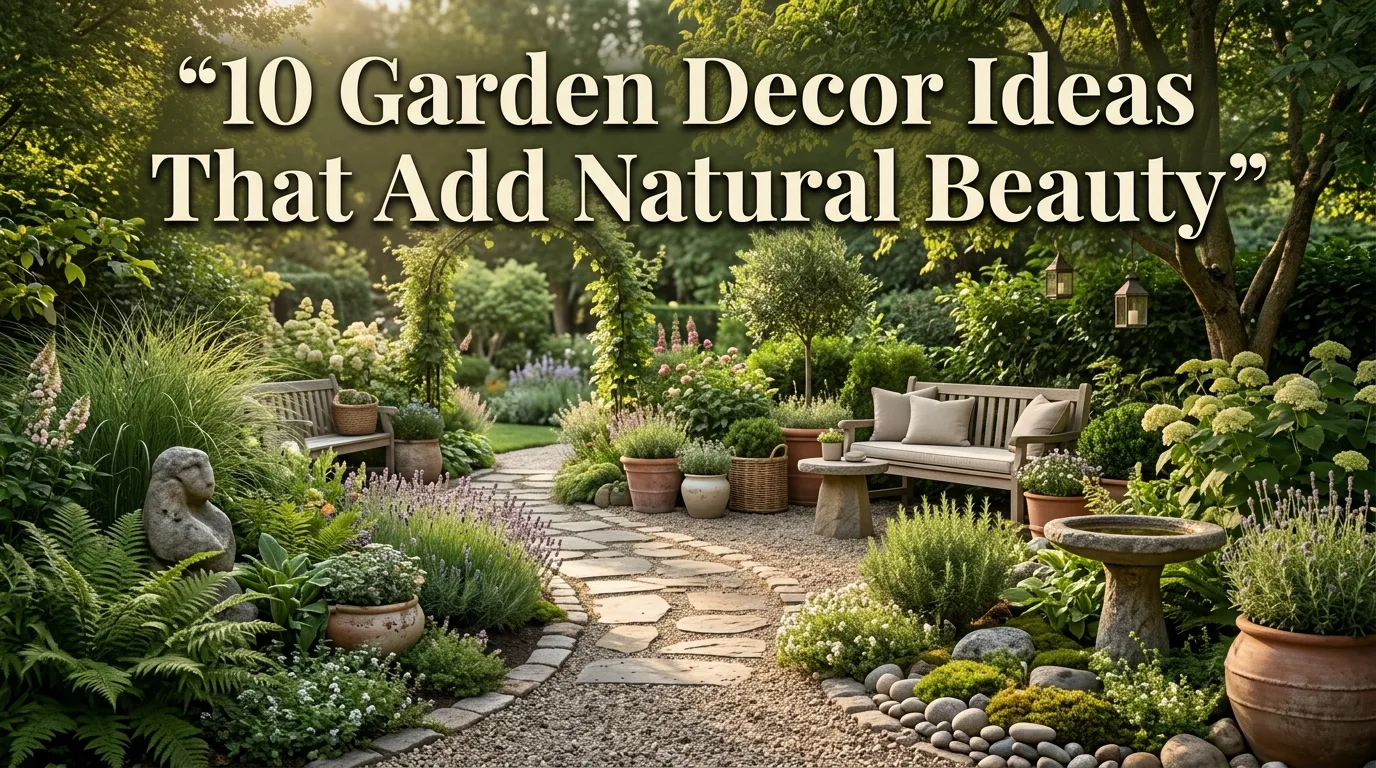
10 Garden Decor Ideas That Add Natural Beauty
A beautiful garden doesn’t need to be filled with elaborate decorations.
Often, the most inviting outdoor spaces use a few thoughtful details that work naturally with the plants, pathways, and architecture already there. Garden decor should enhance the landscape rather than compete with it.
Natural materials, soft lighting, simple seating, decorative containers, and carefully placed garden accents can make even a modest backyard feel more intentional.
In my experience, the best garden decor has a sense of permanence. Stone, wood, terracotta, aged metal, and woven materials tend to blend naturally with greenery and become more beautiful as the garden matures.
You also don’t need a huge yard.
A small patio garden, side yard, courtyard, or balcony can benefit from the same principles.
The goal is to create visual interest while keeping enough open space for plants and pathways to remain the stars.
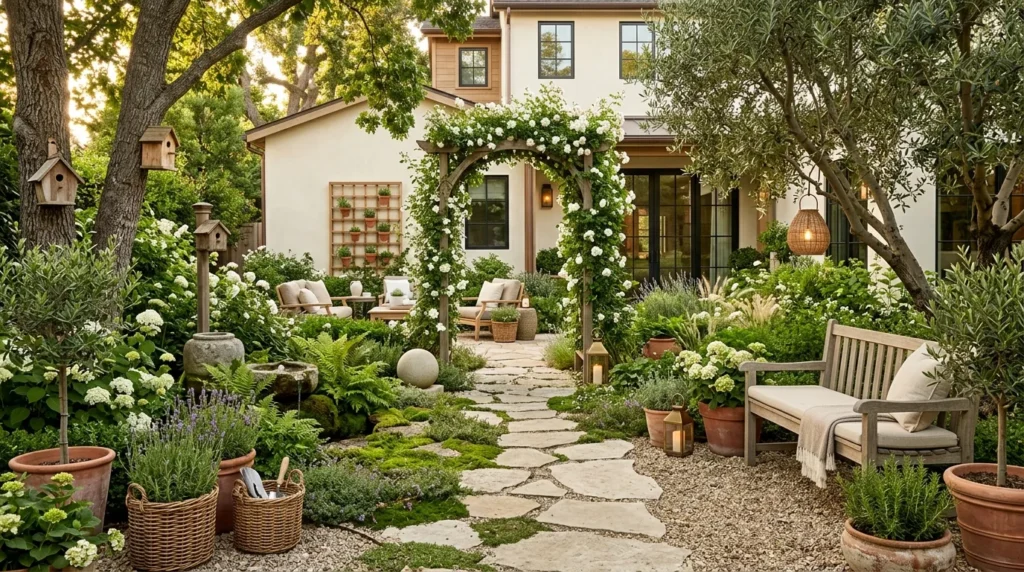
Here are 10 garden decor ideas that add warmth, texture, and natural beauty without making the landscape feel overcrowded.
Table of Contents
- Natural Stone Accents
- Decorative Planters
- Garden Seating
- Wooden Arbors
- Pathway Lighting
- Water Features
- Rustic Garden Trellises
- Outdoor Lanterns
- Sculptural Garden Objects
- Layered Garden Corners
1. Natural Stone Accents
Quick Benefits
- Adds organic texture
- Blends with greenery
- Feels timeless
- Defines garden areas
- Requires little decoration
Why It Works
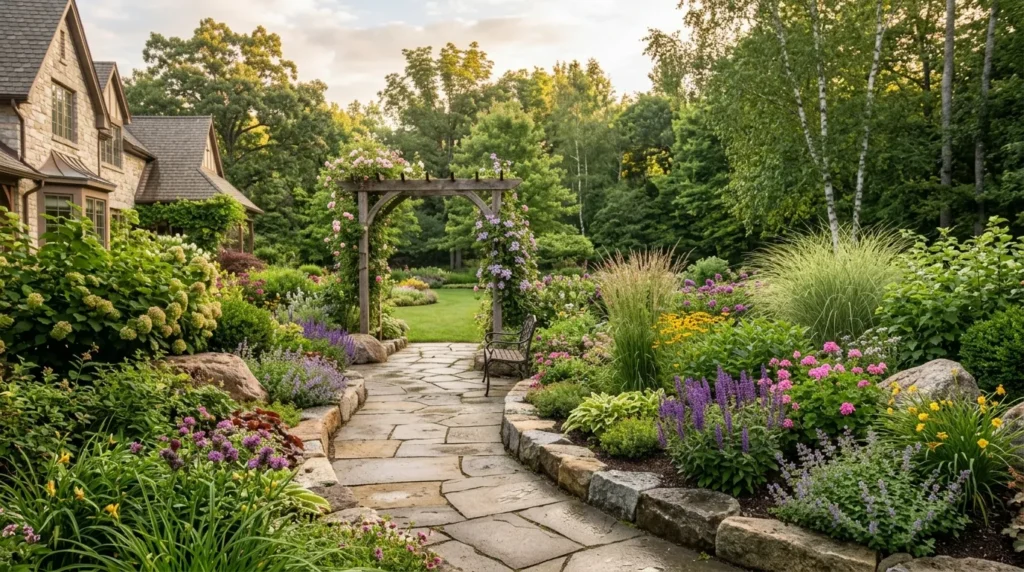
Stone is one of the easiest decorative materials to integrate into a garden because it naturally belongs in an outdoor environment.
Its irregular textures and earthy colors create contrast against leaves and flowers without competing with them.
How To Style It
Use stone as edging around planting beds.
Create a small stone feature beside a pathway.
You can also use larger rocks as visual anchors within a planting arrangement.
Choose stones that complement the colors already present in your yard.
2. Decorative Planters
Quick Benefits
- Adds structure
- Introduces height
- Works in small spaces
- Makes seasonal updates easy
- Adds architectural interest
Why It Works
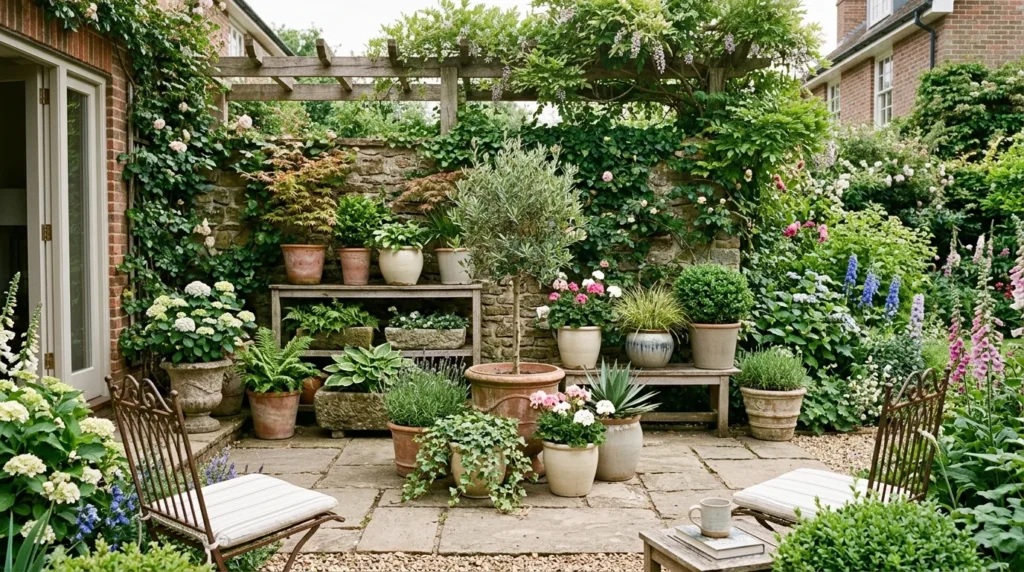
Planters allow you to control where color, texture, and height appear.
They can also make patios, entrances, and corners feel more connected to the surrounding garden.
How To Style It
Choose containers made from terracotta, stone, ceramic, concrete, or weather-resistant materials.
Group containers in different heights.
Use a consistent color family so the arrangement feels intentional.
Place taller plants toward the back and lower plants toward the front.
3. Garden Seating
Quick Benefits
- Adds functionality
- Creates a destination
- Encourages relaxation
- Fills empty corners
- Makes the garden feel lived-in
Why It Works
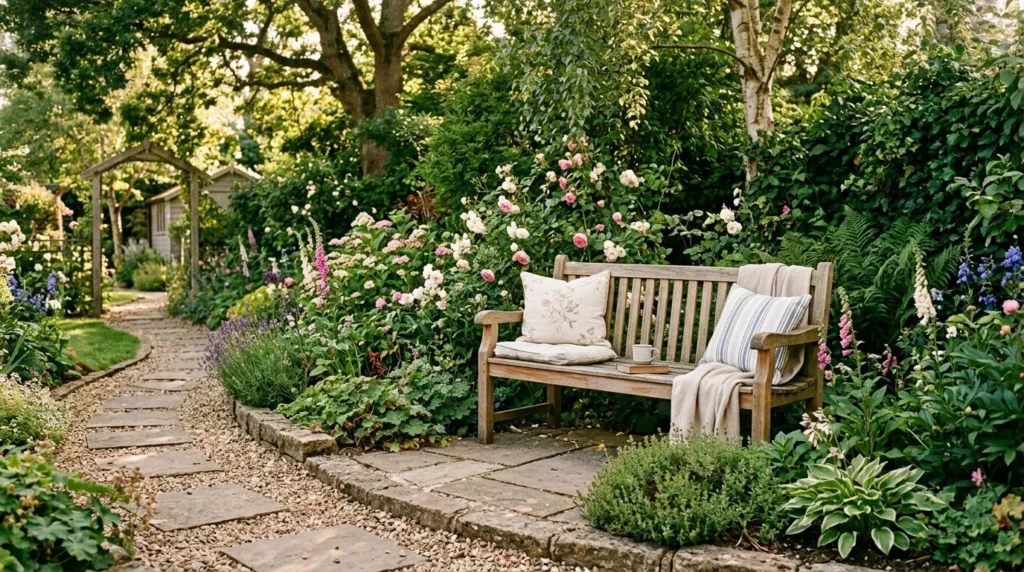
A garden becomes much more useful when there is somewhere comfortable to sit.
A bench or pair of chairs can also create a visual focal point without requiring excessive decoration.
How To Style It
Place seating where there is something pleasant to look toward.
A flowering border, mature tree, fountain, or garden pathway can become the view.
Choose weather-resistant furniture.
Add one or two outdoor cushions for comfort without creating clutter.
4. Wooden Arbors
Quick Benefits
- Adds vertical interest
- Defines entrances
- Supports climbing plants
- Creates architectural structure
- Makes pathways feel special
Why It Works
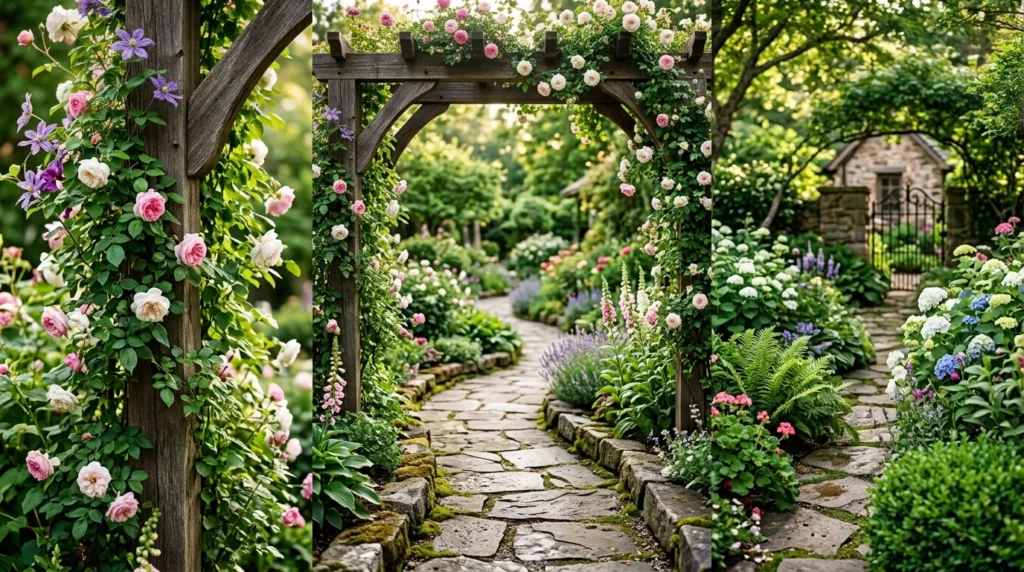
An arbor introduces height into a garden.
It can also create a transition between two spaces, making a simple pathway feel more intentional.
How To Style It
Position an arbor at the entrance to a garden room or along a pathway.
Train suitable climbing plants around the structure.
Keep the surrounding planting relatively soft and natural.
Choose a finish that complements the home’s exterior and existing garden materials.
5. Pathway Lighting
Quick Benefits
- Improves nighttime visibility
- Creates atmosphere
- Highlights landscaping
- Defines pathways
- Adds visual depth
Why It Works
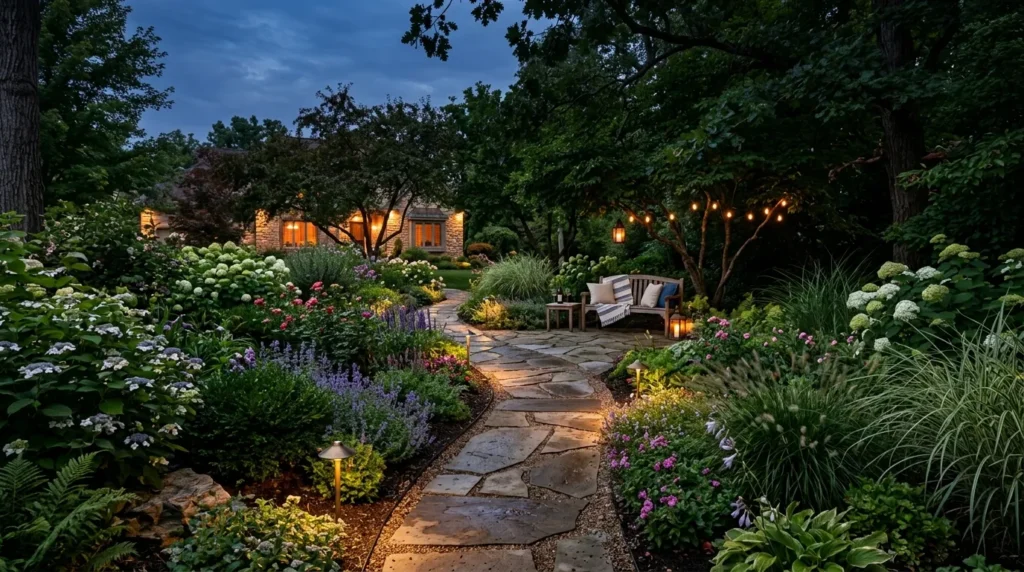
Lighting changes how a garden is experienced after sunset.
Small amounts of strategically placed light can highlight beautiful plants and guide people through the landscape.
How To Style It
Use low-level path lights along walkways.
Add subtle accent lighting near trees or architectural features.
Avoid illuminating every plant.
A combination of light and shadow usually creates a more sophisticated effect.
6. Water Features
Quick Benefits
- Creates a relaxing atmosphere
- Adds movement
- Introduces sound
- Creates a focal point
- Attracts attention
Why It Works
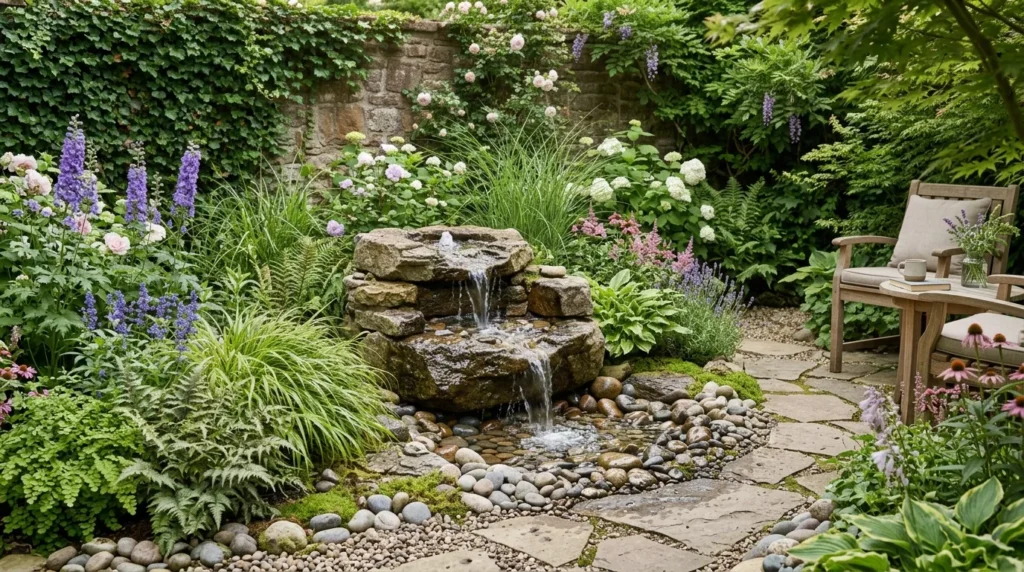
Water adds a different sensory element to the garden.
Even a compact fountain can become a strong focal point.
How To Style It
Choose a water feature proportional to your garden.
A small wall fountain can work beautifully in a courtyard.
A simple basin or bubbling feature can suit a larger landscape.
Keep surrounding decor restrained so the water feature remains visually important.
7. Rustic Garden Trellises
Quick Benefits
- Adds vertical structure
- Supports climbing plants
- Creates privacy
- Adds garden character
- Works with small yards
Why It Works
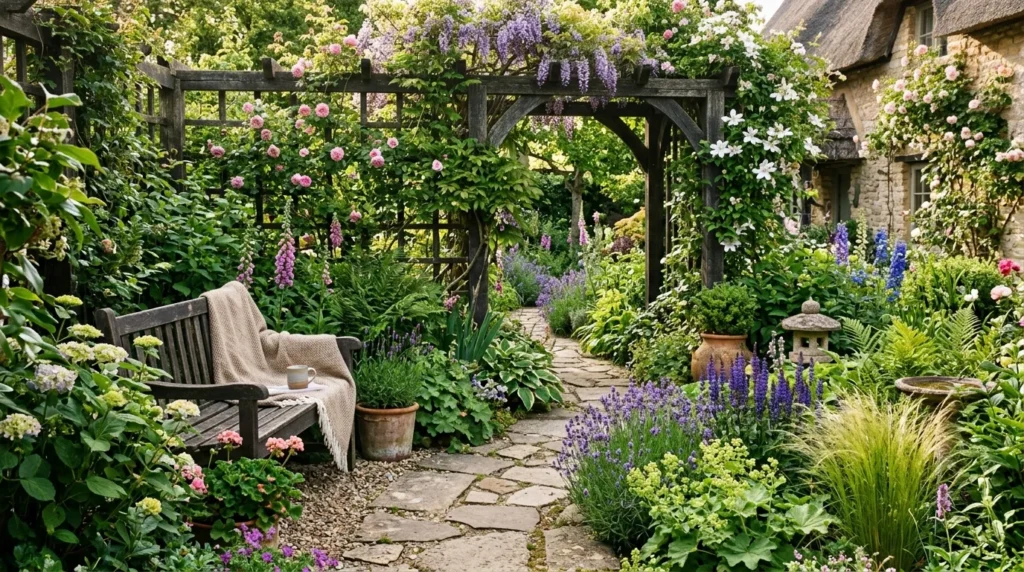
Trellises combine decoration with function.
They provide support for climbing plants while adding a strong vertical element to the garden.
How To Style It
Place a trellis against a wall, fence, or planting border.
Use it for suitable vines or flowering climbers.
Natural wood, dark metal, or painted finishes can all work depending on your home’s style.
8. Outdoor Lanterns
Quick Benefits
- Adds warmth
- Creates evening ambiance
- Easy to move
- Works across garden styles
- Provides decorative interest
Why It Works
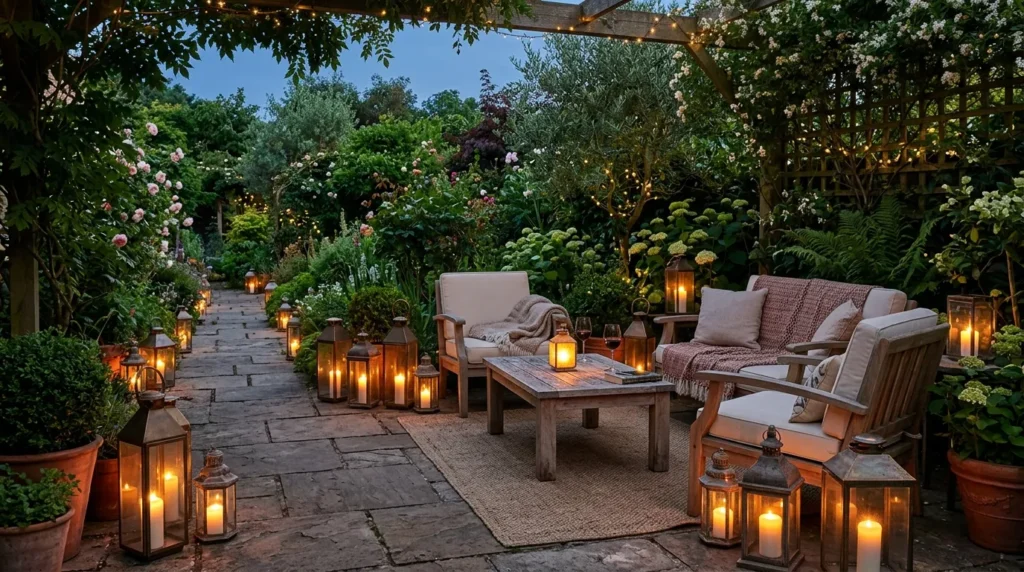
Lanterns create small pools of light that can make outdoor spaces feel more intimate.
They are especially useful around seating areas, patios, and pathways.
How To Style It
Group lanterns in different heights.
Use weather-appropriate products designed for outdoor use.
Place them near seating or along a pathway while keeping them positioned safely.
Choose simple finishes such as black, bronze, natural metal, or neutral tones.
9. Sculptural Garden Objects
Quick Benefits
- Creates focal points
- Adds personality
- Introduces artistic elements
- Works with minimalist landscapes
- Makes empty areas interesting
Why It Works
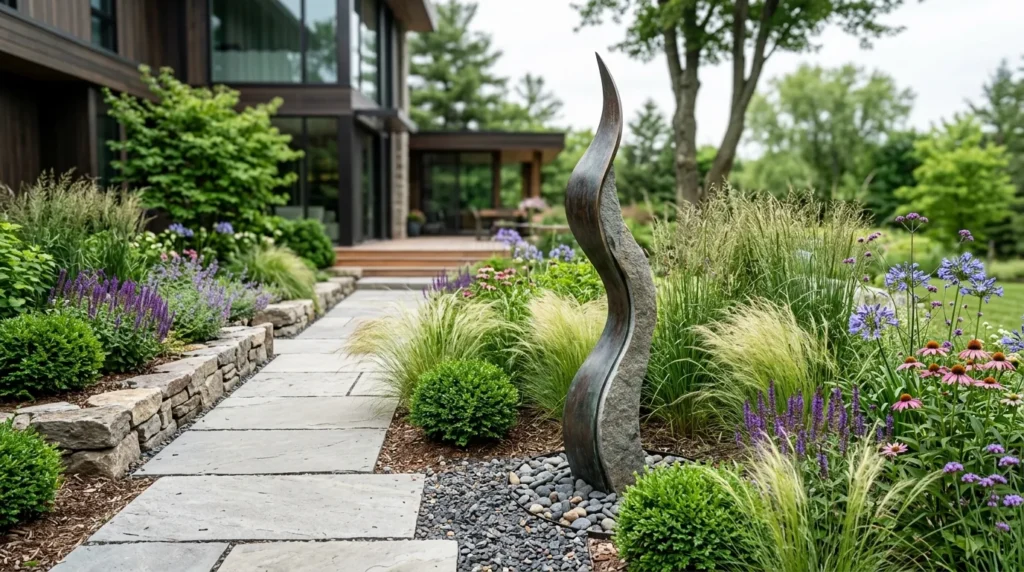
A single sculptural element can be more effective than many small decorations.
It creates a destination for the eye while allowing the plants around it to remain visually important.
How To Style It
Choose one substantial object for a larger garden.
Place it where it can be viewed from the house or pathway.
Stone sculptures, simple metal forms, ceramic pieces, and architectural objects can all work.
Avoid scattering too many unrelated pieces throughout the yard.
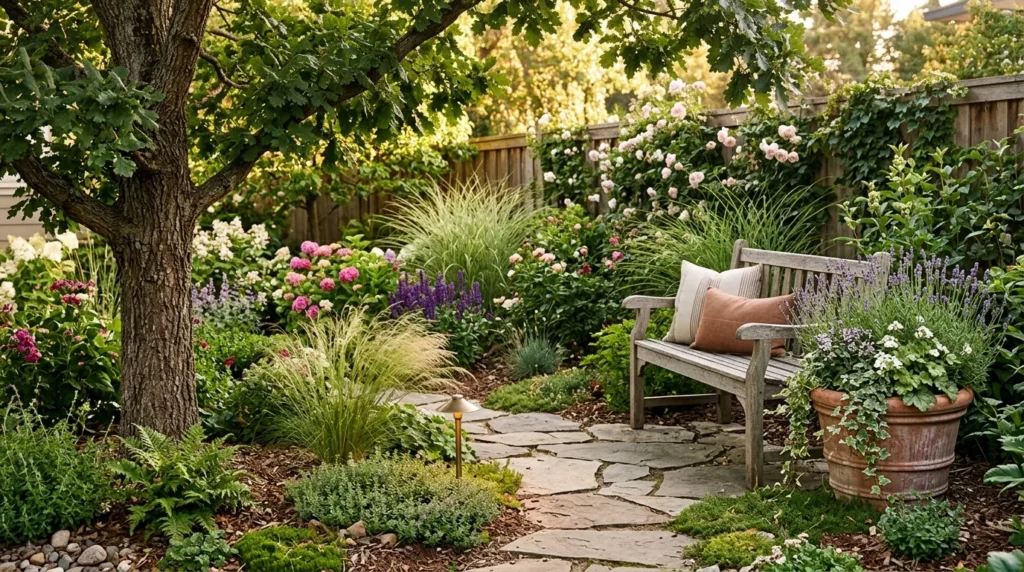
10. Layered Garden Corners
Quick Benefits
- Creates depth
- Makes small spaces interesting
- Combines different textures
- Feels natural
- Adds visual richness
Why It Works
A garden corner can become a miniature composition.
Combining plants, containers, seating, stone, and lighting creates layers that make the space feel fuller without requiring excessive decoration.
How To Style It
Start with a taller element such as a tree, trellis, or large planter.
Add medium-height shrubs or ornamental grasses.
Finish with lower plants, ground cover, stone, and a small decorative accent.
Leave some open space so the arrangement doesn’t become visually crowded.
How To Choose Garden Decor
Before purchasing anything, look at the materials already present in your outdoor space.
Consider:
- Exterior house colors
- Patio materials
- Fence finishes
- Existing furniture
- Plant colors
- Architectural style
- Amount of available space
Then choose decor that complements those elements.
A garden with stone paths might benefit from stone planters.
A modern home may look better with simple concrete or metal accents.
A cottage-style garden may suit weathered wood and terracotta.
Best Natural Materials for Garden Decor
Stone
Timeless, durable, and easy to integrate.
Terracotta
Warm and traditional.
Wood
Natural and welcoming.
Metal
Adds structure and contrast.
Ceramic
Provides color and handcrafted character.
Woven Materials
Adds softness to patios and seating areas.
How To Keep Garden Decor Looking Natural
The easiest approach is to repeat materials.
If you use stone in one area, repeat a similar stone tone somewhere else.
If your furniture has a natural wood finish, consider adding a wooden planter or arbor.
Keep your color palette restrained.
And don’t decorate every corner.
Negative space is just as important outdoors as it is indoors.
Common Garden Decorating Mistakes
Too Many Decorations
A garden should still feel like a garden.
Ignoring Scale
Tiny objects can disappear in a large landscape, while oversized pieces can overwhelm a small yard.
Mixing Too Many Materials
Choose a small number of complementary materials.
Blocking Pathways
Decor should never interfere with comfortable movement.
Using Indoor Decor Outdoors
Choose materials and products designed for outdoor conditions.
Overlighting
Too much light can make a garden feel harsh rather than relaxing.
FAQ
How can I decorate my garden naturally?
Use materials such as stone, wood, terracotta, metal, and ceramic, and combine them with plants rather than covering the landscape with decorative objects.
What garden decor is timeless?
Stone accents, wooden structures, terracotta planters, simple benches, classic lanterns, and understated water features tend to work across many garden styles.
How can I make a small garden look beautiful?
Focus on vertical elements, layered planting, attractive containers, a small seating area, and carefully selected lighting.
Should garden decor match the house?
It doesn’t need to match exactly, but repeating colors and materials from the home’s exterior can make the garden feel more connected.
How many decorative pieces should I use?
There isn’t a fixed number. Start with a few meaningful focal points and add only what the space genuinely needs.
What materials work best outdoors?
Weather-resistant stone, treated or appropriate outdoor wood, suitable metals, terracotta, ceramic, and products specifically designed for exterior use are common choices.
How can I make my garden look good at night?
Use subtle pathway lights, accent lighting, and outdoor lanterns to highlight important areas while leaving plenty of natural darkness.
Conclusion
Garden decor works best when it feels like part of the landscape rather than something placed on top of it.
Start with natural materials.
Add a few beautiful planters.
Create a comfortable seating destination.
Use an arbor or trellis for vertical structure.
Introduce subtle lighting.
Then choose one or two decorative focal points that genuinely complement the plants.
The most beautiful gardens aren’t necessarily the ones with the most decorations.
They’re the ones where plants, materials, pathways, furniture, and decorative details feel naturally connected.
With a little restraint and thoughtful placement, even a simple backyard can become a welcoming outdoor retreat.