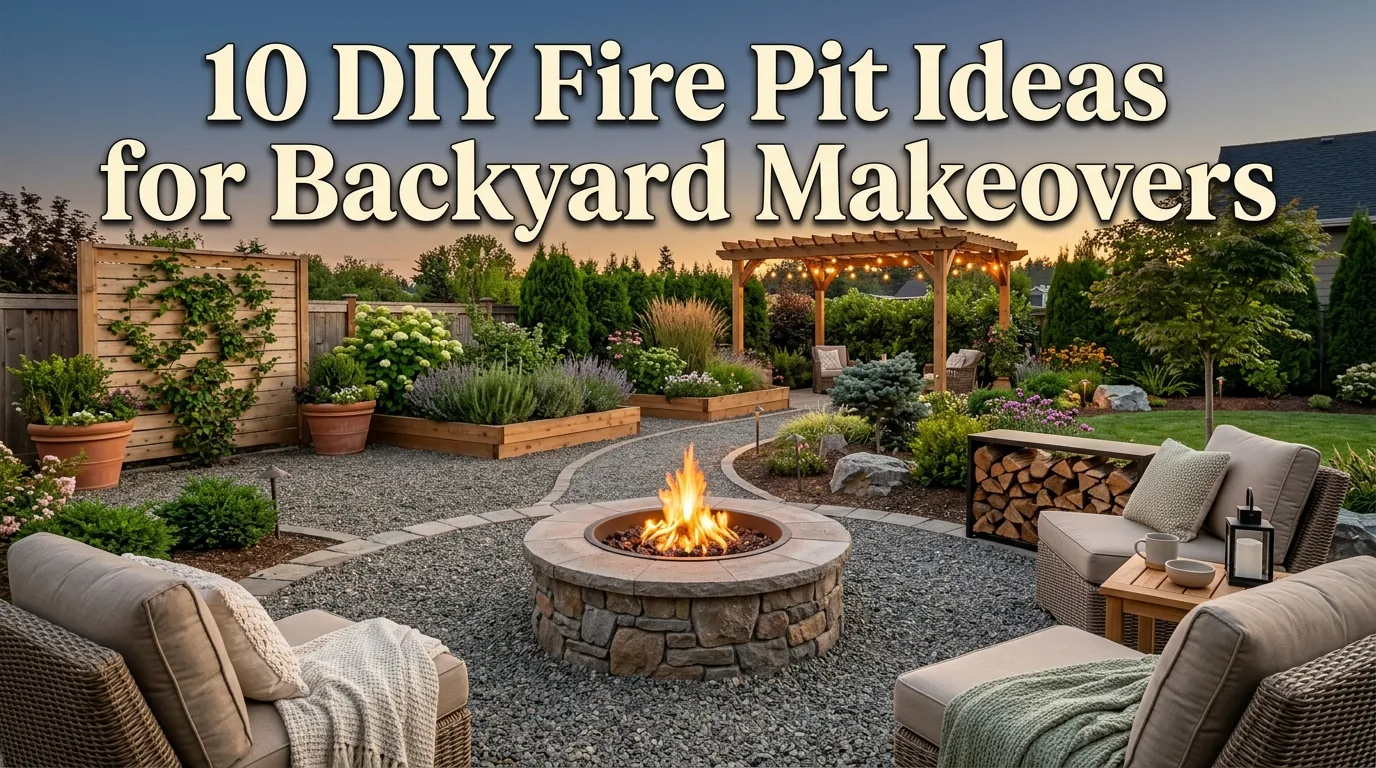
10 DIY Fire Pit Ideas for Backyard Makeovers
A fire pit can completely change the way a backyard feels.
It creates a natural gathering point, adds warmth on cool evenings, and gives an otherwise underused outdoor area a clear purpose. The good news is that a beautiful fire-pit area doesn’t always require a major landscaping project.
With thoughtful planning, suitable materials, comfortable seating, and a well-designed surrounding area, you can create a backyard feature that feels polished and inviting.
In my experience, the biggest difference between a basic fire pit and a backyard feature that looks intentionally designed comes from the area surrounding the fire pit. A beautiful surface, comfortable seating, simple landscaping, and subtle lighting can make the entire setup feel cohesive.
Before starting any DIY fire-pit project, check local fire codes and HOA requirements, choose an appropriate location, and follow the fire-feature manufacturer’s instructions. Required clearances, permitted fuel types, and installation requirements can vary significantly by location and fire-pit design.
Here are 10 inspiring ideas for creating a cozy backyard fire area while keeping the overall landscape stylish and functional.
Table of Contents
- Gravel Fire Pit Circle
- Stone Ring Fire Pit
- Paver Fire Pit Patio
- Concrete Block Fire Pit
- Rustic Stone Fire Pit
- Sunken Fire Pit Area
- Portable Fire Pit Lounge
- Modern Fire Pit Corner
- Garden Fire Pit
- Cozy Entertaining Area
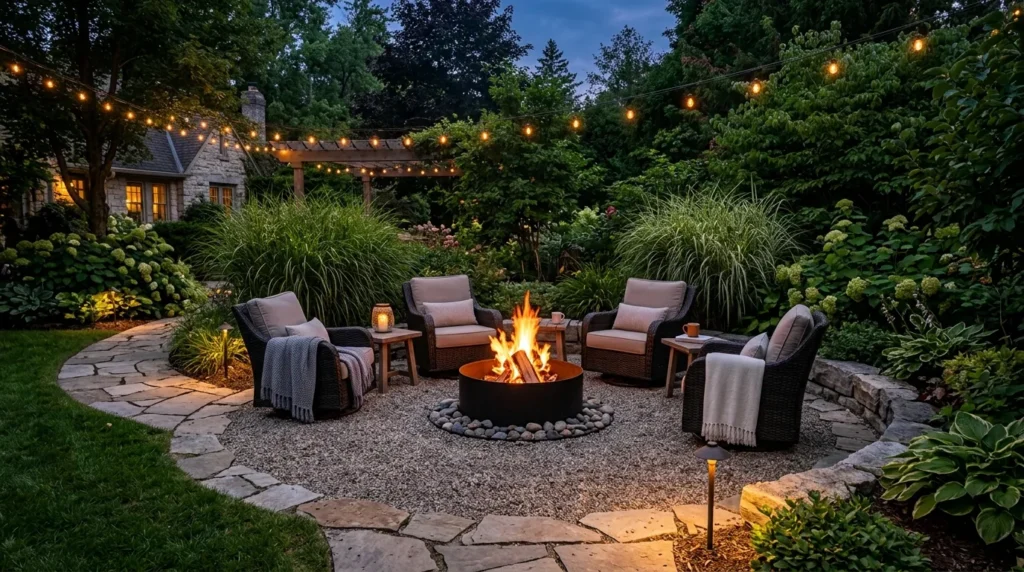
1. Gravel Fire Pit Circle
Quick Benefits
- Defines the fire area
- Creates a casual atmosphere
- Works with many landscapes
- Provides a simple surface
- Easy to style
Why It Works
Gravel creates a distinct zone without requiring a complicated patio installation.
Its loose, natural texture works beautifully with stone, wood, and garden planting.
A circular arrangement also naturally encourages conversation.
How To Style It
Create a properly prepared and level area using materials appropriate for your site and fire feature.
Add a suitable fire pit and surround it with comfortable outdoor chairs.
Use landscape edging to keep gravel contained.
Finish with simple planting around the outside of the designated safety zone.
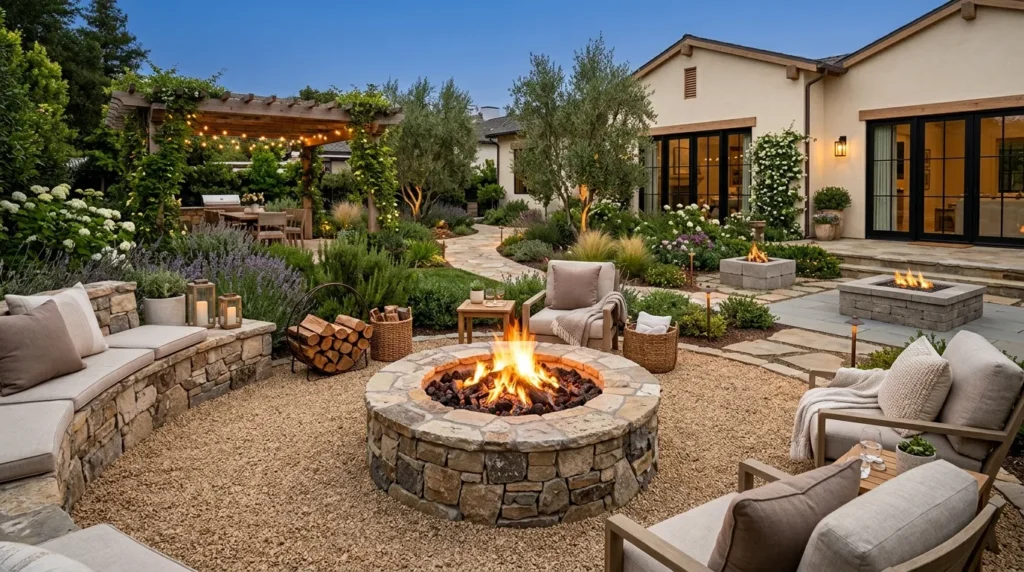
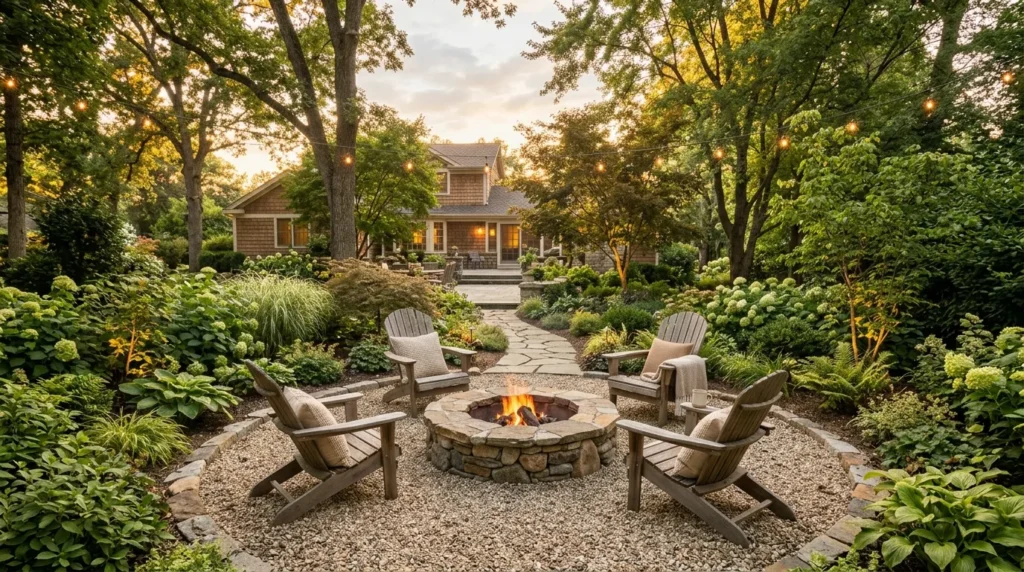
2. Stone Ring Fire Pit
Quick Benefits
- Timeless appearance
- Natural texture
- Blends with landscaping
- Creates a strong focal point
- Works with rustic or traditional yards
Why It Works
Stone has an organic appearance that fits naturally into outdoor environments.
A simple stone ring can give a backyard fire area a more established appearance.
How To Style It
Choose fire-appropriate materials specifically intended for the application.
Create a level noncombustible area around the fire feature where appropriate.
Add Adirondack-style chairs or simple outdoor lounge seating.
Keep nearby plants, mulch, structures, and combustible materials outside required clearances.
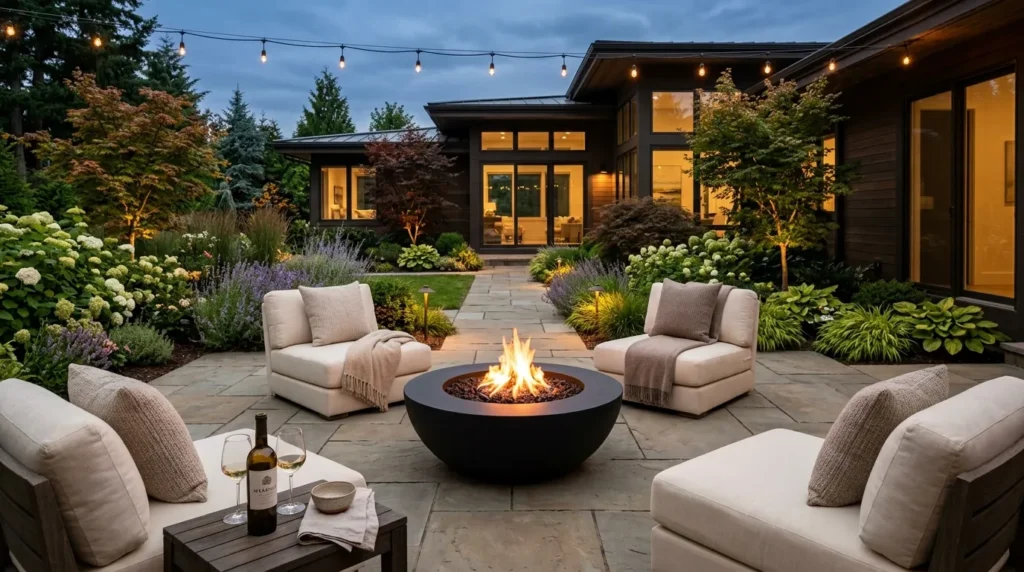
3. Paver Fire Pit Patio
Quick Benefits
- Looks polished
- Creates a dedicated outdoor room
- Provides stable seating
- Works for entertaining
- Adds visual structure
Why It Works
Pavers create a clear foundation for the entire seating arrangement.
They can also connect the fire area visually with an existing patio or walkway.
How To Style It
Choose pavers that complement your home’s exterior.
Create a generously sized seating area rather than making the fire feature the only focus.
Use neutral outdoor furniture and a few cushions for comfort.
Add low-level lighting around the perimeter.
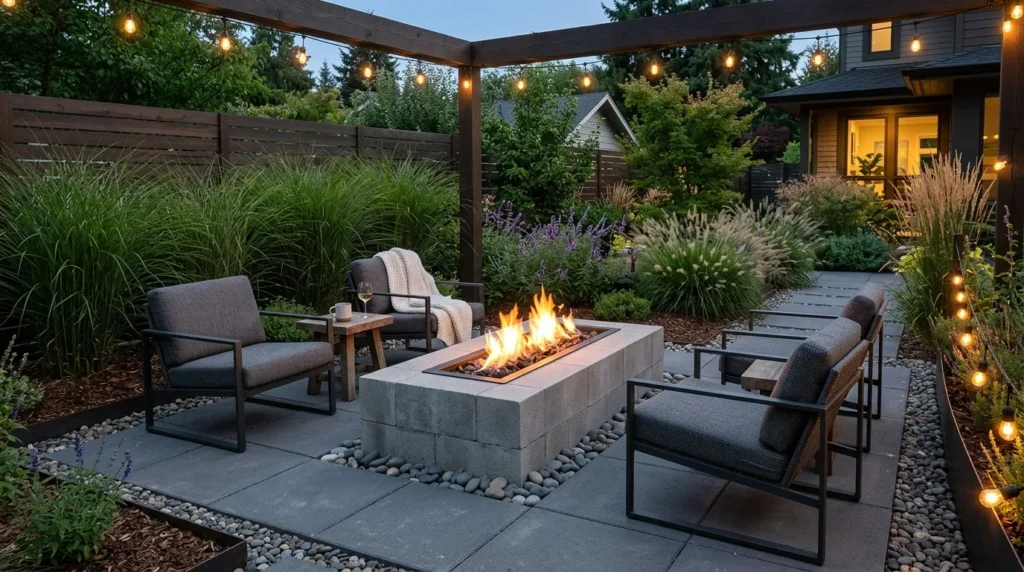
4. Concrete Block Fire Pit
Quick Benefits
- Simple aesthetic
- Budget-conscious option
- Strong visual structure
- Works with modern landscapes
- Easy to customize
Why It Works
Concrete blocks can create a clean architectural look.
They work particularly well when the rest of the backyard already contains simple geometric shapes.
How To Style It
Use only materials appropriate for fire-pit construction and follow a design intended for safe outdoor burning.
Surround the structure with a suitable noncombustible surface.
Pair it with simple outdoor seating and restrained landscaping.
Avoid improvising construction details that could compromise safety.
5. Rustic Stone Fire Pit
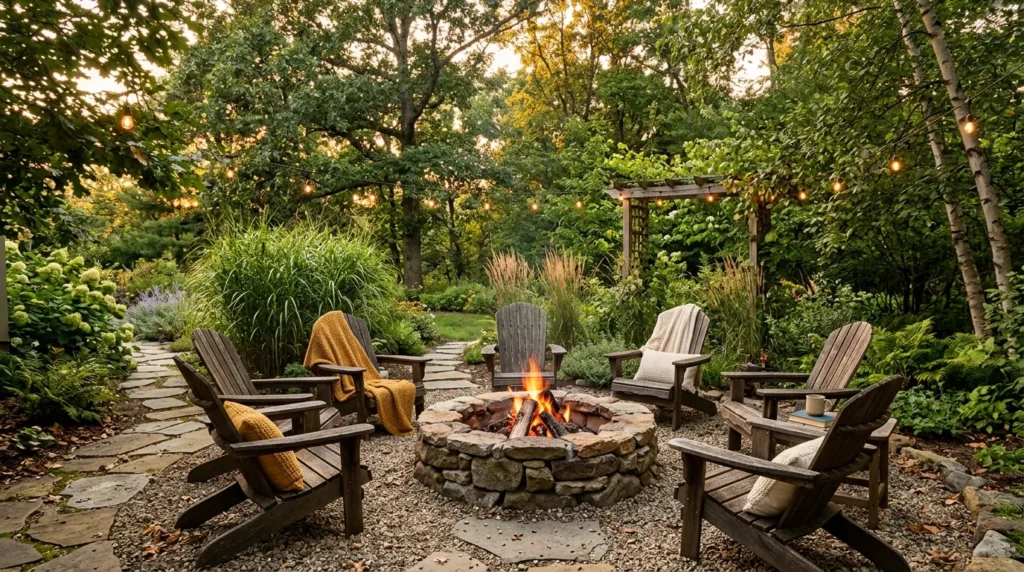
Quick Benefits
- Adds natural character
- Works with gardens
- Creates a cozy atmosphere
- Blends with mature landscapes
- Looks less formal
Why It Works
Irregular stone can make a fire area feel like it has always belonged in the landscape.
It works especially well with native-looking planting and natural pathways.
How To Style It
Use a suitable fire-rated construction approach.
Surround the area with stone or another appropriate surface.
Add weather-resistant wooden chairs or benches.
Use natural textures rather than excessive decorative accessories.
6. Sunken Fire Pit Area
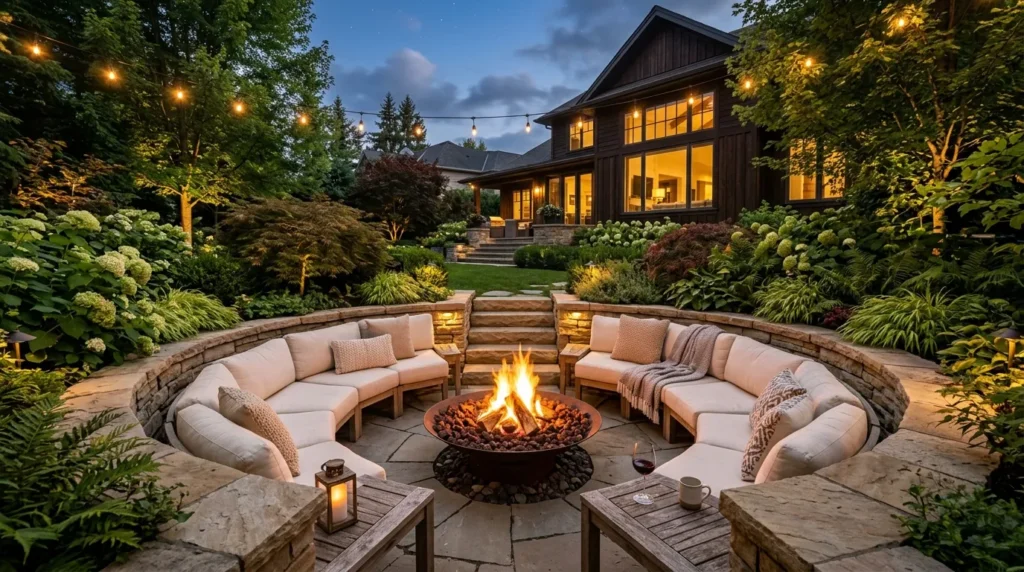
Quick Benefits
- Creates an intimate space
- Defines the seating zone
- Adds architectural interest
- Feels secluded
- Makes the fire area a destination
Why It Works
A sunken arrangement visually separates the fire area from the rest of the yard.
It creates a room-like feeling without needing walls.
How To Style It
Proper drainage and structural stability are essential.
Create a safe, level fire zone and arrange seating around it.
Use retaining materials suitable for outdoor conditions.
Keep the surrounding landscape relatively simple so the change in elevation remains the main design feature.
7. Portable Fire Pit Lounge
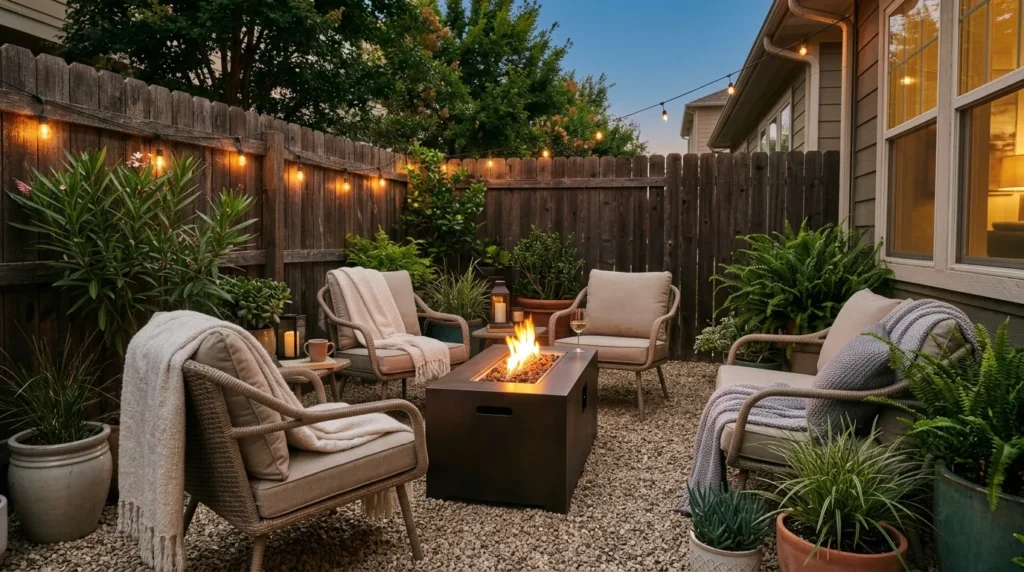
Quick Benefits
- Flexible
- Great for renters
- Easier to rearrange
- Doesn’t require permanent construction
- Works in smaller yards
Why It Works
A portable fire feature allows you to experiment with the layout before committing to a permanent installation.
It can also be moved or stored according to the season and local requirements.
How To Style It
Choose an outdoor-rated fire feature appropriate for your space.
Place it on a suitable surface and maintain all required clearances.
Surround it with lightweight outdoor chairs.
Use a small side table, outdoor cushions, and potted plants positioned safely away from the fire.
8. Modern Fire Pit Corner
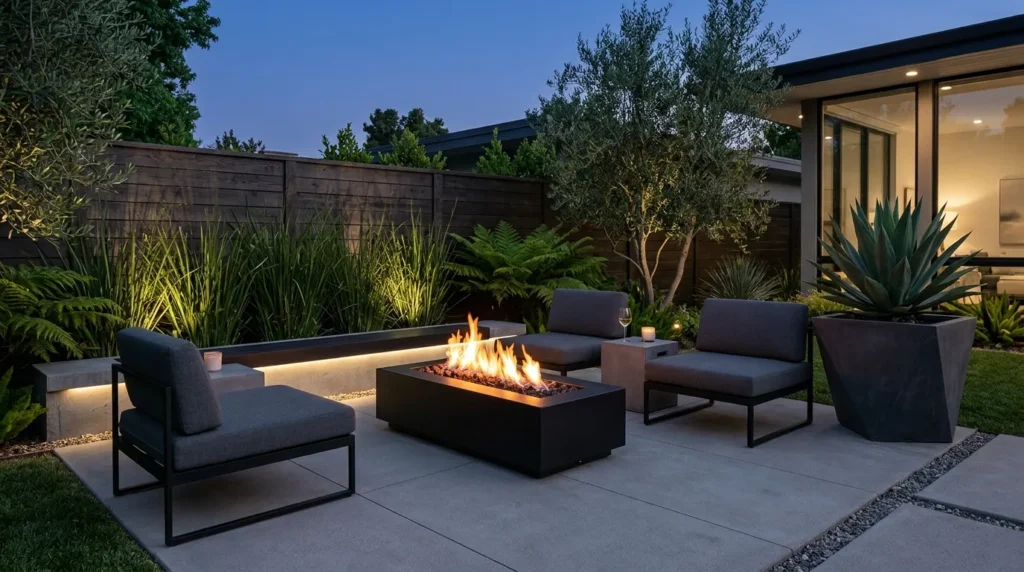
Quick Benefits
- Works with contemporary homes
- Creates a sophisticated focal point
- Uses minimal decoration
- Feels organized
- Great for entertaining
Why It Works
A modern fire pit area relies on clean lines and a restrained material palette.
The simplicity makes the fire feature itself feel intentional.
How To Style It
Use large-format pavers or another suitable hardscape.
Choose streamlined outdoor furniture.
Repeat one or two materials from the house exterior.
Add architectural plants around the perimeter while respecting safety requirements.
9. Garden Fire Pit
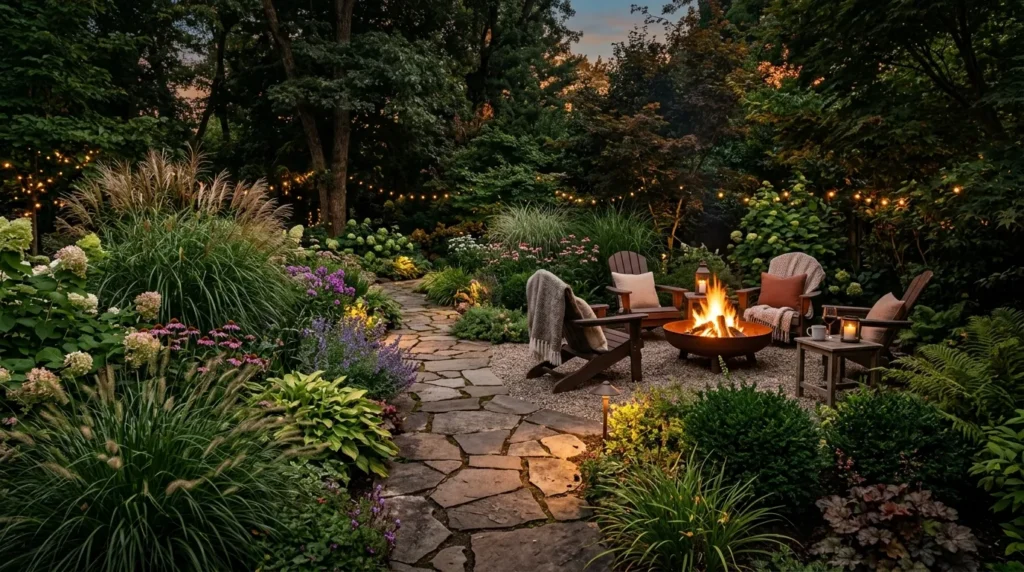
Quick Benefits
- Creates a destination
- Connects fire with nature
- Works in larger gardens
- Feels secluded
- Adds evening atmosphere
Why It Works
A fire pit can become part of the garden experience rather than simply an extension of the patio.
A pathway leading through planting toward the fire area makes it feel like a separate outdoor room.
How To Style It
Create a clearly defined fire area.
Use stone, gravel, or another appropriate surface.
Surround the outer edges with climate-appropriate plants kept at safe distances.
Add low pathway lighting to make the destination visible after dark.
10. Cozy Entertaining Area
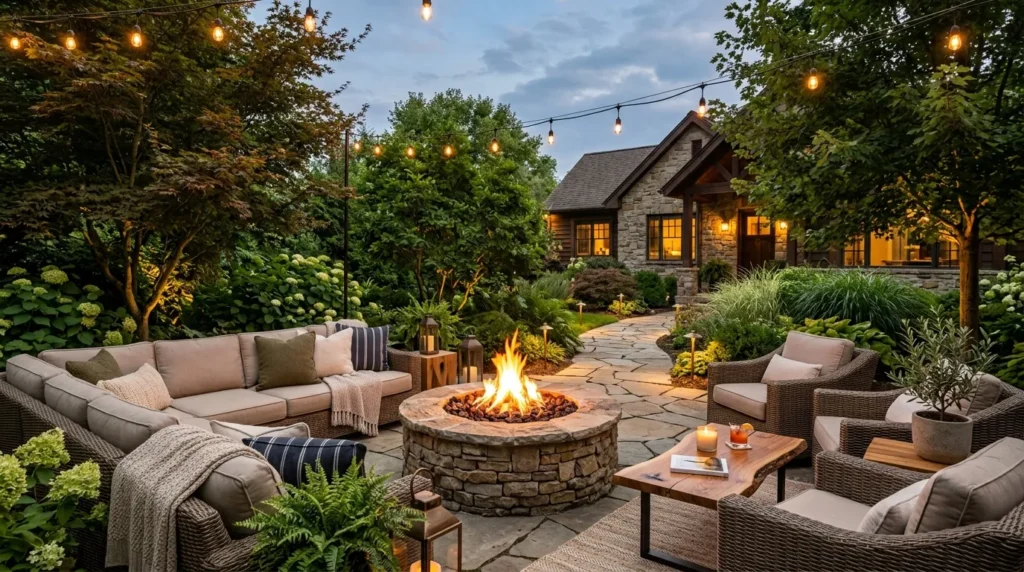
Quick Benefits
- Maximizes outdoor living
- Great for gatherings
- Creates multiple seating options
- Feels complete
- Works across backyard styles
Why It Works
The best fire-pit areas aren’t just about the fire.
They’re about creating a comfortable place where people naturally want to sit.
How To Style It
Arrange several seating options around the fire feature.
Add an outdoor coffee table or side tables positioned safely away from heat.
Use weather-resistant cushions and blankets when appropriate.
Create a clear walking route between the house, seating, and fire area.
How To Plan a DIY Fire Pit Area
Before buying materials, sketch the layout.
Mark:
- Fire feature location
- Seating
- Walking paths
- Existing trees
- Structures
- Fences
- Utilities
- Landscaping
- Fuel storage
Then verify the required clearances for your specific fire feature and local regulations.
This planning stage can prevent many common mistakes.
Best Surfaces Around a Fire Pit
Gravel
Casual and natural.
Stone
Timeless and organic.
Concrete
Versatile and modern.
Pavers
Structured and polished.
Brick
Classic and warm.
The correct material depends on the fire feature, local conditions, and applicable safety requirements.
How To Make a Fire Pit Look Expensive
You don’t need an elaborate design.
Instead, focus on the surrounding environment.
Use a cohesive material palette.
Choose comfortable furniture.
Create a clearly defined seating area.
Add subtle landscape lighting.
Repeat materials from the house or patio.
Keep accessories restrained.
A simple fire feature surrounded by beautifully designed landscaping can look much more sophisticated than an expensive fire pit placed randomly in the yard.
Common Mistakes
Ignoring Local Regulations
Always verify applicable fire restrictions and installation requirements.
Building Too Close to Structures
Maintain all required clearances.
Forgetting Drainage
Water management is important for outdoor installations.
Choosing the Wrong Materials
Not every masonry or decorative material is appropriate for direct exposure to fire.
Overcrowding the Area
Leave comfortable space around seating and walking routes.
Forgetting Wind Direction
Smoke and sparks can affect nearby structures, vegetation, and neighbors.
FAQ
Can I build my own backyard fire pit?
Some fire-pit designs can be DIY projects, but requirements vary by location and fire feature. Check local regulations and use materials and construction methods appropriate for the specific application.
What is the easiest DIY fire pit idea?
A simple, properly constructed fire-pit area with a suitable surface and appropriate fire feature can be relatively straightforward, but the installation should still follow local safety requirements.
What should go around a fire pit?
Suitable noncombustible surfaces such as certain stone, concrete, brick, pavers, or properly selected gravel can help define the area. Exact requirements depend on the fire feature and local regulations.
How do I make a fire pit area cozy?
Use comfortable seating, warm outdoor lighting, natural materials, and a clear layout that encourages conversation.
Can I put a fire pit on gravel?
Some fire-pit designs can be installed in gravel areas, but the specific fire feature, base preparation, local regulations, and manufacturer instructions determine whether the setup is appropriate.
How far should a fire pit be from a house?
The required distance varies by fire-pit type, fuel, local regulations, and manufacturer instructions. Always follow the most restrictive applicable requirement rather than relying on a generic distance.
Can a small backyard have a fire pit?
A compact fire feature may work in some small yards, but available space and local safety requirements are critical. A smaller approved portable feature may be more practical than a large permanent installation.
Conclusion
A backyard fire pit can become one of the most inviting features of an outdoor space.
The secret isn’t simply choosing a beautiful fire pit.
It’s designing everything around it.
Start with the layout.
Create a suitable surface.
Add comfortable seating.
Use natural materials.
Connect the fire area to the rest of the yard with pathways and lighting.
Then keep the surrounding landscape simple and intentional.
Whether you prefer a rustic stone circle, a modern paver patio, a compact portable fire feature, or a dedicated garden lounge, thoughtful planning can turn an ordinary backyard into a welcoming place for relaxing and entertaining.
Design for comfort, beauty, and safety first—and the finished space will feel naturally inviting.