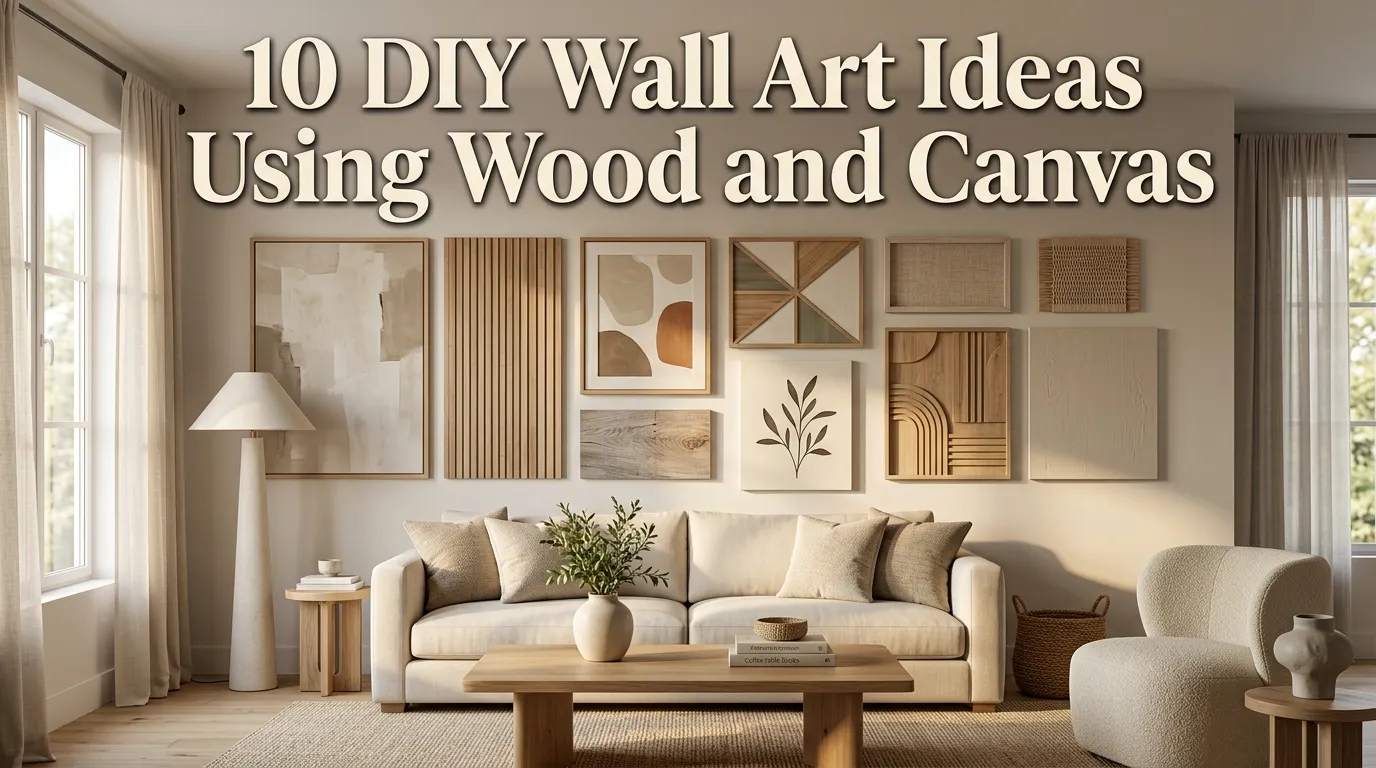
10 DIY Wall Art Ideas Using Wood and Canvas
Blank walls can make an otherwise beautiful home feel unfinished.
The good news is that you don’t need expensive artwork to create a polished focal point. Wood and canvas are two of the easiest materials to turn into custom wall decor, and they work with almost every decorating style.
From oversized abstract canvases to simple wood-panel compositions, DIY wall art can add personality while allowing you to choose colors and dimensions that actually fit your room.
In my experience, the best DIY artwork doesn’t try to look overly complicated. A simple composition with thoughtful proportions, a restrained color palette, and quality-looking materials can feel surprisingly sophisticated.
These projects are also flexible. You can create a statement piece for a living room, a calming artwork arrangement for a bedroom, or a smaller accent for an entryway.
Here are 10 wood and canvas wall art ideas that can make your home feel more personal, layered, and finished.
Table of Contents
- Abstract Canvas Art
- Wood Slat Artwork
- Framed Canvas Panels
- Painted Wood Shapes
- Textured Canvas Art
- Wood and Canvas Grid
- Oversized Neutral Canvas
- Geometric Wood Art
- Botanical Canvas Panels
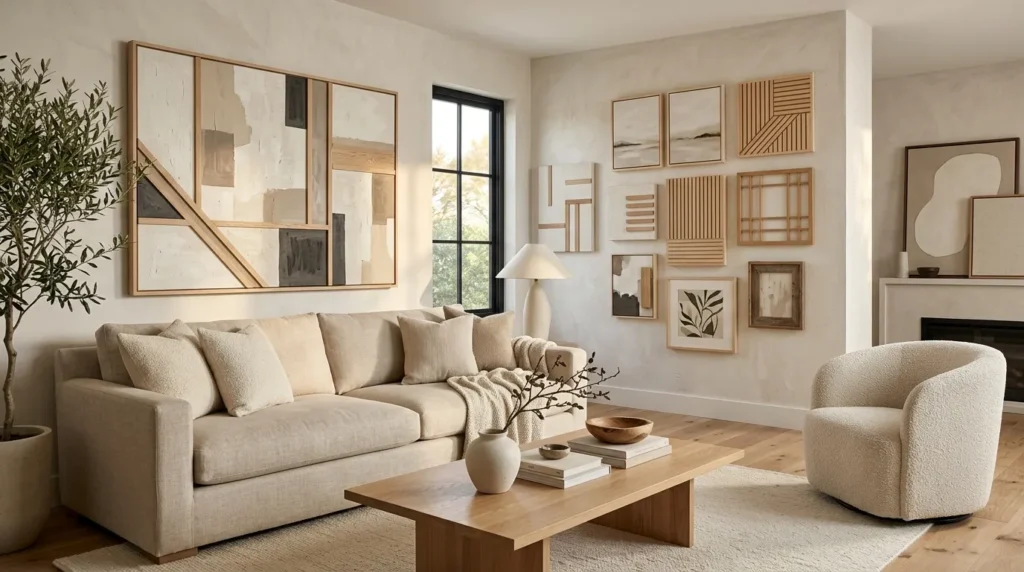
- Layered Wall Composition
1. Abstract Canvas Art
Quick Benefits
- Easy to customize
- Works with many styles
- Adds color subtly
- Creates a focal point
- Can be made oversized
Why It Works
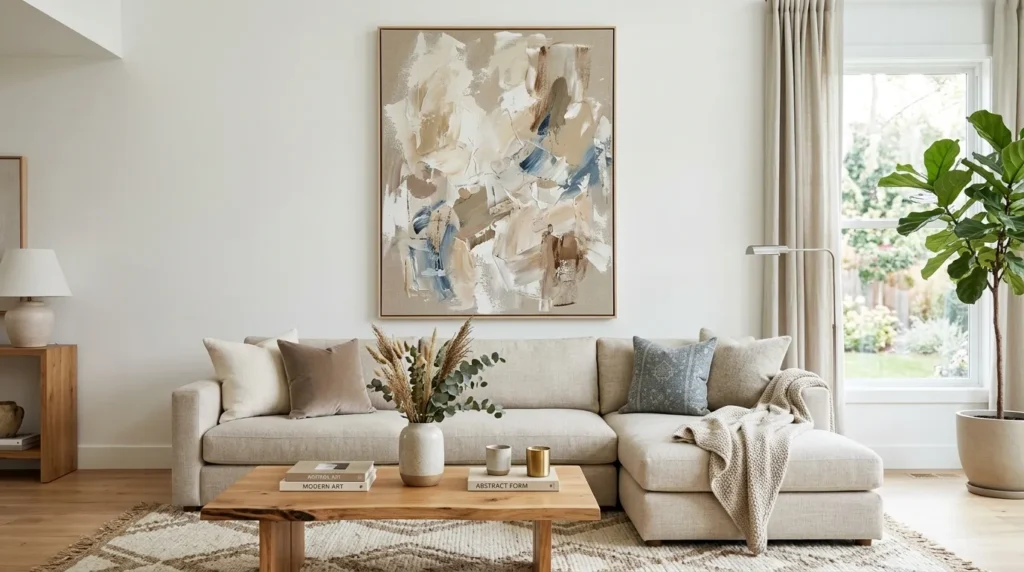
Abstract artwork doesn’t require perfect painting skills.
Simple shapes, brushstrokes, lines, and layered tones can create a sophisticated piece while allowing you to coordinate the artwork with your existing decor.
How To Style It
Start with two or three colors already present in the room.
Use a large canvas for a living room or above a bed.
Try soft beige, cream, taupe, charcoal, muted blue, or sage for a neutral composition.
Keep the surrounding wall relatively simple so the artwork has room to breathe.
2. Wood Slat Artwork
Quick Benefits
- Adds natural texture
- Creates architectural interest
- Works with modern interiors
- Brings warmth to neutral rooms
- Looks custom
Why It Works
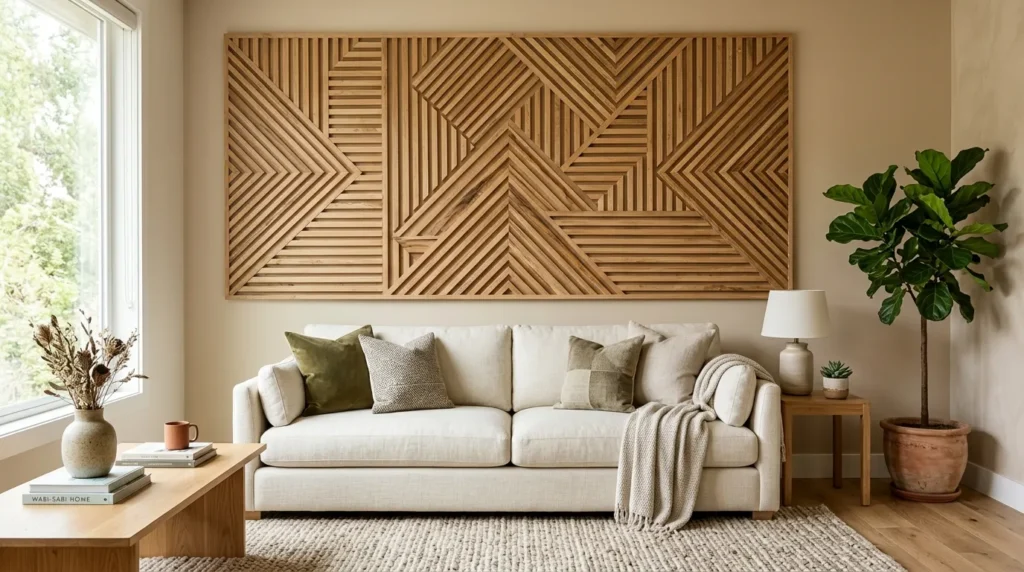
Wood naturally adds warmth and dimension.
Arranging thin wood strips into a repeated pattern creates artwork that feels architectural rather than purely decorative.
How To Style It
Cut wood strips to consistent lengths.
Arrange them vertically, horizontally, or in a simple staggered pattern.
Use a natural wood finish for a Scandinavian look or a darker stain for a more dramatic room.
Mount the finished piece securely.
3. Framed Canvas Panels
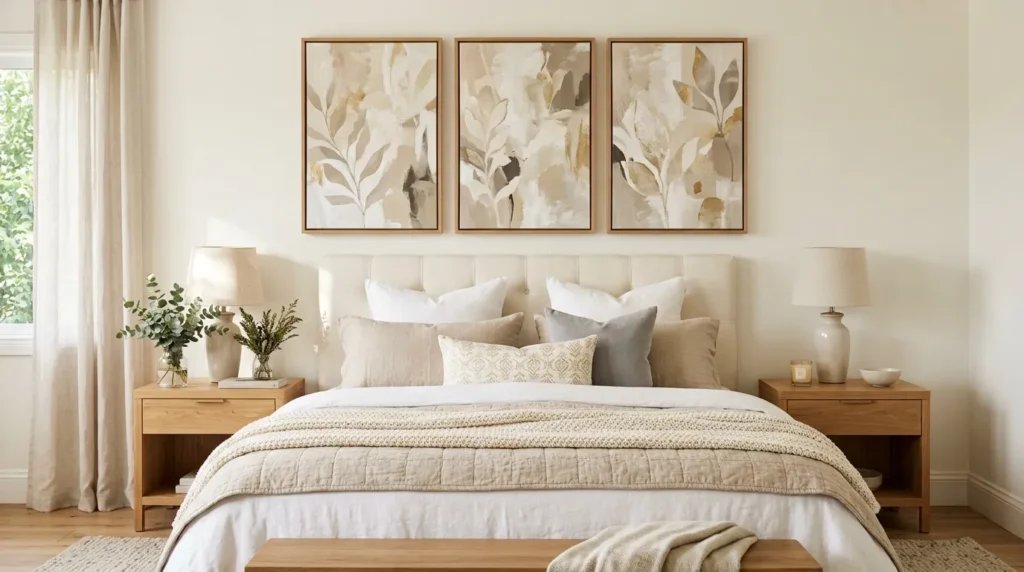
Quick Benefits
- Looks polished
- Easy to personalize
- Works with traditional rooms
- Creates a finished edge
- Great for gallery walls
Why It Works
A simple frame can make handmade canvas artwork look significantly more finished.
It also provides a visual transition between the artwork and the wall.
How To Style It
Choose a frame that relates to your furniture.
Natural oak creates warmth.
Black creates contrast.
Gold or brass can add a more traditional feeling.
Use one large framed canvas or arrange several smaller pieces together.
4. Painted Wood Shapes
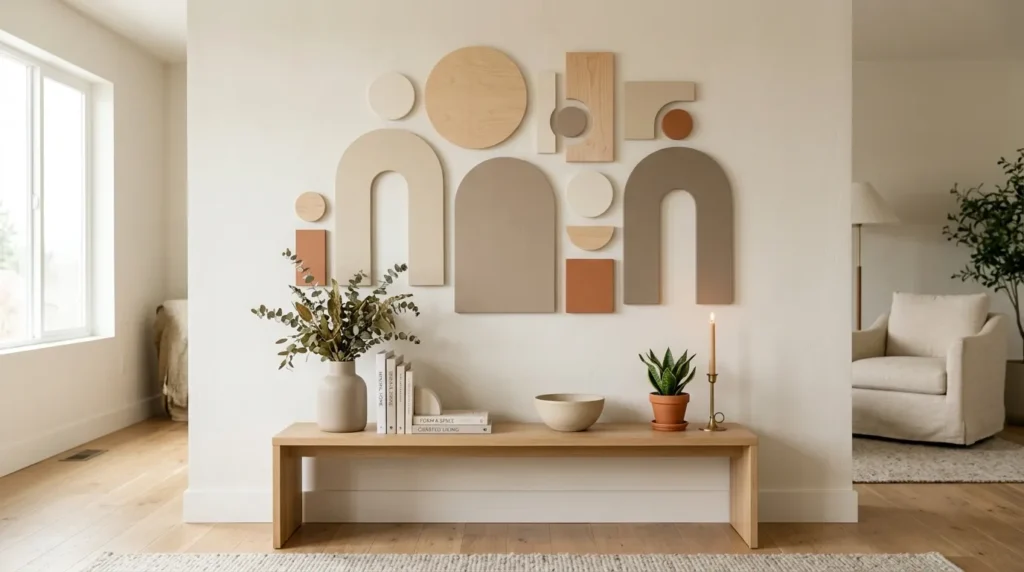
Quick Benefits
- Highly customizable
- Adds dimension
- Easy to coordinate
- Works in modern homes
- Creates sculptural interest
Why It Works
Wood shapes can turn a flat wall into a dimensional art display.
Simple circles, arches, rectangles, or organic shapes can look surprisingly sophisticated when arranged thoughtfully.
How To Style It
Choose one dominant shape and repeat it.
Paint the pieces in related neutral colors.
Alternatively, leave some of the wood natural and paint only selected sections.
Use spacing to create visual rhythm.
5. Textured Canvas Art
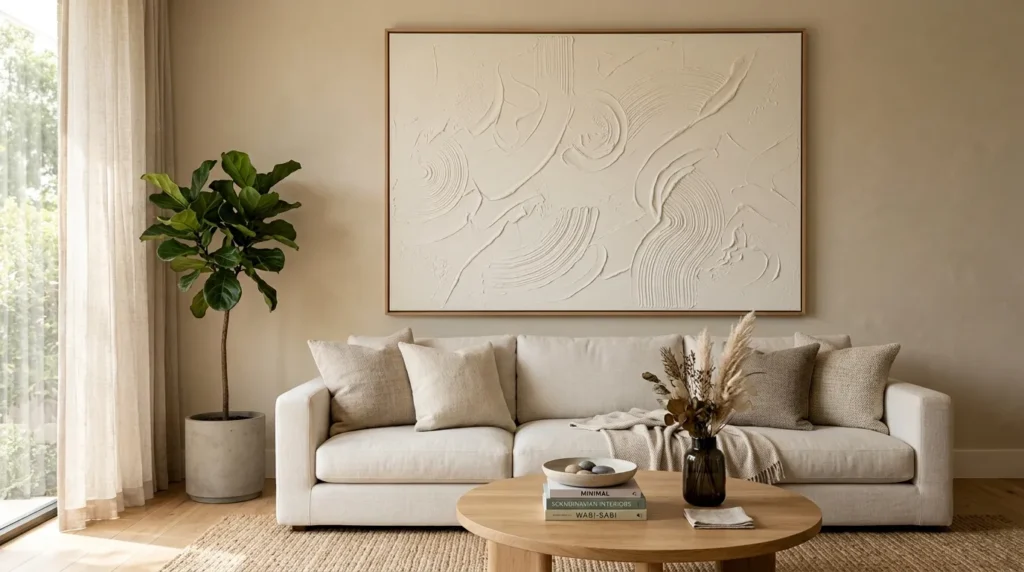
Quick Benefits
- Adds tactile interest
- Creates a luxury appearance
- Works with neutral rooms
- Adds depth
- Can be customized
Why It Works
Texture gives neutral artwork more visual interest.
A simple canvas becomes much more dimensional when raised patterns or tactile materials create shadows across the surface.
How To Style It
Create subtle raised patterns using suitable art materials.
Keep the color monochromatic for a sophisticated appearance.
Cream-on-cream, beige-on-beige, and white-on-white compositions work particularly well with minimalist interiors.
6. Wood and Canvas Grid
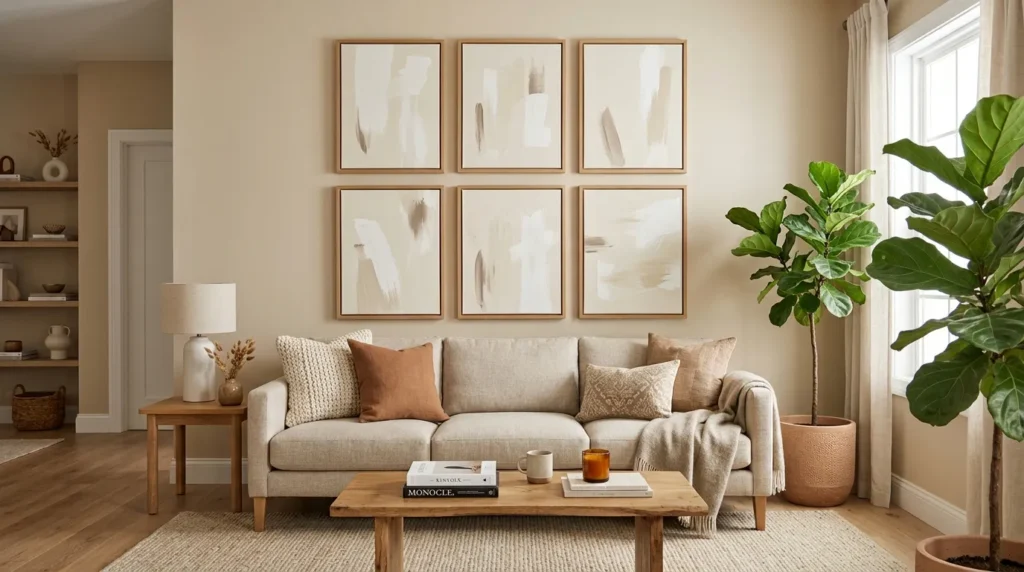
Quick Benefits
- Creates symmetry
- Works above furniture
- Adds texture
- Feels organized
- Great for large walls
Why It Works
A grid arrangement creates instant structure.
Combining wood frames or strips with canvas panels makes the composition feel layered without requiring complicated artwork.
How To Style It
Use three, four, six, or another balanced number of panels depending on the wall size.
Keep the spacing consistent.
Repeat one or two colors across the composition.
Center the entire arrangement over the furniture beneath it.
7. Oversized Neutral Canvas
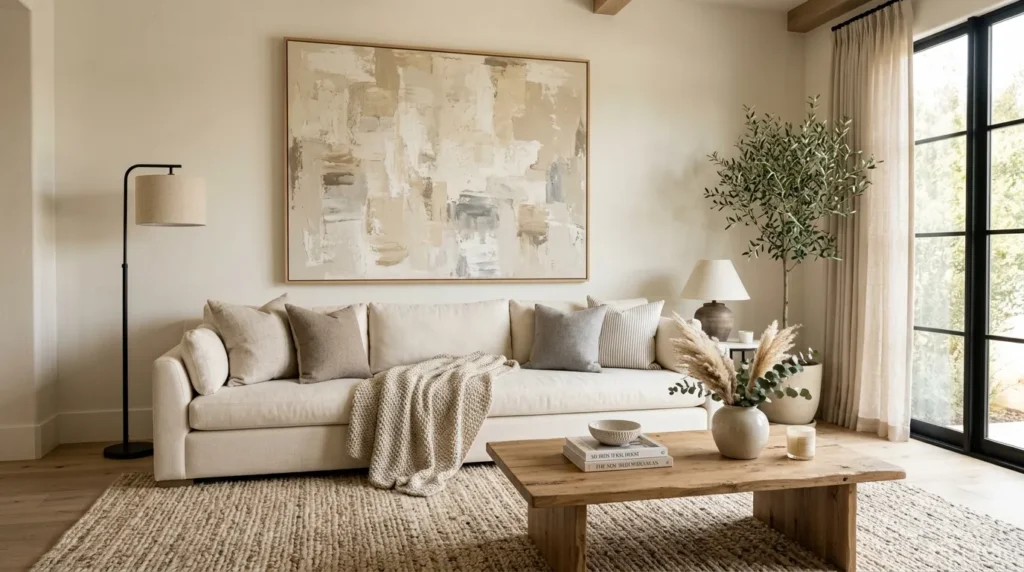
Quick Benefits
- Makes a statement
- Works with minimalist decor
- Creates visual calm
- Helps fill large walls
- Looks sophisticated
Why It Works
Large artwork can make a room feel more finished without requiring multiple decorations.
Neutral abstract art is especially versatile because it can complement changing furniture and accessories.
How To Style It
Choose a canvas large enough to relate to the furniture beneath it.
Use cream, taupe, beige, gray, or muted earthy tones.
Hang it over a sofa, console, bed, or dining table.
Avoid adding too many small objects around it.
8. Geometric Wood Art
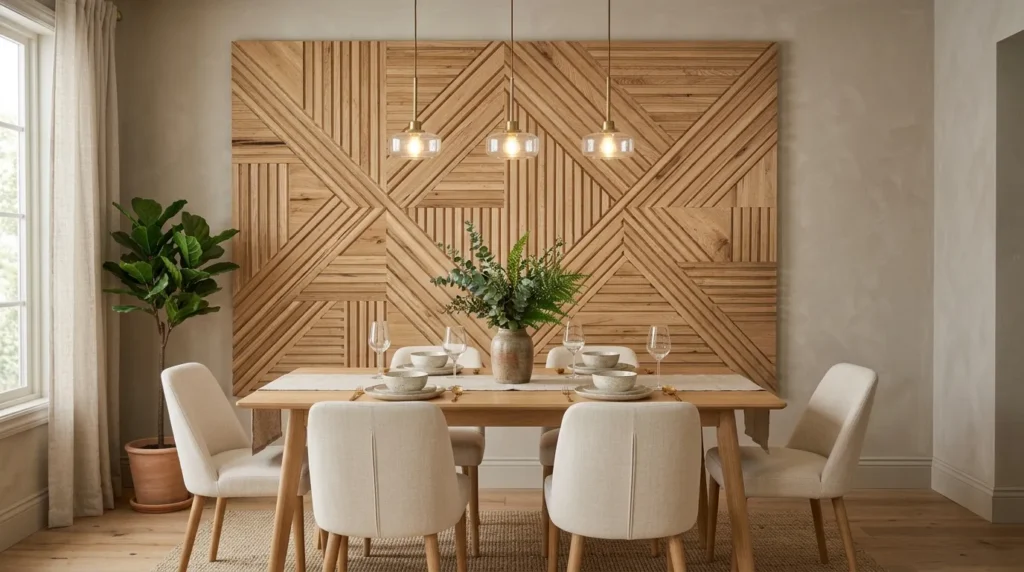
Quick Benefits
- Adds modern style
- Creates dimension
- Uses simple materials
- Works with neutral palettes
- Looks architectural
Why It Works
Geometric patterns create visual rhythm.
Wood adds natural texture, preventing the design from feeling too cold.
How To Style It
Create triangles, rectangles, arches, or linear patterns.
Keep the composition symmetrical for a structured look or introduce slight variation for a more artistic appearance.
Natural wood against a warm neutral wall is especially effective.
9. Botanical Canvas Panels
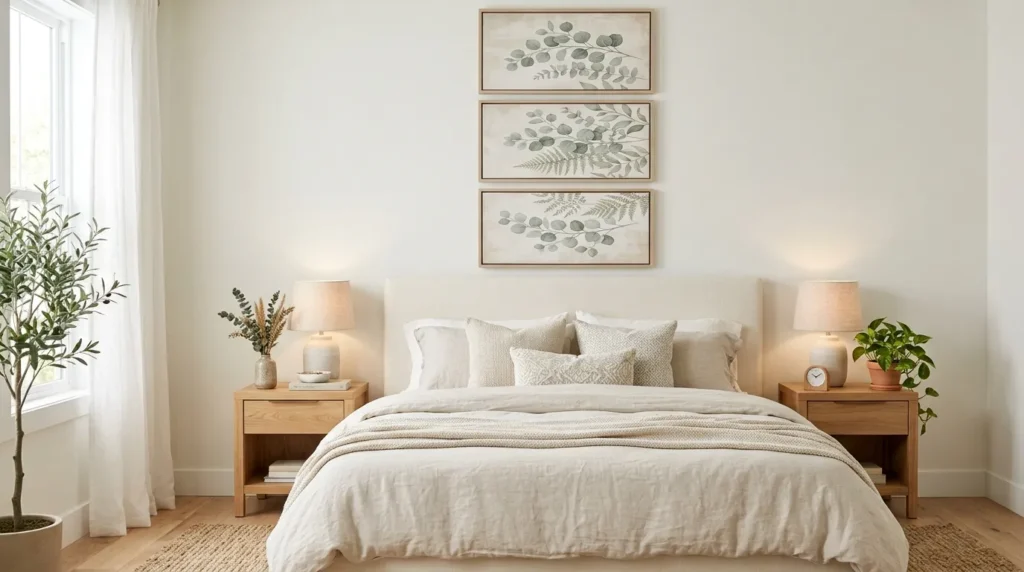
Quick Benefits
- Adds nature-inspired style
- Works with bedrooms
- Creates a calm feeling
- Easy to coordinate
- Fits many decor styles
Why It Works
Botanical imagery introduces organic shapes and color.
It works particularly well in rooms that already contain natural materials and greenery.
How To Style It
Create a set of two or three canvas panels.
Use botanical prints, painted leaves, pressed botanical-inspired compositions, or simple hand-painted foliage.
Choose muted greens, warm beige, cream, and earthy tones for a relaxed palette.
10. Layered Wall Composition
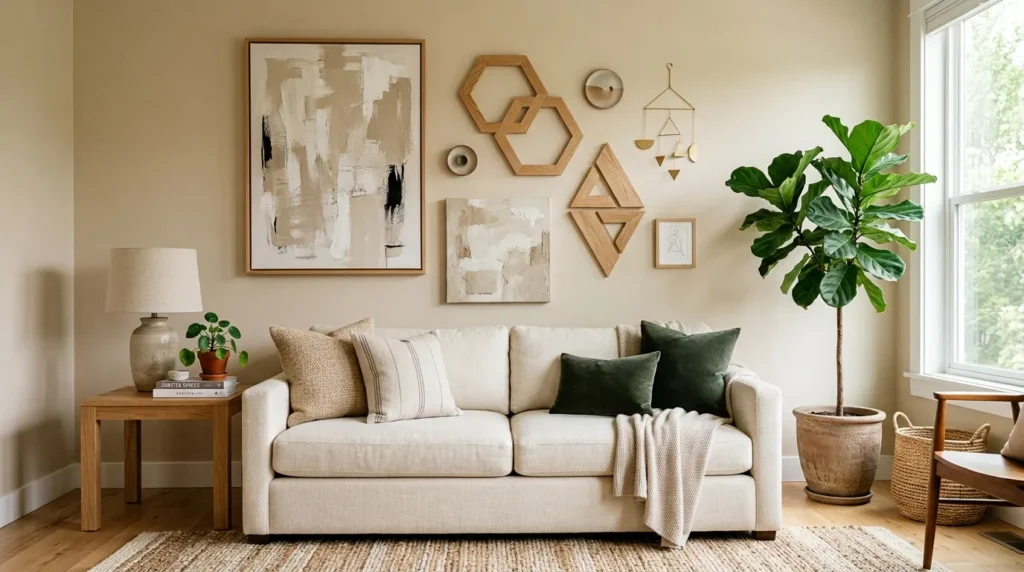
Quick Benefits
- Creates depth
- Feels collected
- Combines materials
- Adds personality
- Works with large walls
Why It Works
Instead of relying on one artwork style, combine wood and canvas to create a layered installation.
Different textures make the wall feel more dynamic.
How To Style It
Combine a framed canvas with smaller wood pieces.
Add one sculptural shape or natural element.
Keep the colors related.
Create a clear visual hierarchy so one piece remains the primary focal point.
How To Choose DIY Wall Art Colors
Start with your existing room.
Look at:
- Sofa color
- Rug
- Curtains
- Bedding
- Wood tones
- Accent colors
- Wall paint
Then choose artwork that repeats some of those colors.
For a calm neutral room, try:
Cream + Beige + Taupe + Natural Wood
For a slightly more colorful room:
Muted Blue + Cream + Warm Wood
For a natural palette:
Sage + Beige + Terracotta + Oak
Best Wood Types for DIY Wall Art
Pine
Affordable and easy to work with.
Oak
Durable with a beautiful natural grain.
Plywood
Useful for larger projects and geometric designs.
Cedar
Adds distinctive natural texture.
MDF
Useful for painted decorative shapes when appropriate for the project.
Choose materials based on the project, desired finish, and installation location.
How To Make DIY Art Look Expensive
The secret isn’t complicated craftsmanship.
It’s proportion and restraint.
Use consistent spacing.
Choose a limited color palette.
Make sure the artwork is appropriately sized for the wall.
Use quality-looking frames.
Avoid overcrowding.
And spend time on the finishing details.
Clean edges and secure mounting can make a simple project feel much more professional.
Common Mistakes
Artwork Too Small
Large walls often need larger-scale artwork.
Too Many Colors
Keep your palette coordinated.
Uneven Spacing
Measure before mounting multiple pieces.
Ignoring Furniture Scale
Artwork should relate visually to the sofa, bed, console, or table underneath.
Hanging Everything Too High
Keep artwork at a comfortable viewing height while considering the furniture below it.
FAQ
Is DIY wall art worth making?
Yes. DIY artwork allows you to customize size, colors, materials, and style while potentially spending less than buying large finished pieces.
What wood is best for DIY wall art?
Pine, oak, plywood, cedar, and MDF can all be useful depending on the project and desired finish.
How can I make cheap DIY wall art look expensive?
Focus on scale, consistent spacing, restrained colors, clean edges, attractive frames, and secure installation.
What colors work best for neutral wall art?
Cream, beige, taupe, soft gray, muted sage, natural wood, and subtle earthy shades are versatile options.
Can DIY canvas art look professional?
Absolutely. Careful composition, quality materials, clean edges, and a suitable frame can make handmade canvas artwork look polished.
How large should wall art be above a sofa?
As a general design guideline, artwork is often most balanced when its overall width relates substantially to the furniture beneath it. The exact size depends on the sofa, wall, and composition.
Can I combine wood and canvas artwork?
Yes. Combining the two materials is an excellent way to introduce contrast between soft canvas and natural wood texture.
Conclusion
DIY wall art doesn’t have to look homemade in the traditional sense.
With the right scale, materials, colors, and composition, simple wood and canvas can become beautiful focal points that feel personal and sophisticated.
Try an oversized abstract canvas for a dramatic statement.
Use wood slats for architectural texture.
Combine multiple panels for a structured gallery effect.
Or layer wood and canvas pieces to create something completely unique.
The most important rule is simple: design the artwork for your room rather than choosing the room around the artwork.
When the colors, proportions, and textures work together, even an inexpensive DIY project can become one of the most memorable details in your home.