

Sliding Pocket Door vs Swing Door for Enclosed Butler’s Pantries
Deciding between a sliding pocket door vs swing door for enclosed butler’s pantries depends entirely on your kitchen‘s spatial flow and your aesthetic goals. While swing doors offer a traditional look and simple installation, pocket doors provide a hidden, space-saving solution that keeps your butler’s pantry tucked away without obstructing high-traffic zones. Choosing the right mechanism requires weighing hardware maintenance against the convenience of a clutter-free walkway.
This article breaks down the functional differences and design trade-offs so you can make an informed decision for your home. By evaluating how these doors interact with your cabinetry and floor space, you will identify the ideal configuration for your specific culinary workspace.
The Verdict on Space Efficiency

The primary argument for choosing a pocket door involves the conservation of square footage. In a butler’s pantry, which is often a tight corridor between the kitchen and dining room, every inch of floor space is valuable. A swing door requires a radius of clearance, which means you cannot place cabinets, shelving, or even a small coffee station within the door’s arc.
If your pantry is narrow, a swing door might feel like a major obstacle. Every time you enter to grab a serving platter, the door swings out into the main kitchen area, potentially clipping a guest or blocking the path. A pocket door eliminates this issue entirely by disappearing into the wall cavity.
This transition creates a cleaner, more fluid layout in busy kitchens. You gain the ability to place floor-to-ceiling cabinetry closer to the doorway without worrying about the door hitting furniture. If your kitchen layout is already congested, the pocket door acts as a structural asset that maximizes your usable floor area.
Installation Complexity and Structural Requirements

Installing a pocket door is significantly more involved than hanging a standard swinging door. You need a wall cavity wide enough to house the sliding mechanism and the door leaf itself. This often requires shifting electrical outlets or studs during a renovation, which increases the initial labor cost.
A swing door, by contrast, uses standard hinges that attach to a door jamb. Most existing wall frames can accommodate a swing door without major structural modifications. If you are retrofitting a pantry in an older home, the swing door is almost always the more cost-effective and faster path to completion.
However, if you are building or renovating from the studs up, the pocket door becomes much more feasible. You can frame the wall to accommodate the hardware before the drywall goes up. While the upfront investment is higher, the long-term utility of the hidden door often justifies the extra effort for high-end custom kitchens.
Hardware Reliability and Long-Term Maintenance
Swing door hardware is notoriously durable and simple to repair. If a hinge starts to squeak or sag over time, a screwdriver is usually all you need to adjust the tension or replace the pin. This low-maintenance profile is a major reason why many builders prefer traditional swinging options for pantry areas.
Pocket doors rely on a track and roller system hidden inside the wall. If a roller breaks or the door jumps off the track, you may have to remove trim or even sections of drywall to perform a proper repair. This makes the pocket door a higher-risk choice if you opt for low-quality hardware kits.
When choosing a pocket door, look for high-grade commercial-rated tracks that feature soft-close mechanisms. These premium systems reduce the impact on the hardware and prevent the door from slamming against the internal stop. High-quality rollers ensure the door glides effortlessly for years, mitigating the risk of future maintenance headaches.
Aesthetics and Design Integration

The visual impact of your pantry door changes the entire look of your kitchen. A swing door can serve as a design statement, especially if you choose a custom wood finish that matches your cabinets or a classic shaker-style panel. It grounds the space and provides a clear boundary between the kitchen and the service area.
Pocket doors offer a more minimalist, modern aesthetic. When they are open, the door is completely hidden, making the pantry feel like an extension of the kitchen. This is perfect for those who want to hide storage during parties but keep the space feeling airy and connected during daily use.
You can also use the door itself as a design element by incorporating glass. Frosted glass or reeded glass panels in a door can add texture to the room while still obscuring the contents of the pantry. A sliding glass pocket door creates a sophisticated look that feels custom and intentional.
Comparing Costs and Value
When analyzing the sliding pocket door vs swing door for enclosed butler’s pantries, price is a major factor. Standard swing doors are widely available at big-box retailers, keeping material costs low. Even with professional installation, they remain the budget-friendly choice.
Pocket doors require a specialized frame kit and higher-quality hardware to function correctly. You are paying for the track, the rollers, and the labor to build the wall cavity. This often pushes the total cost of a pocket door project 50% to 100% higher than a comparable swing door installation.
| Feature | Swing Door | Pocket Door |
|---|---|---|
| Installation Difficulty | Low | High |
| Floor Space Required | High (Arc of swing) | Minimal |
| Maintenance Needs | Low | Moderate (Track care) |
| Cost Estimate | Budget-Friendly | Premium Investment |
The added cost of the pocket door should be viewed as an investment in functionality. If the pantry is a high-traffic area, the convenience of a door that stays out of the way can increase your daily satisfaction with the kitchen layout. For a guest-facing butler’s pantry, the clean look of a hidden door adds significant resale value.
Traffic Flow and Ergonomics
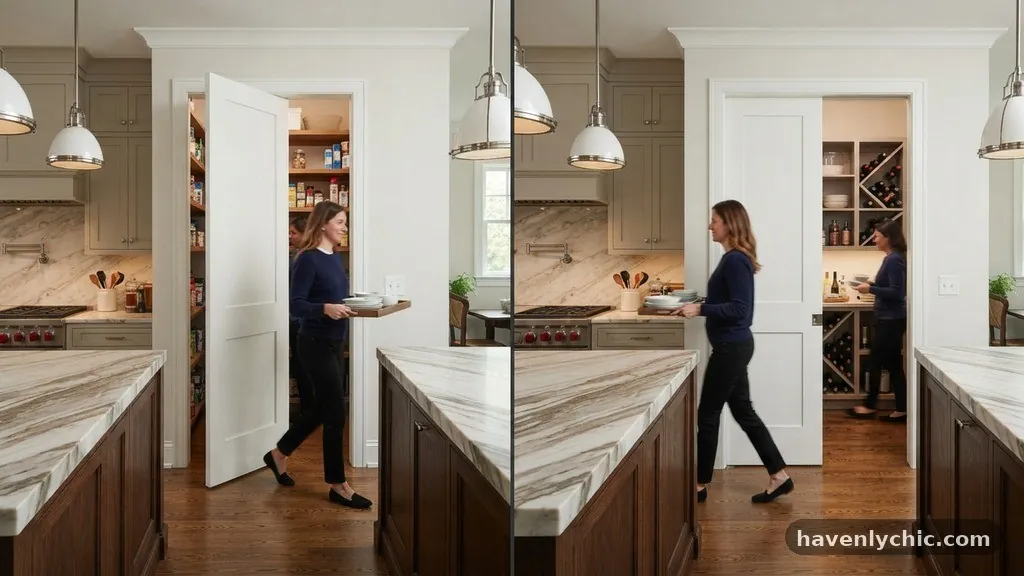
Think about how often you enter and exit your butler’s pantry. If you are constantly moving back and forth while cooking, a swing door can become a nuisance. You have to open it, step through, and close it, all while potentially carrying heavy trays or ingredients.
A pocket door can be left in the open position during heavy cooking sessions. This creates a seamless, open-concept feel that is much more ergonomic for a busy cook. It eliminates the physical act of “clearing the swing path” every time you need to grab a spice jar.
Conversely, if you prefer to keep the pantry closed to hide clutter, a swing door is often faster to operate. You can push it open with a hip or a hand and walk through quickly. It is a matter of personal preference regarding whether you prefer a door that stays open or one that is easy to swing shut.
Sound Dampening and Privacy

If your butler’s pantry contains a loud appliance like a secondary dishwasher or a noisy ice maker, noise control matters. A traditional swing door with a solid core and a tight seal around the jamb provides better sound insulation. The physical contact between the door and the frame creates a natural acoustic barrier.
Pocket doors are notoriously difficult to seal perfectly. Because the door must slide into a wall, there is usually a small gap where the door meets the frame. This allows sound to travel through the opening more easily than with a standard swinging door.
If you require the pantry to be a sound-controlled environment, you might need to look for specific “acoustic” pocket door seals. These are rare and can add to the cost of the project. For most residential pantries, the sound difference is negligible, but it is worth noting if you are sensitive to kitchen noise.
Addressing Obstructions and Wall Space
Before committing to a pocket door, you must ensure there is no electrical wiring, plumbing, or HVAC ductwork in the wall where the door will slide. This is the most common reason homeowners are forced to abandon the pocket door idea. If you discover a critical pipe inside that wall, moving it is an expensive plumbing project.
Swing doors do not have this limitation. You can install them almost anywhere as long as you have the wall space for the hinge side. If you are working with an existing kitchen layout, a swing door is the path of least resistance for almost every remodeling project.
Consider the “swing clearance” carefully before deciding. If the door swings into a hallway that is also used for a laundry room or a mudroom, it will create a bottleneck. In these instances, the extra cost of a pocket door is often worth the headache it saves you in long-term traffic flow issues.
Customization and Style Options

Both door types offer a wide range of styles to match your home’s architecture. You can find solid wood doors, shaker-style panels, or even mirrored doors for both swing and sliding configurations. The choice of hardware—knobs, pulls, or recessed handles—can further influence the final look.
For a butler’s pantry, many people choose to match the door style to their kitchen cabinets. This creates a hidden, “secret” pantry look that is very popular in modern design. A recessed finger pull on a pocket door maintains this sleek, custom appearance.
* Wood: Classic, durable, and easily painted or stained.
* Glass: Adds light and visual interest; great for small, dark pantries.
* Mirrored: Makes a narrow pantry feel twice as large.
* Chalkboard/Magnet: Functional additions for writing grocery lists.
Whatever style you choose, ensure the weight of the door is compatible with the mechanism. Heavy solid wood doors require high-duty roller kits for pocket installations to prevent sagging. Consult with a National Kitchen & Bath Association professional to ensure your chosen materials are suited for your specific door hardware.
Common Mistakes to Avoid
One of the biggest mistakes is installing a pocket door in a wall that is too thin. A standard 2×4 wall is often insufficient for a heavy-duty pocket door frame, which can lead to the door feeling flimsy or “wobbly” when opened. Use 2×6 framing if possible to ensure the wall is rigid and the door operates smoothly.
Another error is failing to account for the door handle. A standard knob will prevent a pocket door from sliding fully into the wall. You must use a flush-mount pull or a specialized pocket door lock that sits inside the door face.
Finally, do not underestimate the importance of the door stop. If you don’t have a properly adjusted stop, the door can crash into the frame, damaging the finish or the hardware. Ensure your installer sets the stops correctly so the door comes to a gentle, quiet rest every time it is used.
Frequently Asked Questions
Is a pocket door more expensive to install than a swing door?
Yes, a pocket door is generally more expensive. You have to account for the specialized frame kit, potential wall modifications, and more complex labor compared to a standard door hung on hinges.
Can I install a pocket door in an existing wall?
It is possible, but it is a major renovation. You will need to open the wall, remove studs, move electrical or plumbing lines, and re-drywall, which is significantly more work than replacing a swing door.
Do pocket doors eventually fall off the track?
While possible, it is rare with modern, high-quality hardware. If you choose a reputable track system and ensure it is installed level, the door should slide smoothly for many years without jumping the track.
What is the biggest advantage of a swing door for a pantry?
The biggest advantage is simplicity and reliability. Swing doors are easier to install, maintain, and seal, making them a very practical choice for high-traffic or busy family kitchens.
Are butler’s pantries considered outdated?
Quite the opposite. They are currently trending as a way to keep kitchen clutter hidden while providing extra prep space. A well-designed pantry is a high-value feature in modern home design.
Conclusion
Choosing between a sliding pocket door vs swing door for enclosed butler’s pantries comes down to balancing your spatial limitations with your budget and aesthetic preferences. If you have the room for a swing door and want a low-maintenance, cost-effective solution, it is hard to beat the traditional approach. However, if your kitchen layout demands every square inch of space or if you desire a sleek, modern, and hidden look, a high-quality pocket door is a superior choice.
Carefully evaluate your wall structure and traffic patterns before making your final selection. Taking the time to plan your door configuration now will ensure your butler’s pantry remains a functional and stylish asset for years to come.