How to Decorate a Bedroom Like a Professional Home Stylist
A beautifully decorated bedroom doesn’t necessarily require expensive furniture or a professional interior designer.
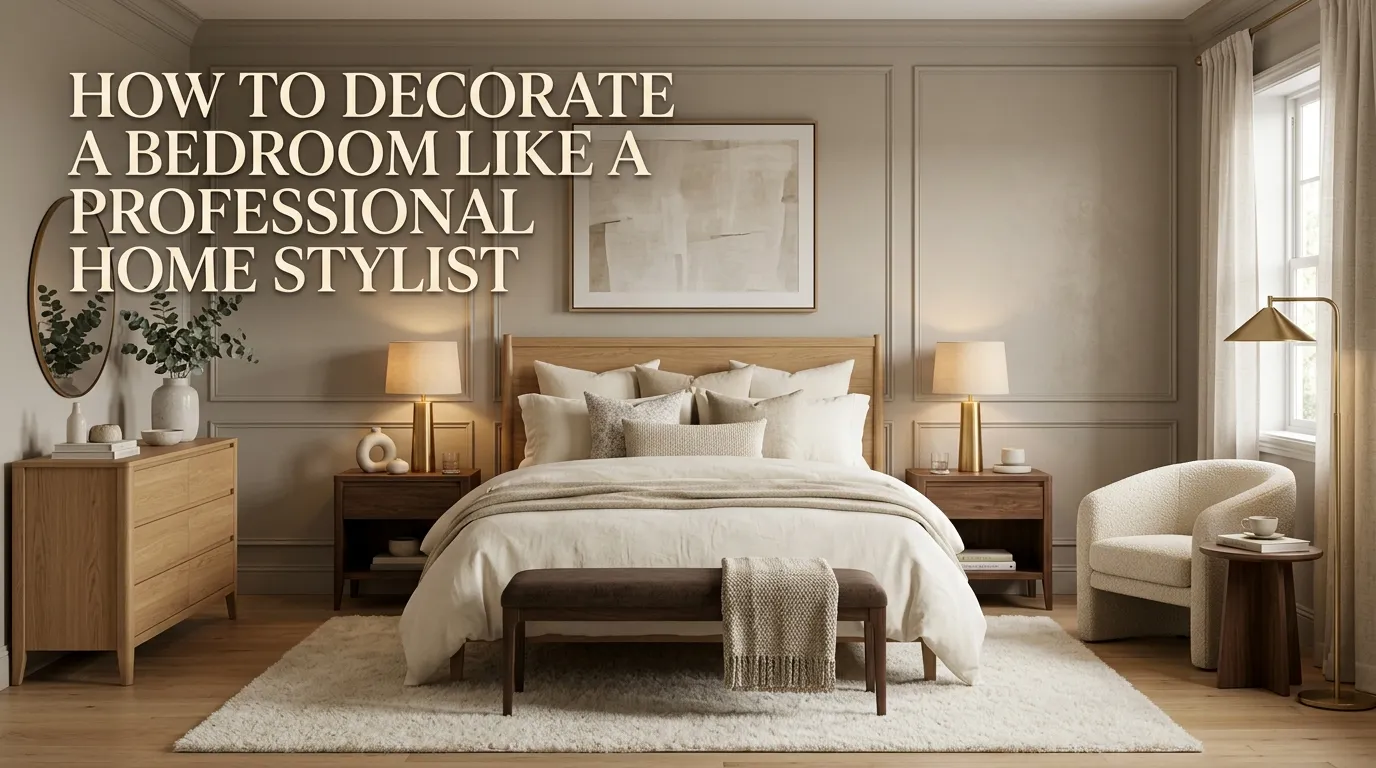
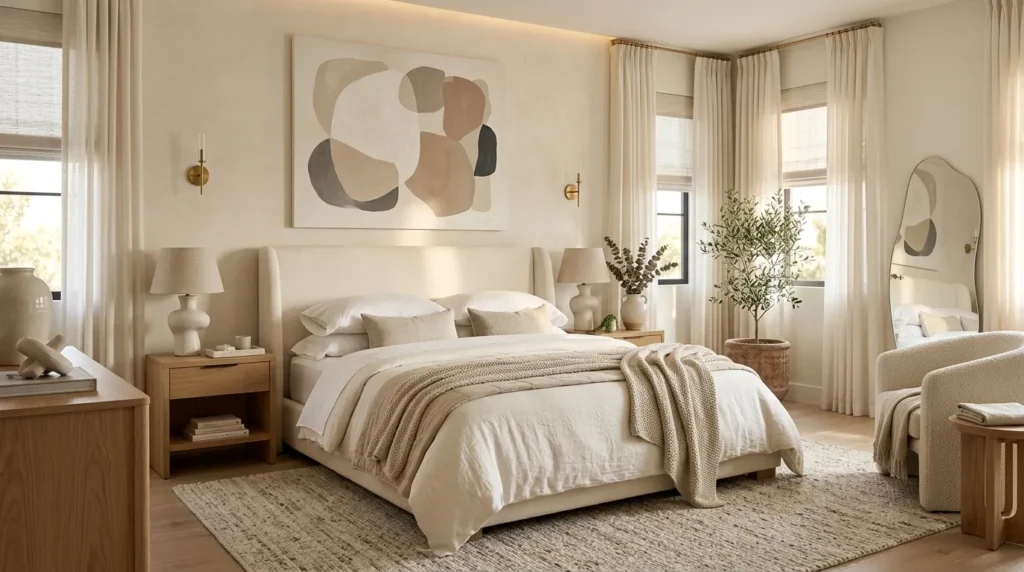
What makes a bedroom look professionally styled is often the way everything works together: proportion, color, texture, lighting, symmetry, and thoughtful editing.
Professional home stylists know that a room can have beautiful individual pieces and still feel unfinished if they aren’t arranged with intention. The bed might be lovely, but the wrong-sized rug can make the entire room feel disconnected. A gorgeous nightstand can still look messy if it’s overloaded with accessories.
The good news is that many of these styling principles are easy to recreate at home.
In my experience, the biggest transformation usually comes from editing before adding. Remove unnecessary items, establish a cohesive palette, improve the bed styling, and then gradually introduce layers of texture and personality.
You don’t need to copy a showroom.
Your bedroom should still feel comfortable and personal.
These professional-inspired decorating techniques can help you create a bedroom that looks polished in photographs while remaining practical and relaxing in everyday life.
Table of Contents
- Start With a Clear Palette
- Build Around the Bed
- Choose the Right Rug
- Layer the Bedding
- Balance the Nightstands
- Add Designer-Style Lighting
- Create a Focal Wall
- Mix Complementary Textures
- Edit the Accessories
- Finish With Personal Details
1. Start With a Clear Palette
Quick Benefits
- Creates instant cohesion
- Makes shopping easier
- Prevents visual clutter
- Helps colors work together
- Gives the room a polished foundation
Why It Works
Professional stylists rarely choose every item independently.
Instead, they establish a color story first and use it to guide the rest of the room. This creates visual consistency even when furniture and accessories come from different places.
A restrained palette also makes it easier for textures and shapes to become noticeable.
How To Style It
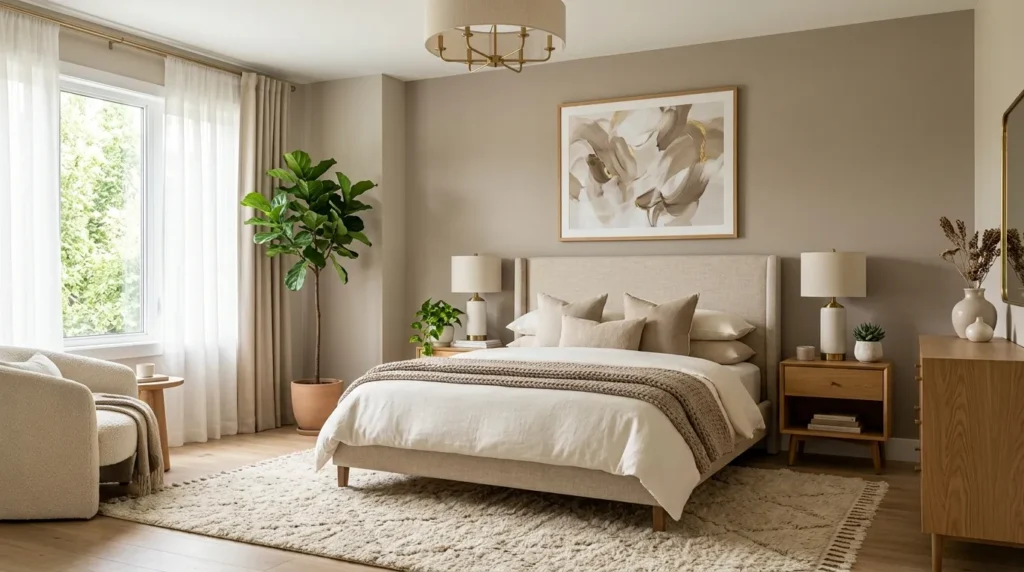
Choose one dominant color, one secondary neutral, and one or two subtle accent shades.
For example, warm white can be the foundation, beige can provide depth, and natural wood can add warmth.
Use stronger colors sparingly through artwork, pillows, or small accessories.
2. Build Around the Bed
Quick Benefits
- Establishes a focal point
- Creates visual structure
- Makes furniture placement easier
- Gives the room a finished appearance
- Helps balance the layout
Why It Works
The bed is usually the largest and most important visual element in a bedroom.
Professional styling often begins by treating it as the anchor of the room.
Once the bed is positioned correctly, nightstands, lighting, rugs, artwork, and seating can be arranged around it.
How To Style It
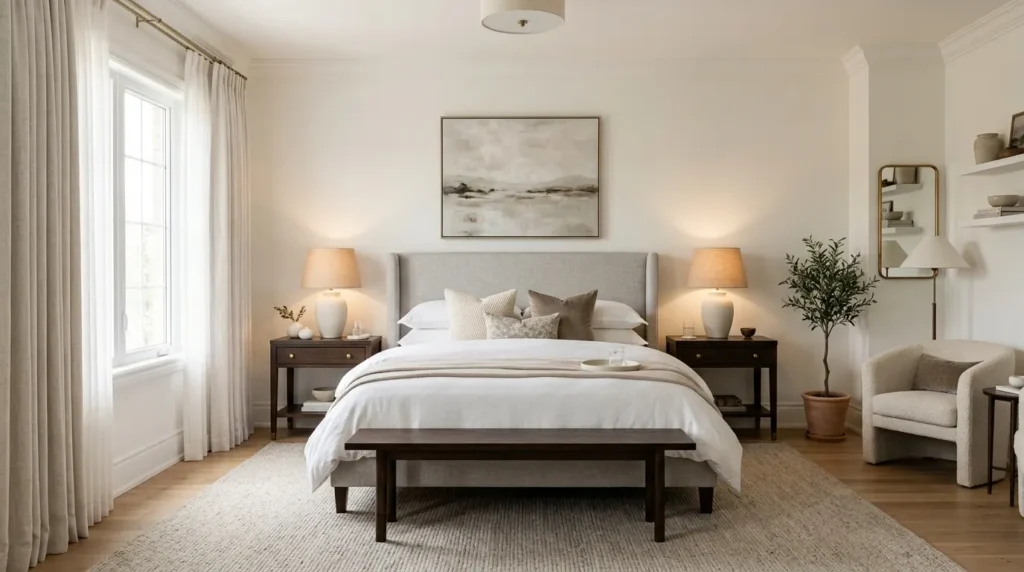
Position the bed where it has enough breathing room and works naturally with doors and windows.
Center it when the room allows.
Then build symmetry or intentional balance around it.
Avoid pushing every major piece against the walls simply to create more floor space.
3. Choose the Right Rug
Quick Benefits
- Adds softness
- Defines the sleeping area
- Makes furniture feel connected
- Adds color and texture
- Creates a finished look
Why It Works
A rug that is too small can make an otherwise beautiful bedroom feel visually disconnected.
Professional styling pays close attention to scale because rugs help connect the bed and surrounding furniture into one composition.
How To Style It
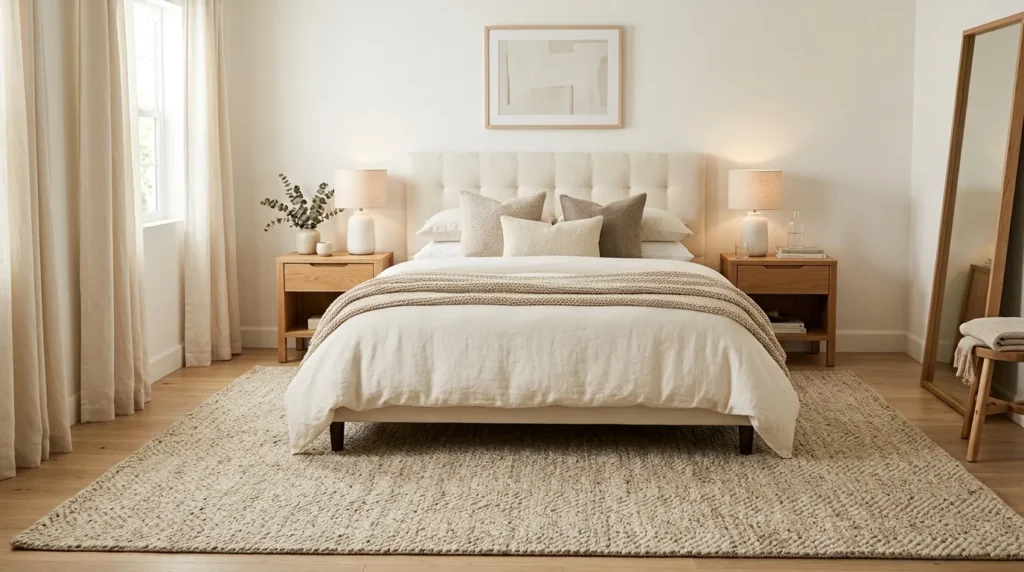
Whenever possible, choose a rug large enough to extend beyond the sides of the bed.
Allow enough visible rug around the furniture to create a comfortable visual frame.
Neutral textured rugs are especially versatile.
If the bedroom already contains patterned bedding or artwork, consider a simpler rug.
4. Layer the Bedding
Quick Benefits
- Creates depth
- Makes the bed inviting
- Adds professional polish
- Introduces texture
- Allows easy seasonal changes
Why It Works
A professionally styled bed rarely looks like a single sheet, duvet, and two pillows.
Layers create dimension.
The trick is to use different textures and proportions while keeping the colors coordinated.
How To Style It
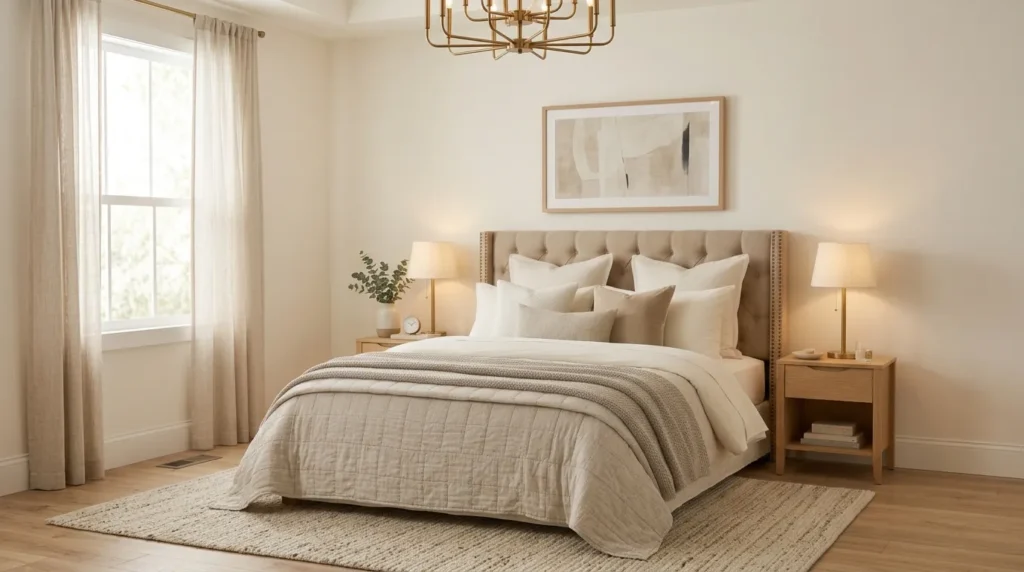
Start with sheets in a simple neutral.
Add a duvet or quilt.
Use standard sleeping pillows behind decorative pillows.
Add one lumbar cushion or smaller accent pillow.
Finish with a folded throw across the lower portion of the bed.
Avoid using so many pillows that the bed becomes difficult to use.
5. Balance the Nightstands
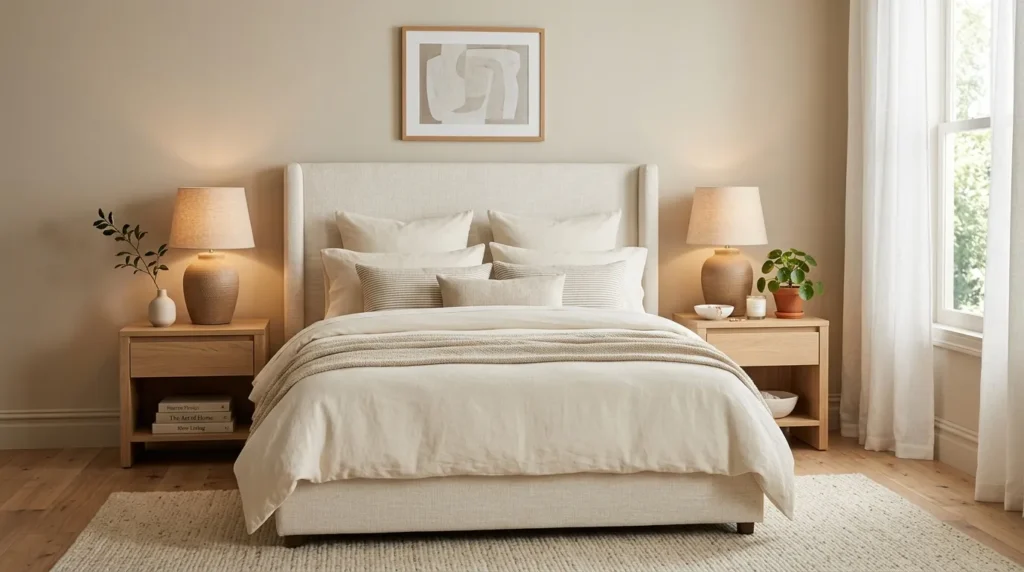
Quick Benefits
- Creates symmetry
- Improves functionality
- Frames the bed
- Reduces visual clutter
- Makes the room feel intentional
Why It Works
Nightstands occupy a prominent position beside the bed.
When both sides feel balanced, the entire bedroom tends to look more organized.
They don’t necessarily have to be identical.
How To Style It
Use lamps or wall-mounted lighting to create visual balance.
Keep accessories limited.
A small vase, book, candle where safely appropriate, or decorative object can be enough.
Leave some empty surface area.
That empty space is part of the styling.
6. Add Designer-Style Lighting
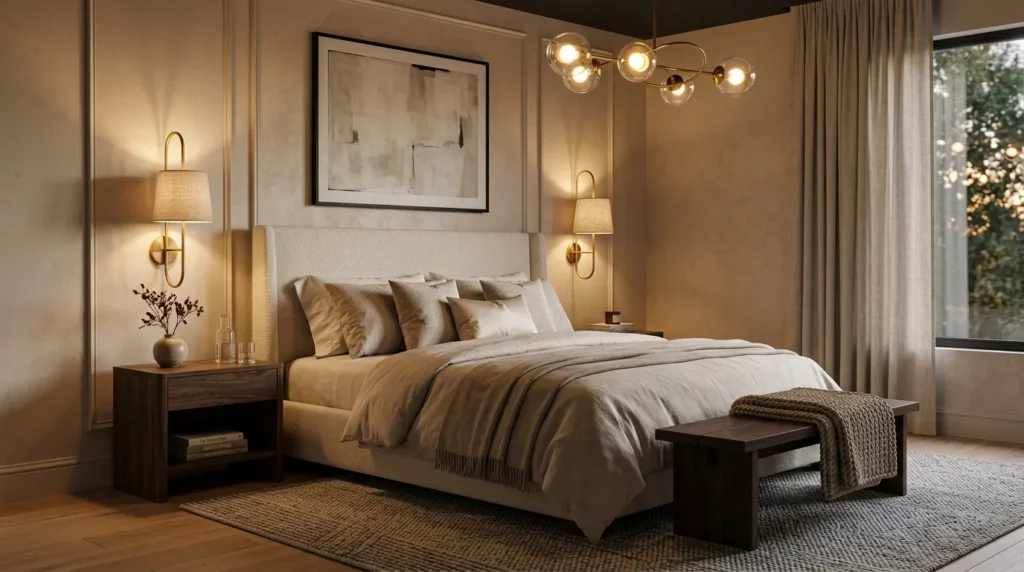
Quick Benefits
- Creates atmosphere
- Adds architectural interest
- Improves bedside functionality
- Makes the room feel sophisticated
- Highlights textures
Why It Works
Professional interiors rarely depend on a single overhead light.
Multiple sources create layers and allow the room to feel different throughout the day.
How To Style It
Combine ambient lighting with bedside lamps, sconces, or suitable accent lighting.
Choose fixtures with proportions that relate to the bed and nightstands.
Warm illumination generally creates a more relaxing bedroom atmosphere.
If changing hardwired fixtures, make sure installations are appropriate for the space and handled safely.
7. Create a Focal Wall
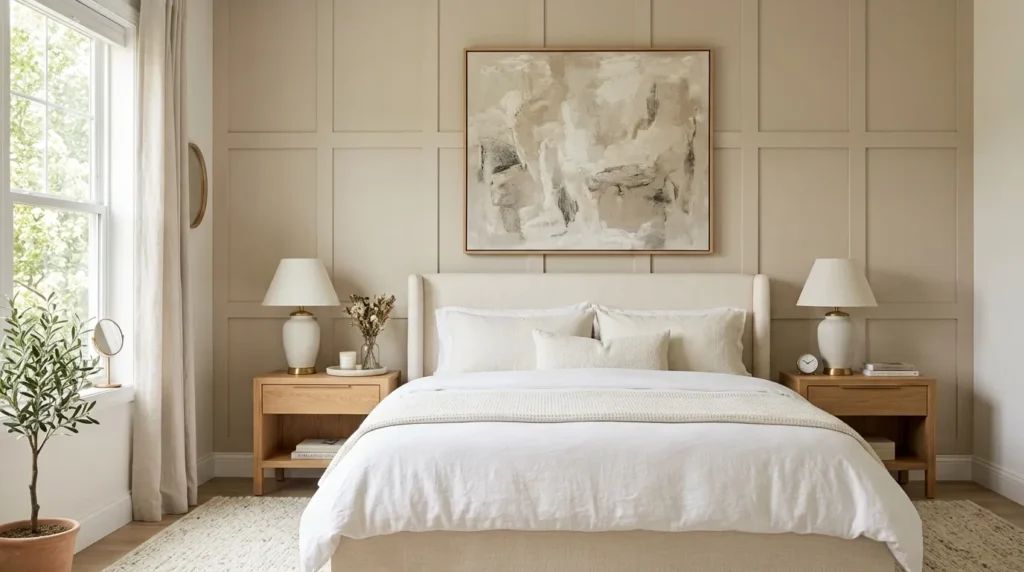
Quick Benefits
- Gives the room a visual anchor
- Adds personality
- Creates depth
- Highlights the bed
- Makes the design feel intentional
Why It Works
Professional stylists often create one dominant visual moment instead of giving every wall equal attention.
The wall behind the bed is an obvious place to create that focus.
How To Style It
Consider:
- Large artwork
- Subtle wall paneling
- Textured wallpaper
- A painted accent wall
- A large upholstered headboard
- A carefully arranged gallery
Keep the surrounding walls quieter so the focal point has room to stand out.
8. Mix Complementary Textures
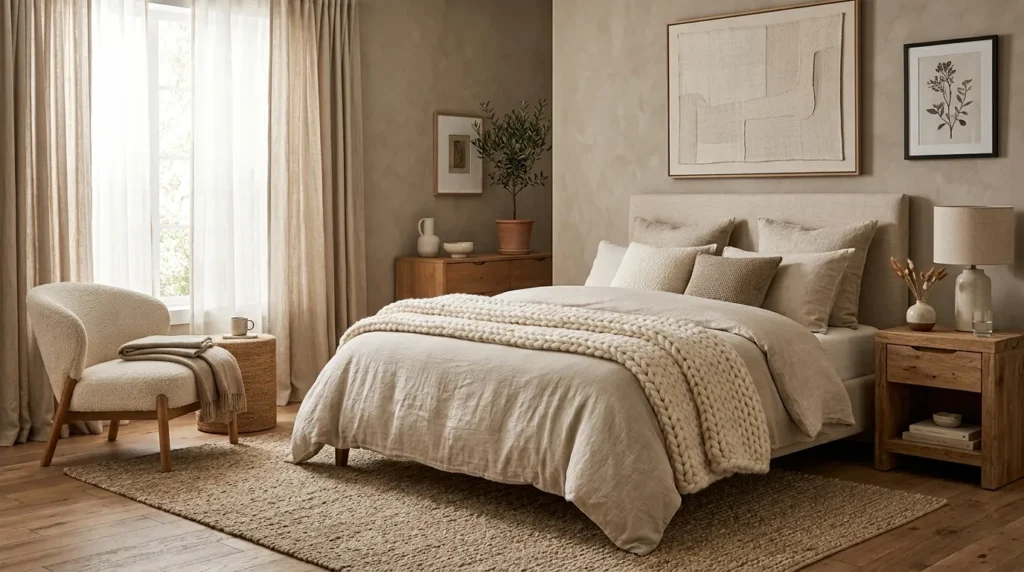
Quick Benefits
- Adds depth
- Makes neutrals more interesting
- Creates warmth
- Prevents a flat appearance
- Looks sophisticated
Why It Works
A professional-looking bedroom doesn’t need many colors when it has plenty of texture.
Smooth cotton, rumpled linen, woven fibers, wood, ceramic, boucle, and soft wool can all contribute visual interest.
How To Style It
Combine materials rather than simply adding more decorations.
Try linen bedding with a woven rug.
Pair a wooden nightstand with ceramic accessories.
Add a chunky throw to a smooth upholstered bed.
Keep the colors connected so the different textures feel cohesive.
9. Edit the Accessories
Quick Benefits
- Reduces clutter
- Makes important pieces stand out
- Creates breathing room
- Improves visual balance
- Makes cleaning easier
Why It Works
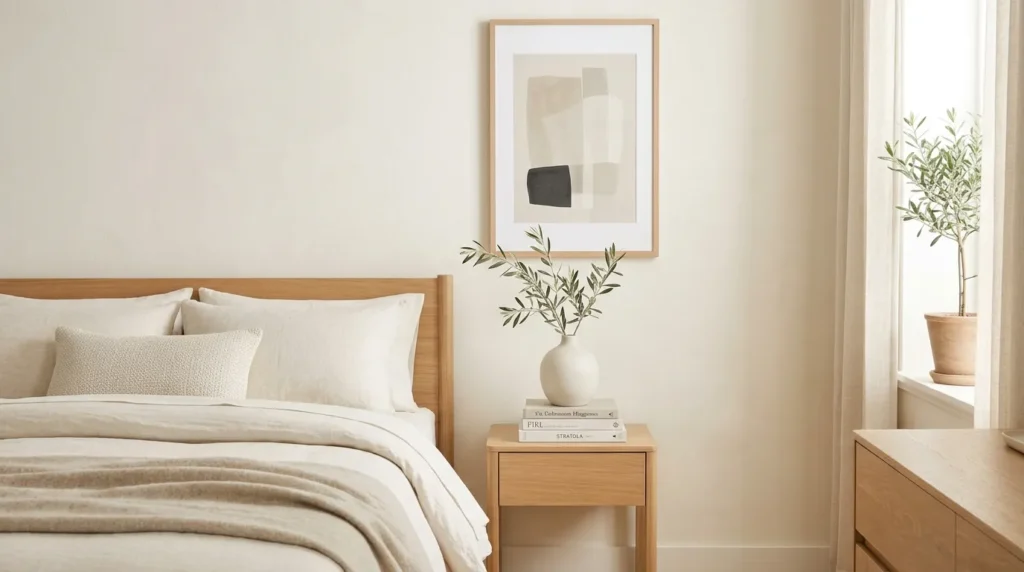
One of the biggest differences between a decorated room and a professionally styled room is often restraint.
Stylists don’t necessarily have fewer beautiful objects.
They simply choose which ones deserve attention.
How To Style It
Walk around the bedroom and remove anything that doesn’t serve a practical or decorative purpose.
Then group remaining objects thoughtfully.
Avoid placing small items randomly across every surface.
Leave some shelves, dresser areas, and nightstands partially empty.
10. Finish With Personal Details
Quick Benefits
- Makes the room feel authentic
- Adds personality
- Prevents a showroom appearance
- Creates emotional connection
- Makes the design uniquely yours
Why It Works
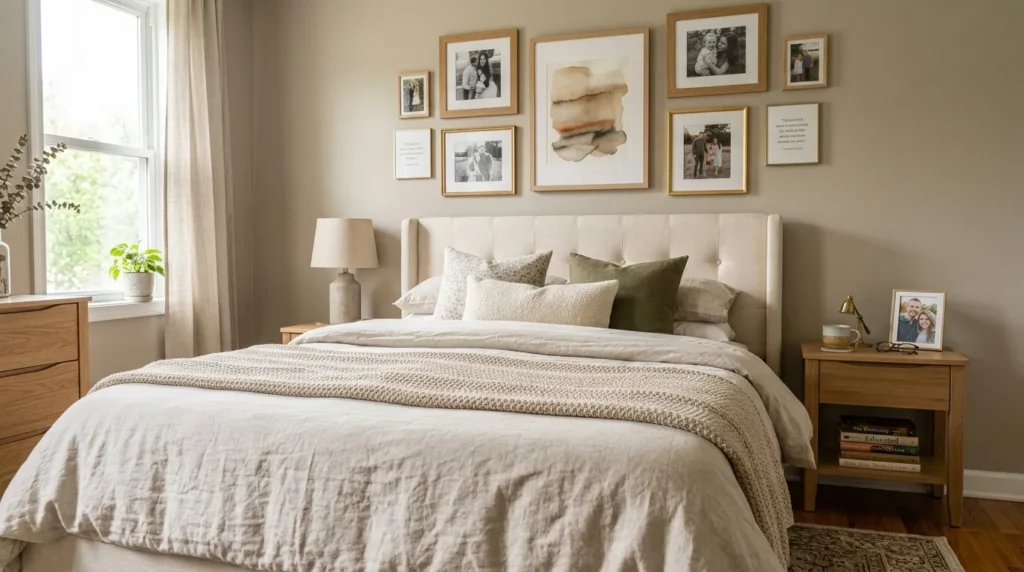
A bedroom should not look like a furniture showroom.
Professional styling still leaves room for personality.
Family photographs, favorite books, meaningful artwork, travel objects, or a cherished vintage piece can make the room feel lived-in.
How To Style It
Choose a few personal items rather than displaying everything you own.
Place meaningful artwork where you can enjoy it.
Keep sentimental pieces visible but coordinated with the overall room.
The goal is polished and personal.
How Professional Stylists Make a Bedroom Look Expensive
You don’t necessarily need a large decorating budget.
Instead, focus on the things that have the greatest visual impact.
Prioritize Scale
Choose rugs, artwork, curtains, and furniture that are appropriately sized.
Use Repetition
Repeat colors, materials, or shapes throughout the room.
Create Negative Space
Don’t fill every surface.
Layer Textures
Texture creates richness without requiring lots of color.
Improve Lighting
Beautiful lighting can dramatically change the atmosphere.
Keep the Palette Consistent
A cohesive color story makes inexpensive and expensive pieces feel more connected.
Bedroom Styling Formula
A simple formula you can use is:
Foundation + Focal Point + Texture + Lighting + Personality
Foundation
Walls, flooring, major furniture, and large textiles.
Focal Point
Bed, headboard, artwork, or feature wall.
Texture
Bedding, rugs, curtains, throws, wood, and woven materials.
Lighting
Ceiling fixture + bedside lighting + optional accent lighting.
Personality
Artwork, books, greenery, photographs, and meaningful accessories.
This formula makes decorating decisions much easier because every item has a role.
Common Bedroom Styling Mistakes
Using a Tiny Rug
The rug should relate to the scale of the bed and surrounding furniture.
Too Many Pillow Arrangements
Decorative pillows should enhance the bed rather than make it impractical.
Ignoring Curtain Height
Curtains can dramatically influence how tall the room feels.
Decorating Every Surface
Empty space creates balance.
Mixing Too Many Colors
A restrained palette is usually easier to style.
Choosing Furniture Without Measuring
Always measure the room and consider doors, windows, walkways, and furniture clearance.
FAQ
How do I make my bedroom look professionally decorated?
Start with a cohesive color palette, establish the bed as the focal point, choose appropriately scaled furniture and rugs, layer textiles, improve lighting, and carefully edit accessories.
How many colors should a bedroom have?
There isn’t a strict rule, but using a dominant neutral with one or two complementary tones can make the room feel cohesive and sophisticated.
How can I make my bed look professionally styled?
Layer quality-looking bedding, use pillows in different sizes, add a textured throw, and coordinate the colors rather than matching every piece exactly.
Should bedroom nightstands match?
Matching nightstands create classic symmetry, but complementary nightstands can also work when their proportions, colors, or materials create balance.
What makes a bedroom look expensive?
Good proportions, cohesive colors, layered textures, appropriate lighting, substantial-looking textiles, and uncluttered surfaces often create a more luxurious appearance.
How do I decorate without making my bedroom cluttered?
Edit accessories carefully and leave intentional empty space. Focus on a few meaningful or beautiful objects rather than decorating every available surface.
What should I put on my bedroom nightstand?
A lamp, a book, a small decorative object, or a simple vase can be enough. Keep the arrangement functional and leave some surface space available.
Conclusion
Decorating a bedroom like a professional home stylist is less about buying expensive things and more about understanding how the pieces work together.
Start with a clear palette.
Build around the bed.
Choose a properly scaled rug.
Layer the bedding.
Balance the nightstands.
Add warm, attractive lighting.
Create one focal wall.
Mix complementary textures.
Then edit the room until every visible piece feels intentional.
Finally, bring in a few personal details that make the bedroom feel like yours.
The most beautiful bedrooms aren’t necessarily the ones with the most furniture or accessories.
They’re the rooms where scale, color, texture, lighting, and personality work together naturally.