
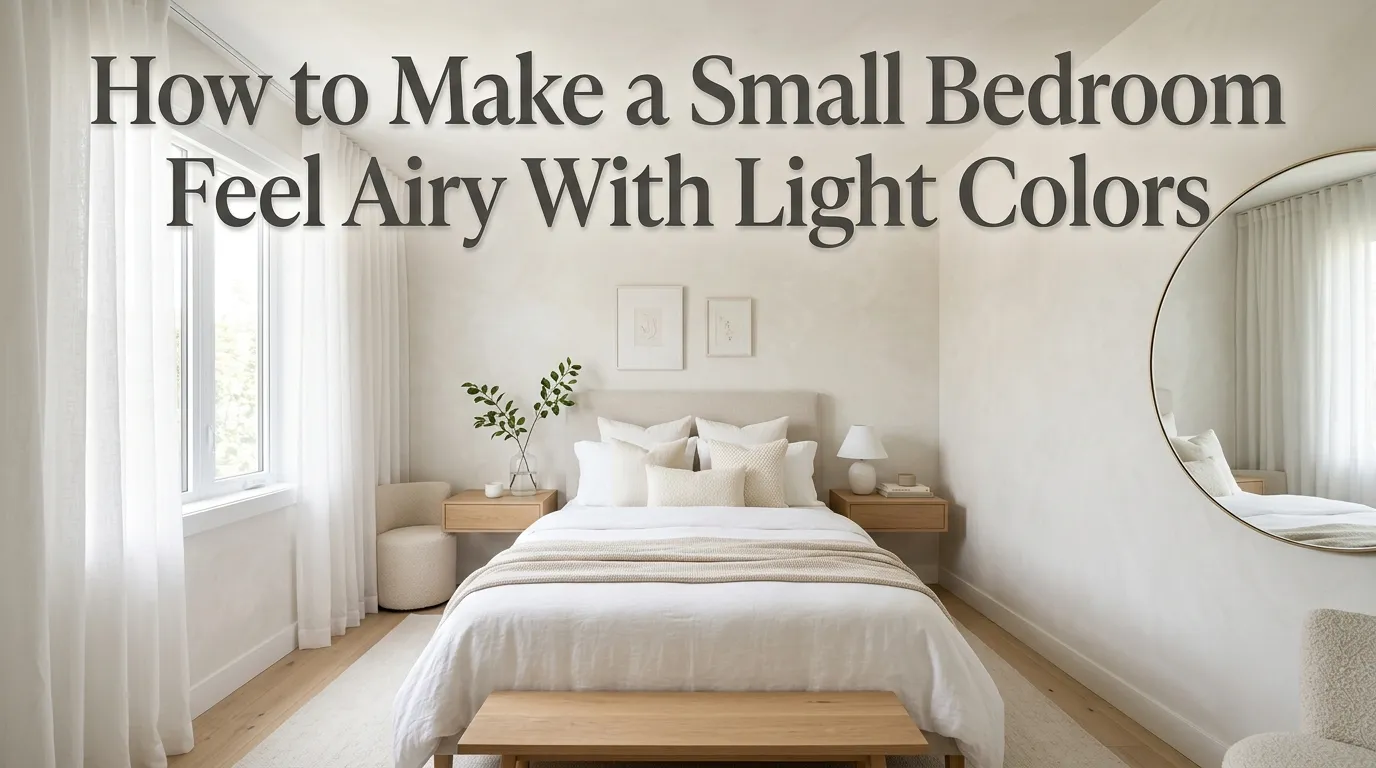
How to Make a Small Bedroom Feel Airy With Light Colors
A small bedroom doesn’t have to feel cramped or dark.
One of the simplest ways to create a more open atmosphere is to use a thoughtful light color palette. Soft whites, warm creams, pale beige, light taupe, muted pastels, and gentle gray can reflect available light and help the room feel visually lighter.
But simply painting everything white isn’t the whole solution.
The real difference comes from how you combine color, lighting, furniture, textiles, mirrors, and negative space.
In my experience, small bedrooms feel most comfortable when light colors are used as a foundation rather than a strict rule. A pale wall paired with warm wood, soft textiles, and carefully chosen accents can feel much more inviting than an all-white room.
You also don’t need to replace your entire bedroom.
Changing the bedding, curtains, wall color, artwork, or rug can sometimes create a noticeable difference.
Here are 10 practical ways to make a small bedroom feel brighter, airier, and more spacious using light colors.
Table of Contents
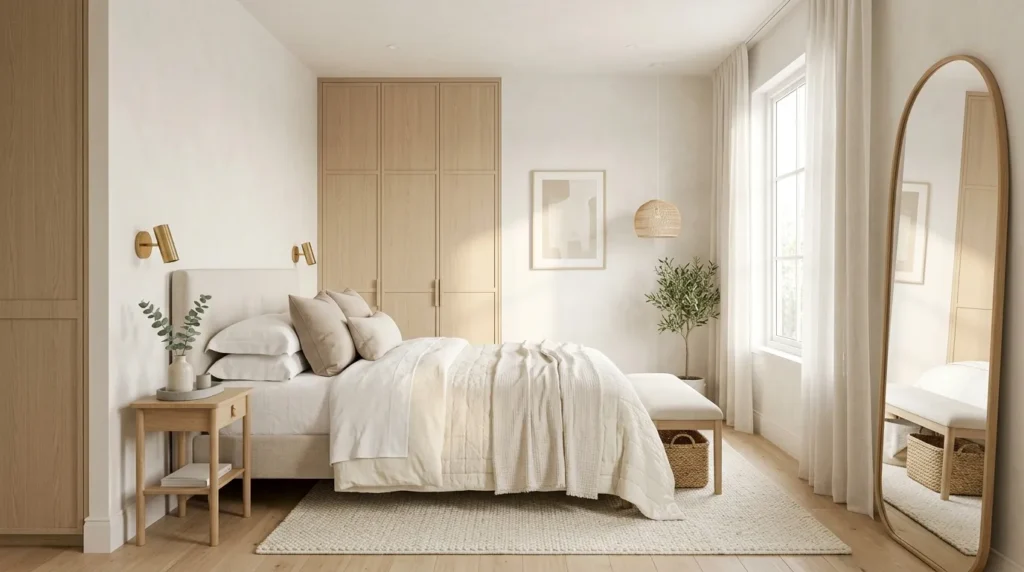
- Choose Warm White Walls
- Layer Soft Neutrals
- Use Light Bedding
- Add Pale Curtains
- Introduce Light Wood
- Keep Floors Bright
- Use Soft Accent Colors
- Add Reflective Details
- Create Visual Continuity
- Protect Negative Space
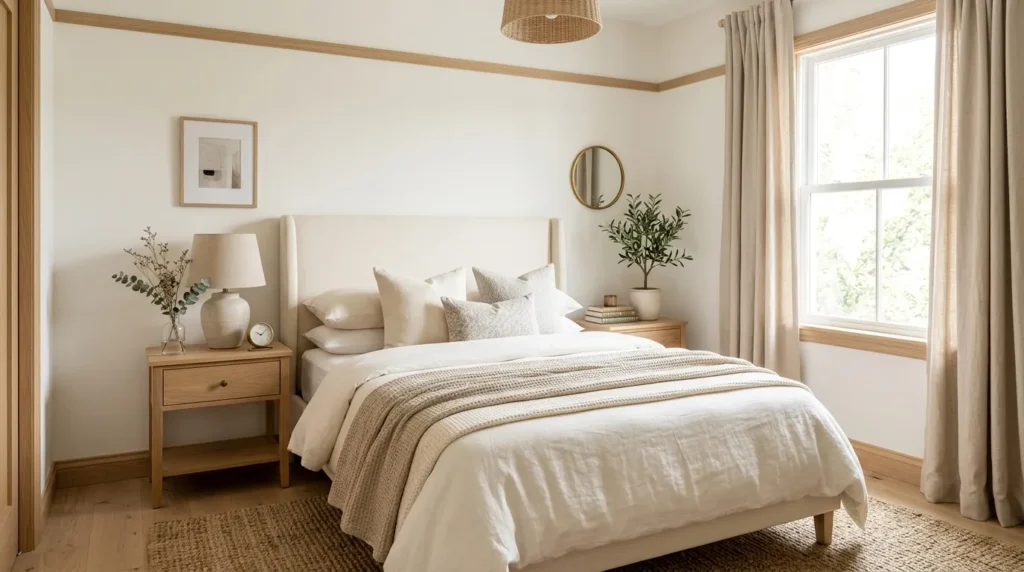
1. Choose Warm White Walls
Quick Benefits
- Reflects natural light
- Creates visual openness
- Works with many styles
- Makes furniture stand out
- Feels timeless
Why It Works
Light walls can make the boundaries of a small bedroom feel less visually heavy.
Warm white is especially useful because it provides brightness without the stark feeling that some cool whites can create.
How To Style It
Choose a warm white with subtle cream or beige undertones.
Pair it with natural wood, linen, soft beige bedding, and warm lighting.
If your room receives limited sunlight, test paint samples at different times of day before committing to a color.
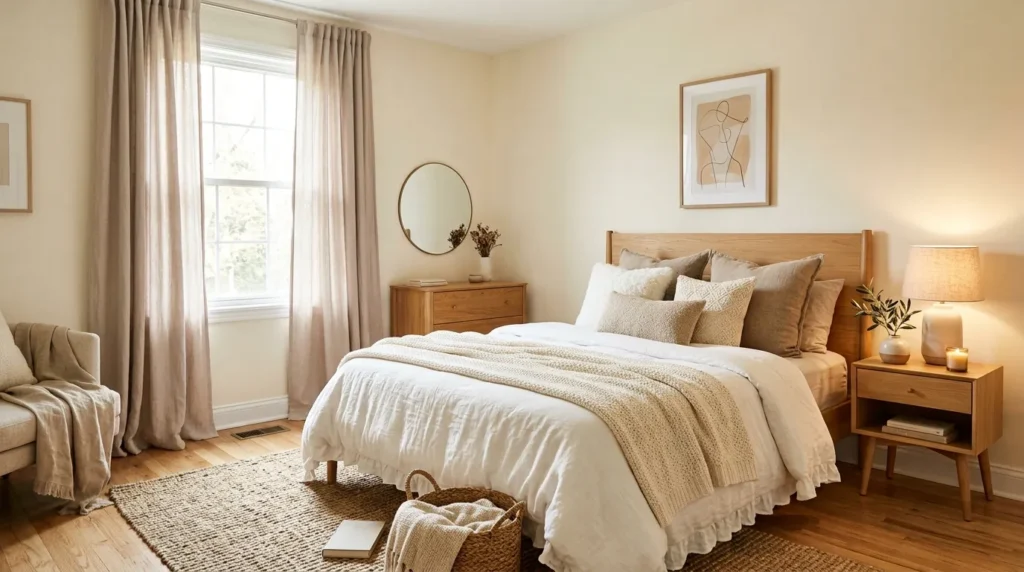
2. Layer Soft Neutrals
Quick Benefits
- Adds depth
- Prevents a sterile appearance
- Creates cohesion
- Makes decorating easier
- Keeps the room visually light
Why It Works
An airy room doesn’t need to be completely white.
Different light neutrals can create dimension while maintaining a soft visual flow.
How To Style It
Combine:
Warm white + cream + pale beige + light taupe
Use slightly different shades on walls, bedding, curtains, and rugs.
Keep strong contrast to a minimum.
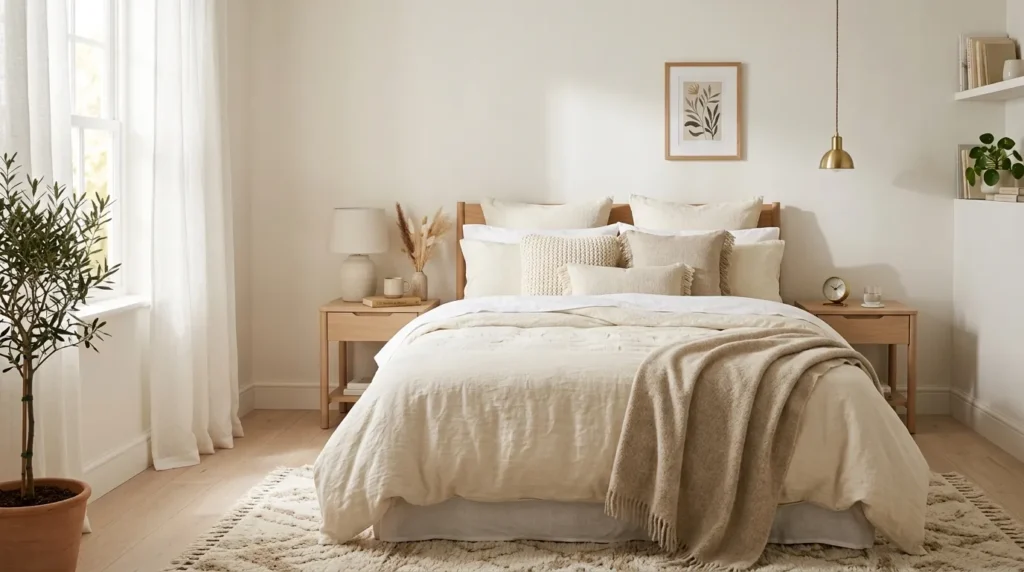
3. Use Light Bedding
Quick Benefits
- Brightens the largest visual surface
- Makes the bed feel lighter
- Creates a calm atmosphere
- Works with many palettes
- Easy to update
Why It Works
The bed often occupies a significant amount of visual space.
Dark or highly patterned bedding can make a small bedroom feel heavier.
How To Style It
Choose cream, ivory, soft beige, pale gray, or muted pastel bedding.
Layer different textures rather than relying on bold patterns.
A linen duvet, cotton sheets, and a lightweight textured throw can create depth while maintaining an airy appearance.
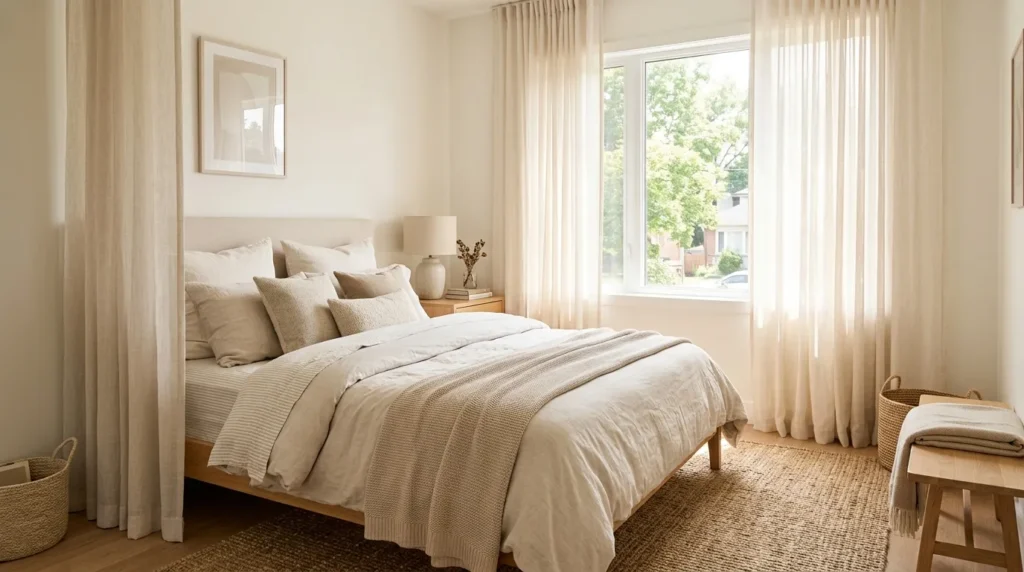
4. Add Pale Curtains
Quick Benefits
- Softens windows
- Allows more light
- Makes walls feel taller
- Adds texture
- Creates visual continuity
Why It Works
Heavy, dark curtains can visually frame a small window and make the room feel enclosed.
Light curtains create a softer transition between the window and surrounding wall.
How To Style It
Choose lightweight curtains in cream, ivory, soft beige, or another pale neutral.
Mount the curtain rod appropriately high and wide where practical to create the impression of a larger window.
Keep the fabric long enough to create an elegant vertical line.
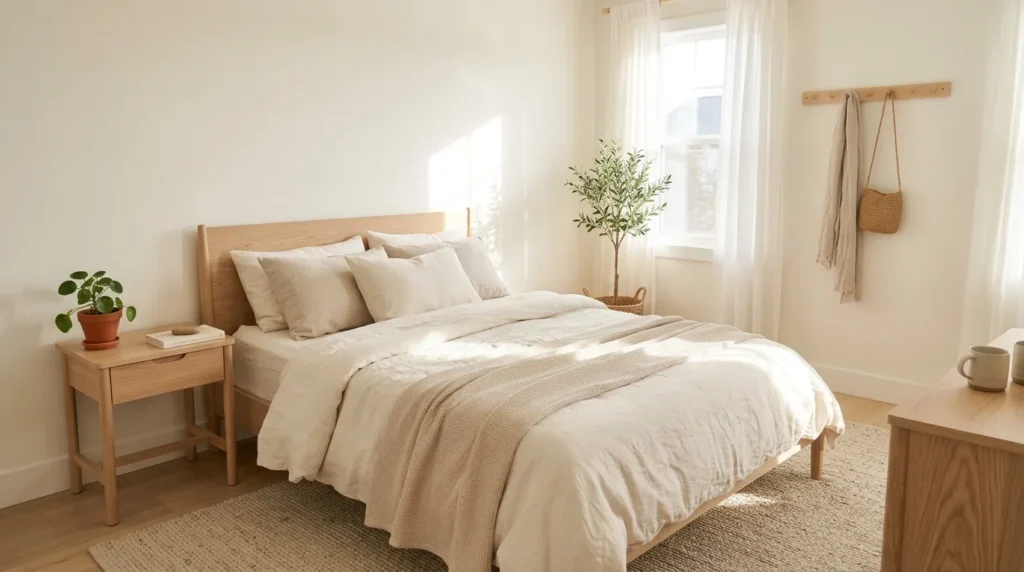
5. Introduce Light Wood
Quick Benefits
- Adds warmth
- Prevents an all-white look
- Creates natural texture
- Works with neutral colors
- Feels timeless
Why It Works
Light colors can sometimes make a small room feel visually flat.
Pale oak, ash, birch, and other lighter wood tones introduce warmth without adding heavy contrast.
How To Style It
Use light wood through existing furniture, picture frames, a headboard, or small accessories.
Pair it with cream textiles and soft neutral walls.
Avoid mixing too many competing wood tones in a very small room.
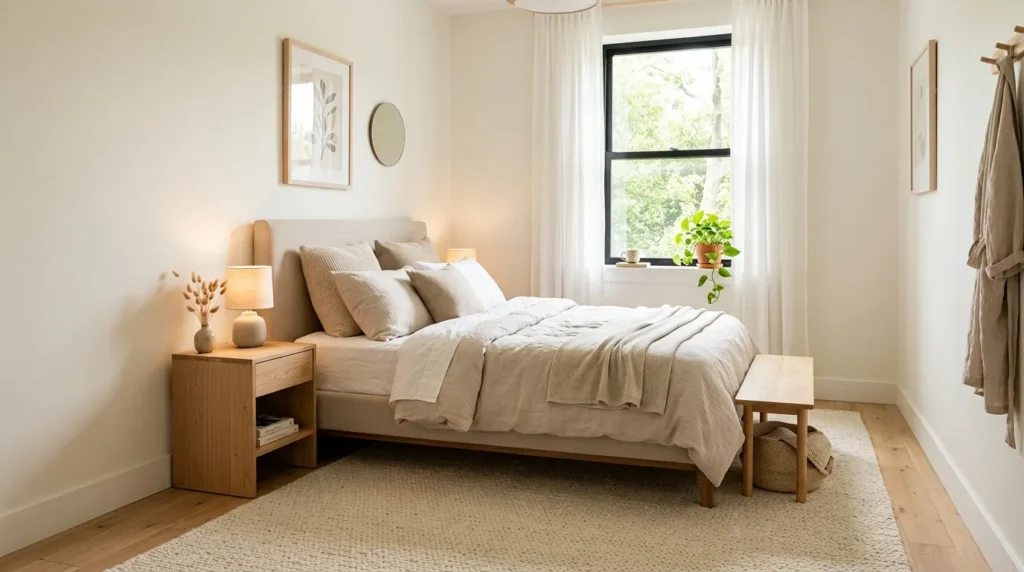
6. Keep Floors Bright
Quick Benefits
- Opens the visual base
- Connects the room together
- Makes furniture feel lighter
- Adds softness
- Creates continuity
Why It Works
The floor is one of the largest surfaces in the bedroom.
A very dark floor combined with dark furniture and dark bedding can make a small room feel visually dense.
How To Style It
If you have light flooring, keep the surrounding palette soft.
If your floor is darker, use a large appropriately sized light rug to visually soften the base.
Choose cream, beige, oatmeal, or light gray depending on your overall palette.
7. Use Soft Accent Colors
Quick Benefits
- Adds personality
- Prevents monotony
- Keeps the room bright
- Creates visual interest
- Makes styling flexible
Why It Works
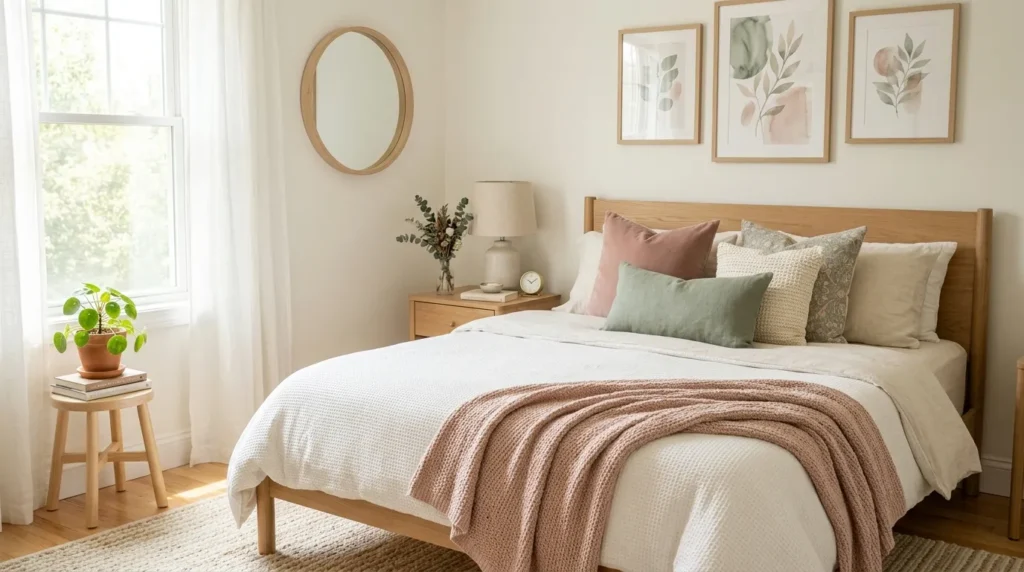
A completely neutral room isn’t the only way to make a small bedroom airy.
Pale accent colors can add character without creating strong visual blocks.
How To Style It
Try:
Soft sage
Powder blue
Dusty blush
Pale lavender
Muted butter yellow
Use these shades in small doses through pillows, artwork, throws, or accessories.
8. Add Reflective Details
Quick Benefits
- Bounces available light
- Adds depth
- Creates visual interest
- Helps walls feel less heavy
- Works in compact rooms
Why It Works
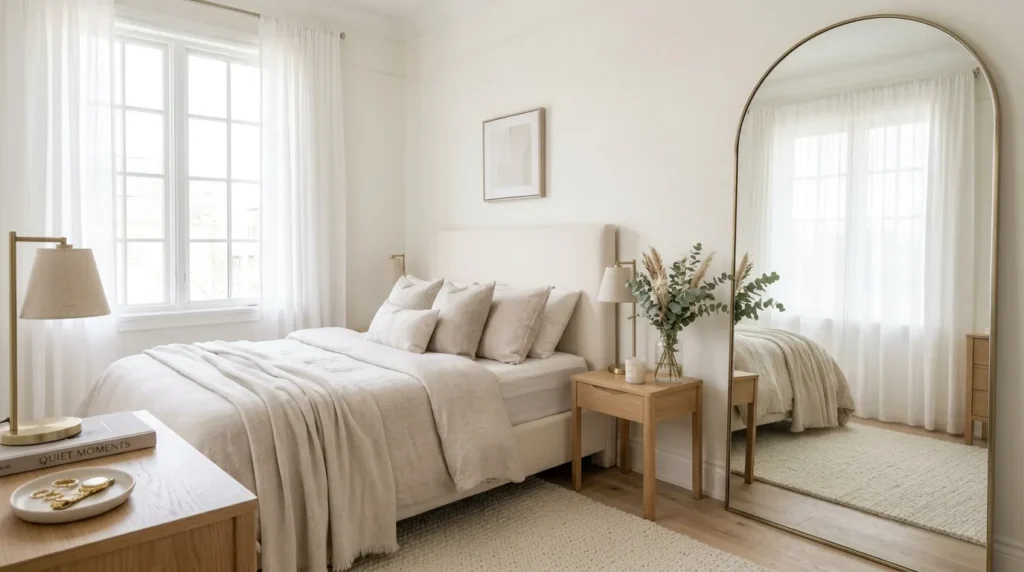
Reflective surfaces can help distribute light around a room.
A mirror is particularly useful because it can visually expand the room while reflecting windows or brighter areas.
How To Style It
Place a mirror where it can reflect natural light or an attractive part of the room.
You can also introduce subtle reflective finishes through glass, polished ceramic, or small metallic accents.
Avoid covering every surface with reflective materials.
9. Create Visual Continuity
Quick Benefits
- Makes the room feel larger
- Reduces visual interruptions
- Creates cohesion
- Simplifies decorating
- Helps furniture blend naturally
Why It Works
Strong color changes can visually divide a small bedroom into separate sections.
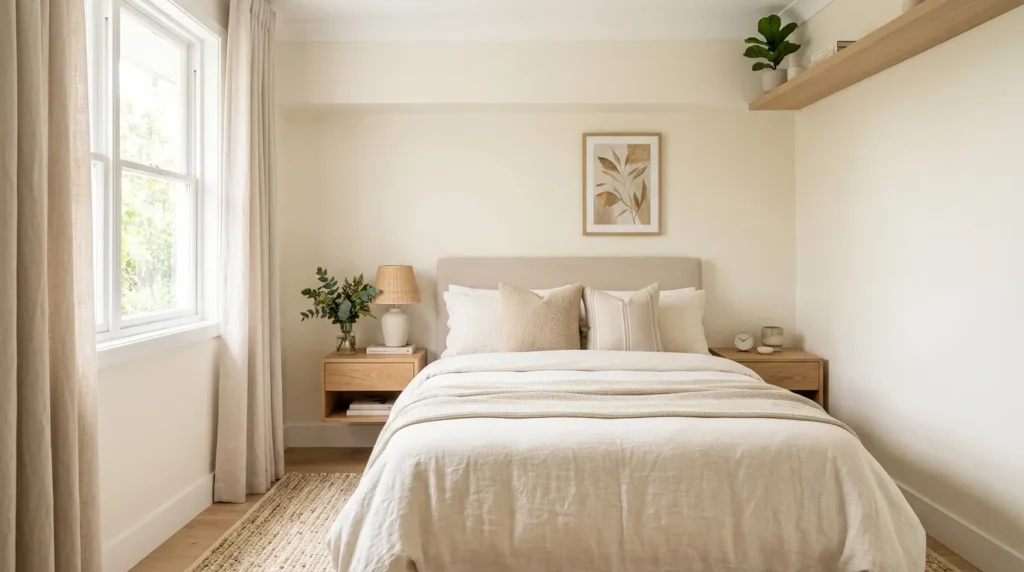
A more continuous palette allows the eye to move around the room more easily.
How To Style It
Keep major surfaces within the same general color family.
For example, pair warm white walls with cream bedding, pale beige curtains, and a light rug.
Then introduce small accents rather than large blocks of contrasting color.
10. Protect Negative Space
Quick Benefits
- Makes the room breathe
- Reduces clutter
- Improves circulation
- Highlights important pieces
- Creates a sophisticated appearance
Why It Works
An airy bedroom isn’t simply a room with light colors.
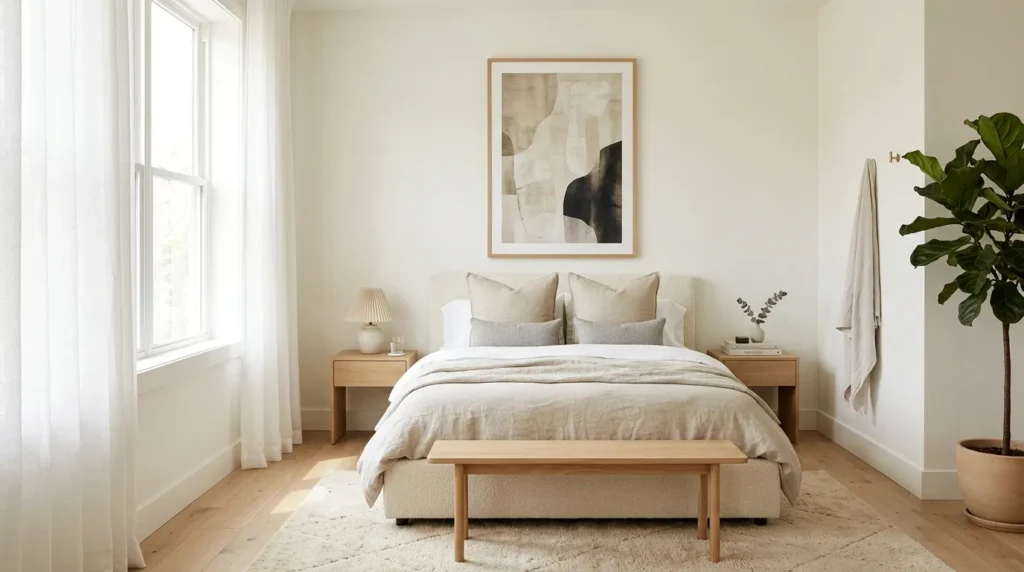
It also needs visual breathing room.
Too many accessories, furniture pieces, and decorations can overwhelm even the palest color palette.
How To Style It
Keep pathways clear.
Avoid filling every wall.
Leave some surface space on nightstands.
Choose fewer, larger decorative pieces instead of many tiny objects.
The empty space is part of the design.
How To Choose the Best Light Color for a Small Bedroom
Consider the amount and direction of natural light.
North-Facing Rooms
Warm whites and creamy neutrals can help balance cooler natural light.
South-Facing Rooms
Most light colors can work, but very warm shades may become more intense in strong sunlight.
East-Facing Rooms
Morning light can make colors appear warmer early in the day and cooler later.
West-Facing Rooms
Warm afternoon light can intensify beige, cream, and other warm tones.
Always test samples in the actual room before painting.
Best Light Color Combinations
Warm and Cozy
Cream + beige + light wood
Fresh and Calm
Soft white + pale blue + light gray
Natural
Ivory + sage + oak
Feminine
Warm white + dusty blush + beige
Minimalist
Soft white + pale taupe + natural wood
How To Make a Small Bedroom Look Bigger Without Renovating
You can create a noticeable visual difference without major construction.
Try:
- Painting walls a light color
- Using pale bedding
- Hanging curtains high
- Adding one strategically placed mirror
- Choosing lighter textiles
- Removing unnecessary furniture
- Keeping floors visually open
- Using similar colors across large surfaces
- Reducing visible clutter
The goal is to make the eye travel smoothly around the room.
Common Light-Color Mistakes
Using Only Bright White
A room can feel cold if every surface is stark white.
Ignoring Undertones
Two “white” paints can look completely different in the same room.
Adding Too Much Contrast
Dark furniture and accessories can overpower an otherwise airy palette.
Forgetting Texture
A neutral room needs texture to avoid looking flat.
Overfilling the Room
Light colors cannot compensate for excessive furniture.
Choosing Paint Without Testing
Natural and artificial lighting can dramatically change how a color looks.
FAQ
What colors make a small bedroom look bigger?
Warm white, cream, pale beige, soft gray, light taupe, and gentle pastel shades can help create a lighter visual atmosphere.
Does white make a small bedroom look bigger?
It can. White and other light colors reflect available light and can reduce visual boundaries, especially when combined with good lighting and uncluttered furniture placement.
What is better for a small bedroom, white or beige?
Both can work. Warm white creates a brighter appearance, while beige can add warmth and softness. The best choice depends on the room’s natural light and existing finishes.
Should bedroom curtains be light or dark?
Light curtains generally support an airy look because they create less visual weight around the window.
Can dark furniture work in a small bedroom?
Yes. A few dark pieces can provide contrast, but balancing them with light walls, bedding, rugs, and curtains can prevent the room from feeling heavy.
How can I make a small bedroom brighter?
Use light wall colors, pale textiles, layered lighting, reflective surfaces, clean windows, and furniture arrangements that don’t block natural light.
Should everything in a small bedroom match?
Not exactly. A coordinated palette is usually more successful than perfect matching. Introduce subtle differences in texture and tone to create depth.
Conclusion
Making a small bedroom feel airy doesn’t require knocking down walls or replacing every piece of furniture.
Start with the largest visual surfaces.
Use warm whites, soft neutrals, pale bedding, lightweight curtains, and light wood to create a gentle foundation.
Then introduce small amounts of color, reflective details, and natural texture.
Most importantly, protect the room’s negative space.
A small bedroom becomes much more inviting when your eye has somewhere to rest.
The best airy bedroom isn’t necessarily the palest one. It’s the one where light, color, furniture, texture, and empty space work together to create a calm and open feeling.