

Can You Put a Full-Size Microwave in a 24-Inch Deep Butler’s Pantry?
Determining whether you can put a full-size microwave in a 24-inch deep butler’s pantry requires balancing standard cabinetry dimensions with the physical footprint of modern appliances. Most homeowners wonder if they have enough clearance to tuck away their cooking tech without creating a fire hazard or a design eyesore.
While 24 inches is the industry standard for depth, the reality of ventilation, cord management, and door swing clearance makes this a nuanced decision. Understanding these constraints helps you decide if a butler’s pantry is the right spot for your microwave or if you should keep it in the main kitchen area.
The short answer is yes, you can technically fit a full-size microwave in a 24-inch deep butler’s pantry, but you must prioritize ventilation and electrical access above all else. A standard full-size unit typically measures between 18 and 22 inches in depth. When you add the required air gap behind the unit and the thickness of the power cord, a 24-inch deep cabinet or shelf will be pushed to its absolute limit.
You will need to ensure the back of the pantry is open or vented to prevent heat buildup. Without proper airflow, even a high-end unit will struggle with efficiency and potentially pose a safety risk.
Assessing Cabinetry and Countertop Depth

Most standard base cabinetry in a butler’s pantry is built to a 24-inch depth. This depth is intentional, as it aligns with standard dishwasher and oven footprints in the main kitchen.
However, when you add a backsplash or a wall-mounted shelf, the usable surface area often drops to 22 or 23 inches. You must measure the interior clear space specifically, rather than relying on the nominal depth of the cabinetry.
If you are using a countertop-style microwave, you need to account for the rubber feet at the base. These feet often prevent the unit from sitting flush against a wall or backsplash. If the microwave is too large, the front door may overhang the edge of the counter, which can be unstable.
Always check the manufacturer’s specifications for “clearance from rear wall” requirements. Many brands suggest at least 2 to 3 inches of space behind the unit for heat dissipation.
Managing Ventilation for Safe Operation
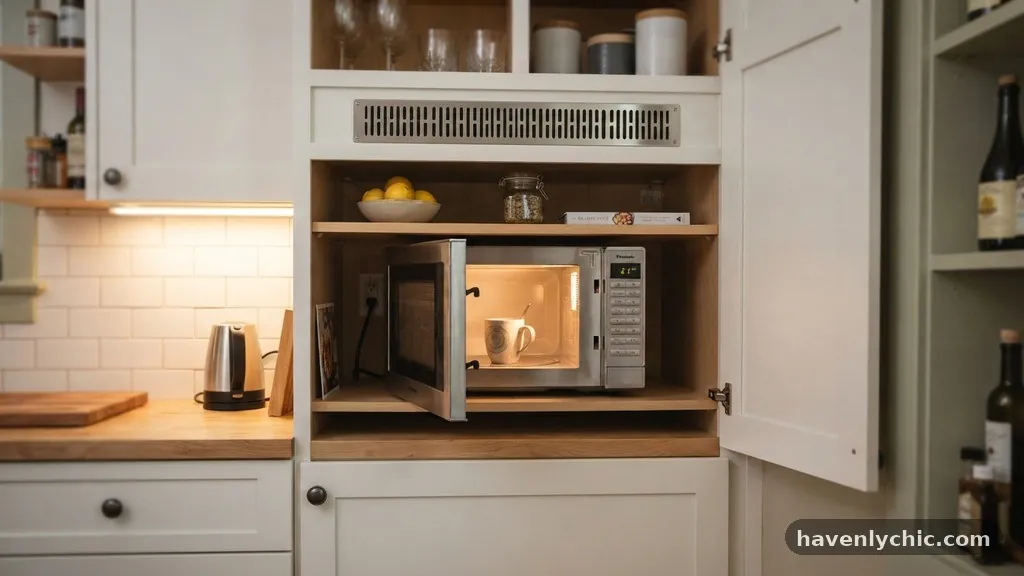
Ventilation is the most critical factor when you place a microwave in an enclosed or semi-enclosed pantry. Unlike a main kitchen where there is usually an overhead vent or an open layout, a butler’s pantry can quickly trap heat.
If the microwave is tucked into a cubby, the heat generated during cooking has nowhere to escape. This can lead to the appliance overheating or, in extreme cases, damaging the surrounding wooden cabinetry.
Consider installing a louvered door on the cabinet or leaving the back panel of the pantry shelf open. If the pantry is a walk-in space, ensure there is enough ambient air circulation to prevent the room from becoming humid and hot.
You might also consider using a trim kit designed for built-in models. These kits are engineered to vent air from the front, which solves the problem of needing extra space behind the unit.
Electrical Requirements and Outlet Placement
A full-size microwave draws significant power, often requiring a dedicated 15-amp or 20-amp circuit. Placing this appliance in a butler’s pantry means you need an outlet that is easily accessible but also hidden from view.
If your pantry was designed primarily for wine storage or glassware, the existing outlets might not be rated for high-wattage kitchen appliances. You should consult with an electrician to verify your current load capacity before plugging in a large unit.
Avoid using extension cords, as they are not designed for the constant, high-draw load of a microwave. If you are renovating the space, have an outlet installed directly behind the microwave cabinet.
This keeps the cord short and prevents it from dangling across your prep surfaces. Ensure the plug is accessible so you can quickly disconnect the unit during cleaning or if a maintenance issue arises.
Comparing Microwave Installation Types

Choosing the right type of microwave for your storage area depends on your budget and the desired aesthetic. You can choose between a standard countertop model, a built-in unit, or a drawer-style microwave. Each has specific requirements regarding depth and ventilation that will influence whether it fits into your 24-inch deep space.
| Microwave Type | Best Feature | Space Efficiency |
|---|---|---|
| Countertop | Affordability | Low (requires rear clearance) |
| Built-in | Sleek Look | Medium (needs trim kit) |
| Drawer | Accessibility | High (vented from front) |
Drawer microwaves are often the best choice for a butler’s pantry because they don’t require the same rear clearance as traditional units. They are designed to fit into standard cabinet widths and depths while venting heat out the front.
While they are more expensive, they provide a clean look that matches high-end cabinetry. If you are planning a long-term remodel, this is the most professional solution.
The Role of the Butler’s Pantry in Workflow

A butler’s pantry is meant to be a transition zone between the kitchen and the dining area. Placing a microwave here can be incredibly functional if you use the space for reheating coffee or warming up appetizers before a dinner party.
It keeps the main kitchen clutter-free and allows guests to help themselves without entering your primary cooking zone. Think about how often you actually use the microwave for heavy-duty cooking versus simple tasks.
If you use the microwave primarily for defrosting or heating leftovers, keeping it in the pantry is a great way to save counter space in the main kitchen. However, if you do a lot of complex cooking, you might find that walking back and forth to the pantry is a chore. The ideal setup places the appliance near your glassware and sink area, making the entire process of cleaning and serving more efficient.
Aesthetic Considerations and Cabinetry Finish
Integrating a microwave into a butler’s pantry should not ruin the visual flow of your home. If you have beautiful custom cabinetry, a bulky, stainless steel microwave sitting on an open shelf might look out of place.
Many homeowners choose to hide the appliance behind a cabinet door or inside a dedicated appliance garage. This keeps the look consistent with the rest of your home’s design.
When choosing a microwave, look for models that match the hardware and finish of your other appliances. If your pantry is a focal point with wine storage or open shelving, a sleek built-in microwave will blend in much better than a standard countertop unit.
You can also work with a cabinet maker to create a custom shelf that fits the exact dimensions of your microwave. This ensures that the appliance looks like a permanent fixture rather than an afterthought.
Safety Standards and Fire Prevention

Safety should be your top priority when installing any high-wattage appliance in an enclosed space. Microwaves generate significant heat during operation, and surrounding this heat with wooden cabinetry can be dangerous if the unit is not properly vented. Always follow the manufacturer’s installation manual, which can be found at the National Electrical Manufacturers Association website for guidance on electrical safety.
Never store flammable items, such as paper towels or linens, in the same cabinet as a microwave. If you notice the cabinet frame getting hot to the touch while the microwave is running, stop using it immediately and check your ventilation.
It is better to move the unit to a more open area than to risk a fire in your pantry. Ensure the microwave is placed on a stable, heat-resistant surface that can support its weight and the vibration of the turntable.
Optimizing Storage Around the Appliance
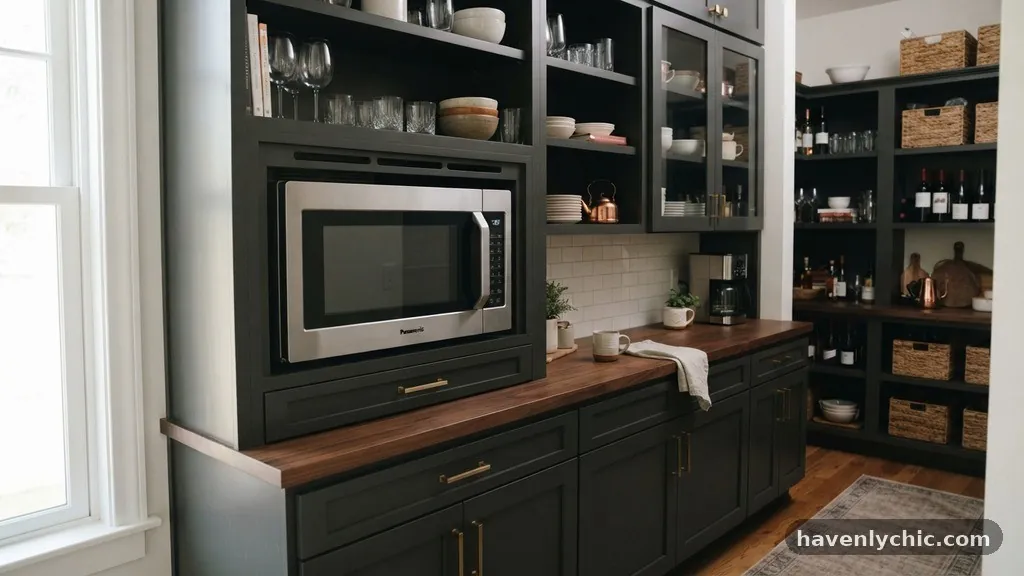
Once you have decided that you can put a full-size microwave in a 24-inch deep butler’s pantry, you should organize the surrounding storage. Since you are sacrificing some counter space, make the most of the vertical area above and below the unit. Install shelves for your most-used glassware or coffee supplies to keep the area functional.
* Use drawer dividers for utensils to keep the prep area tidy.
* Install under-cabinet lighting to make the pantry feel like an extension of the kitchen.
* Keep frequently used items like coffee mugs or small plates within arm’s reach of the microwave.
* Store heavy or rarely used items on lower shelves to keep the counter clear.
By organizing the space effectively, you turn a simple appliance placement into a dedicated “beverage station” or “snack zone.” This adds value to your home and makes the butler’s pantry a more useful part of your daily routine.
Common Mistakes to Avoid
Many people make the mistake of buying the microwave first and then trying to force it into the pantry. This often leads to frustration when the unit doesn’t fit or the door won’t open properly.
Always measure your available space first, including the depth of the door when it is fully open. You don’t want the pantry door hitting the microwave door every time you try to use it.
Another common error is ignoring the cord length. If the outlet is too far away, you might be tempted to use a cheap extension cord, which is a significant fire hazard.
Finally, don’t underestimate the weight of a full-size microwave. Ensure your shelving is reinforced to handle the weight, especially if you are using an older, heavier model.
FAQ: Common Questions About Pantry Microwaves
What is the minimum depth required for a built-in microwave?
Most built-in models require a depth of at least 20 to 22 inches, including the space needed for the power cord and ventilation. While a 24-inch deep cabinet is sufficient, you must ensure the wall behind it doesn’t obstruct airflow.
Is a drawer microwave worth the extra cost for a pantry?
Yes, if you want a clean look and better functionality. Drawer microwaves are specifically designed for low cabinets and offer better ventilation, making them the safest and most aesthetic choice for a butler’s pantry.
Can I put a standard microwave in an appliance garage?
You can, provided the garage has adequate ventilation. You must ensure the door to the garage is open whenever the microwave is in use, or the heat will build up and potentially damage the appliance.
Does placing a microwave in the pantry affect its lifespan?
If the unit is properly ventilated, it should last as long as it would in a main kitchen. However, if it is cramped and overheats regularly, the electronic components will fail much faster than expected.
How do I handle the power cord in a shallow pantry?
Install an outlet directly behind the microwave location. If that isn’t possible, use a low-profile flat plug to minimize the gap between the unit and the wall.
Final Thoughts on Pantry Placement
Deciding if you can put a full-size microwave in a 24-inch deep butler’s pantry is a practical exercise in spatial planning and safety. While the standard cabinet depth is technically compatible with most units, the success of the installation depends on how you manage heat, power, and accessibility. By choosing a model with front-venting capabilities or ensuring your shelving is open to air circulation, you can integrate this appliance without compromising your pantry’s design or safety.
Take the time to measure your specific space and consult with an electrician if you have any doubts about your power supply. A well-placed microwave can turn your butler’s pantry into a highly efficient hub for snacks, coffee, and quick meal prep.
If you plan your installation carefully, you will enjoy the added convenience without sacrificing the style of your home. Reach out to a professional cabinet installer if you need custom modifications to make your setup look truly integrated and modern.