How to Decorate a Living Room Without Hiring a Designer
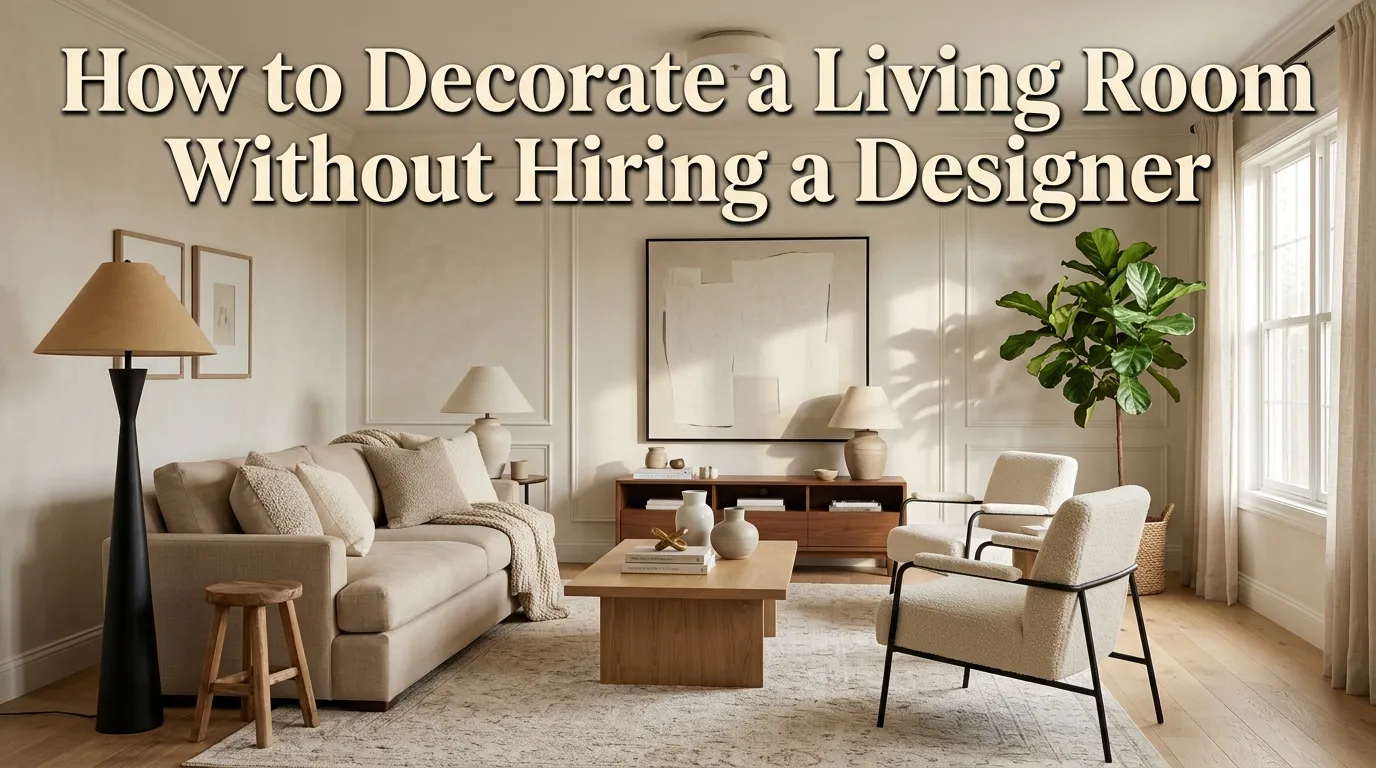
You don’t need a professional designer to create a living room that feels polished, comfortable, and thoughtfully put together.
The biggest difference between a room that feels unfinished and one that feels intentional usually comes down to a handful of decisions: furniture placement, scale, color, lighting, texture, and editing.
Instead of buying everything at once, start by looking at what you already have. A sofa you love, a vintage side table, a favorite artwork, or even a beautiful rug can become the starting point for the entire room.
In my experience, decorating without a designer works best when you approach the room in layers. Get the layout right first, establish a cohesive color palette second, and then add lighting, textiles, artwork, and accessories.
You also don’t need to follow every trend. A living room tends to feel more timeless when it reflects the people who actually use it.
Here are 10 practical ways to decorate your living room with a designer-inspired look while keeping the process approachable.
Table of Contents
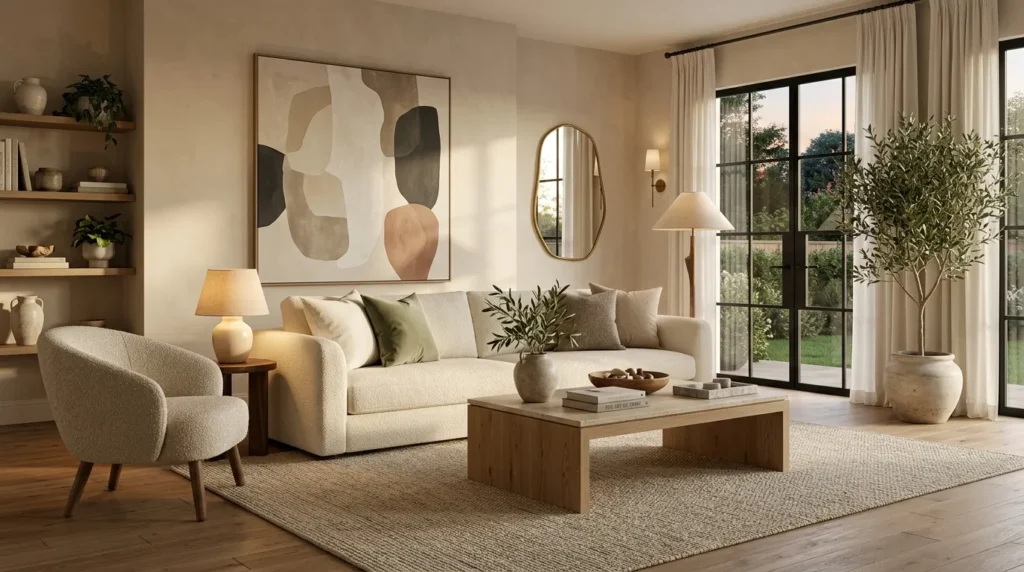
- Start With Layout
- Choose a Color Palette
- Balance Furniture
- Layer the Lighting
- Add Large-Scale Art
- Mix Textures
- Anchor With a Rug
- Style the Coffee Table
- Add Natural Elements
- Edit the Room
1. Start With Layout
Quick Benefits
- Improves flow
- Makes furniture feel intentional
- Creates functional zones
- Prevents overcrowding
- Costs nothing
Why It Works
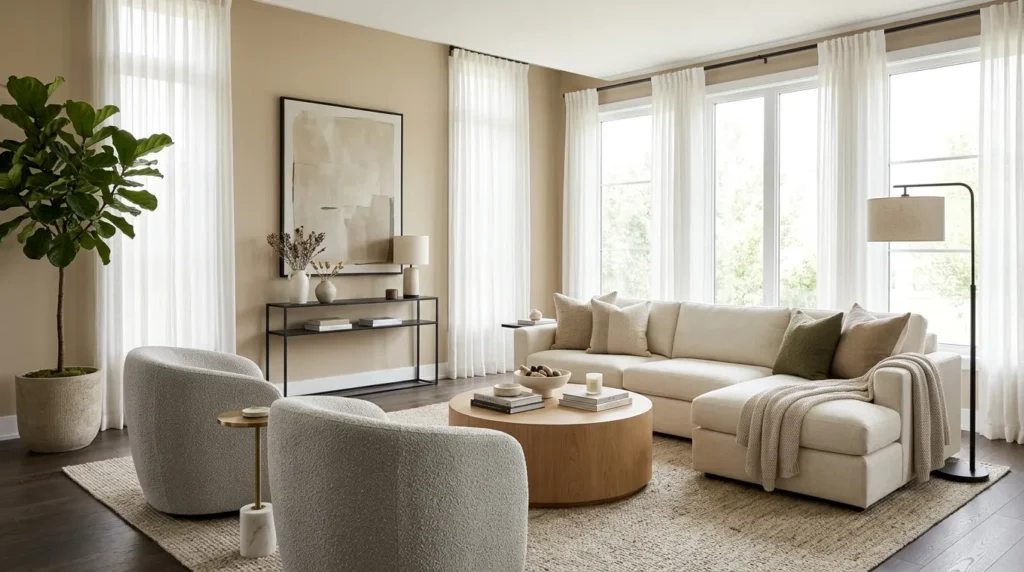
A beautiful sofa and expensive accessories won’t make a room work if the furniture arrangement feels awkward.
Start by considering how people naturally move through the room.
Identify the main focal point, whether that’s a fireplace, television, window, artwork, or architectural feature.
Then arrange seating around conversation and everyday use rather than automatically pushing every piece against a wall.
How To Style It
Pull larger furniture slightly away from the walls when space allows.
Create a clear path through the room.
Arrange chairs and sofas so they relate to one another.
For an open-plan space, use furniture placement to visually define the living room without blocking circulation.
2. Choose a Color Palette
Quick Benefits
- Creates cohesion
- Makes shopping easier
- Prevents visual clutter
- Helps coordinate accessories
- Makes the room feel intentional
Why It Works
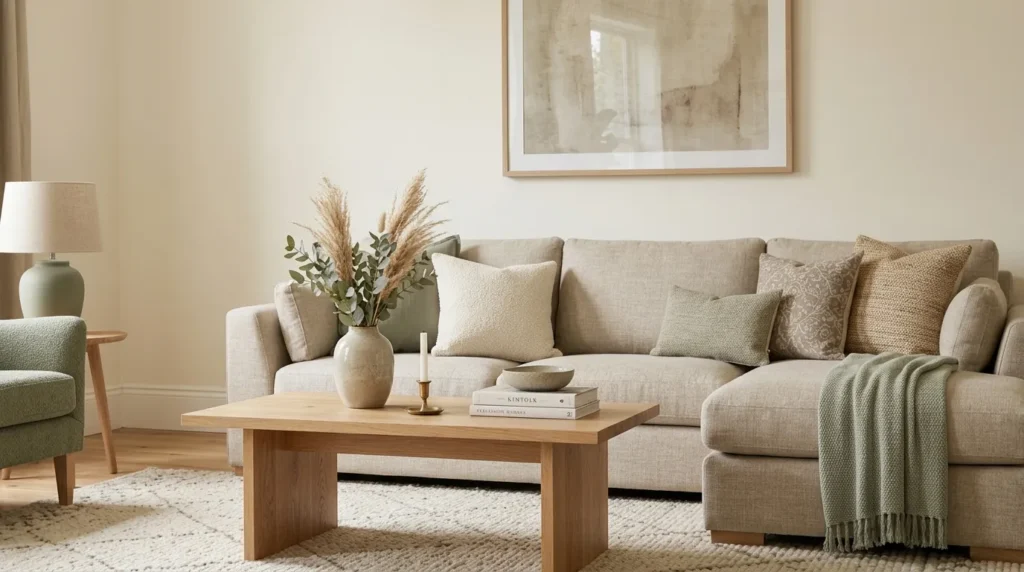
A simple color palette makes different furniture pieces feel like they belong together.
You don’t need everything to match.
Instead, repeat a few colors throughout the room.
How To Style It
Start with one dominant neutral.
Add a secondary color through upholstery, rugs, curtains, or artwork.
Then introduce one or two accent shades in smaller amounts.
For example:
Warm white + beige + natural wood + muted sage
or
Cream + taupe + charcoal + soft blue
3. Balance Furniture
Quick Benefits
- Improves proportions
- Creates visual harmony
- Prevents bulky areas
- Makes seating comfortable
- Gives the room a finished appearance
Why It Works
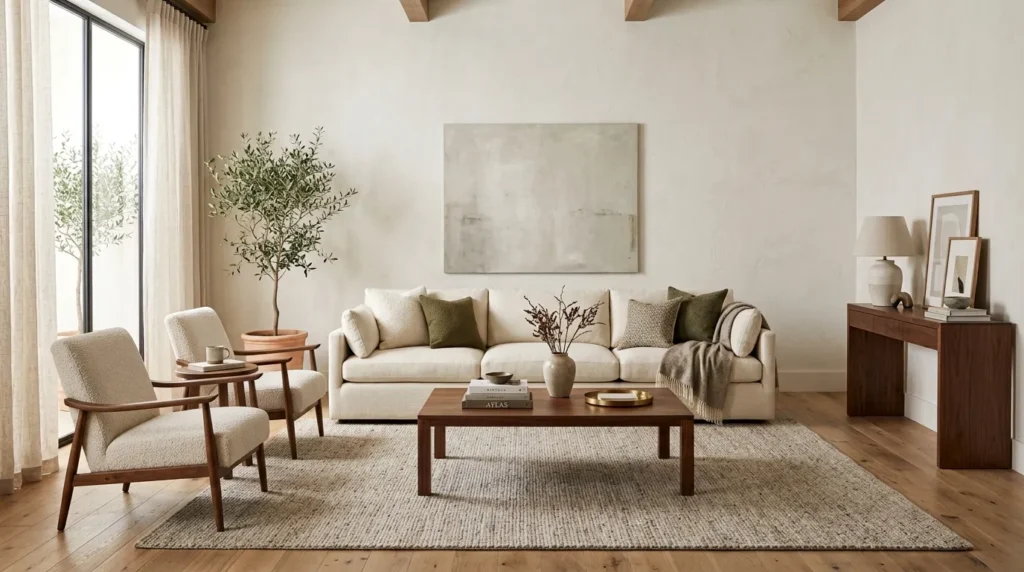
Furniture scale matters just as much as furniture style.
A tiny coffee table can look lost in front of a large sectional.
Likewise, oversized chairs can make a small living room feel cramped.
How To Style It
Look at the room as a whole.
Balance heavier pieces with visually lighter ones.
Pair a substantial sofa with appropriately scaled tables and chairs.
Don’t automatically choose the smallest furniture available for a small room. A few well-proportioned pieces can actually feel cleaner than many tiny pieces.
4. Layer the Lighting
Quick Benefits
- Creates atmosphere
- Adds warmth
- Highlights decor
- Makes the room flexible
- Improves evening comfort
Why It Works
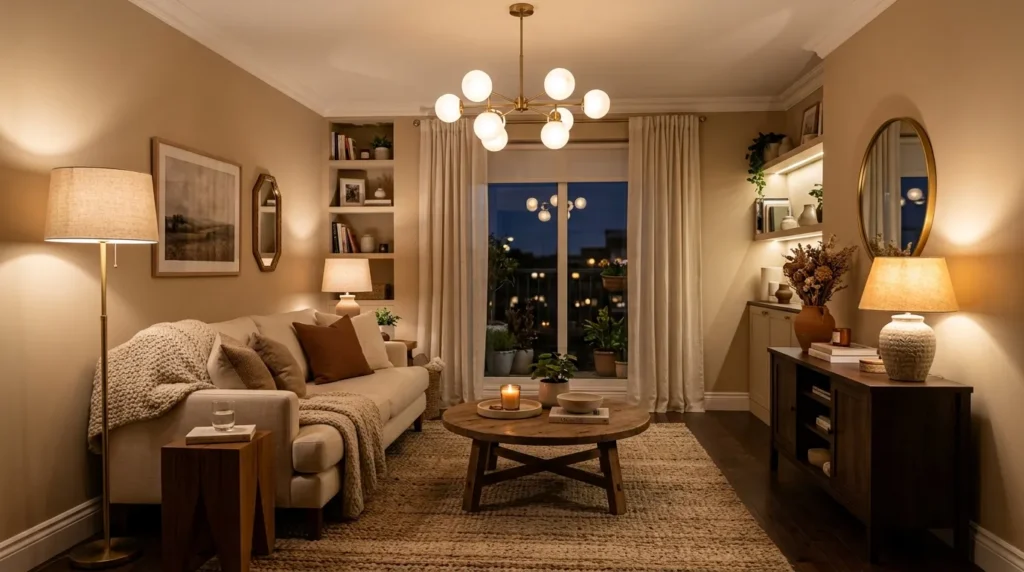
One ceiling fixture rarely provides enough visual warmth for a living room.
Multiple light sources create layers and allow you to change the mood.
How To Style It
Combine overhead lighting with:
- Floor lamps
- Table lamps
- Wall lighting
- Accent lighting
- Decorative lamps
Place lighting at different heights.
A floor lamp beside a sofa, table lamp on a console, and soft accent light near artwork can make the room feel significantly more sophisticated.
5. Add Large-Scale Art
Quick Benefits
- Creates a focal point
- Fills empty walls
- Adds personality
- Makes furniture feel grounded
- Can transform a room quickly
Why It Works
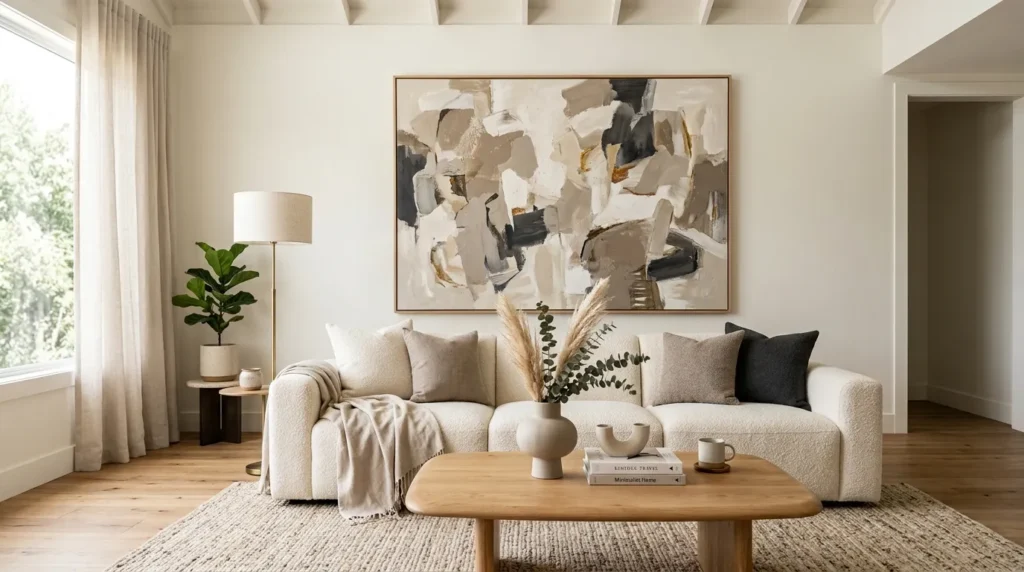
One appropriately sized artwork can have more impact than several tiny pieces scattered across a large wall.
Scale is often the difference between artwork looking intentional and looking lost.
How To Style It
Choose artwork that relates to the room’s palette.
Above a sofa, select a piece or grouping that visually relates to the sofa’s width.
For a minimalist room, try one oversized abstract piece.
For a more collected style, create a carefully spaced gallery arrangement.
6. Mix Textures
Quick Benefits
- Adds depth
- Makes neutrals interesting
- Creates comfort
- Prevents flatness
- Adds visual richness
Why It Works
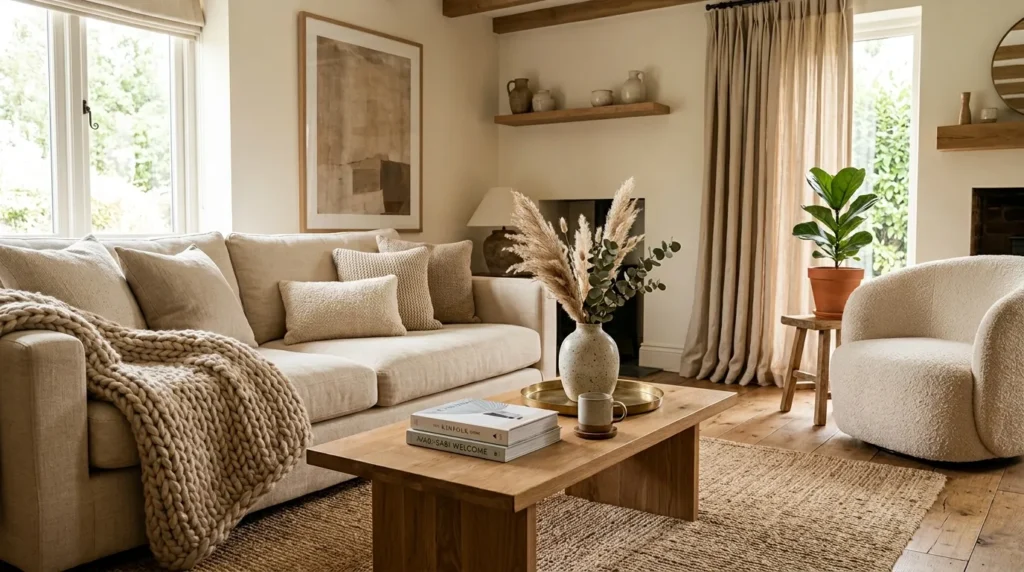
A room decorated entirely in one smooth material can feel flat.
Texture creates contrast without requiring strong colors.
How To Style It
Combine:
Linen + wool + wood + ceramic + woven materials
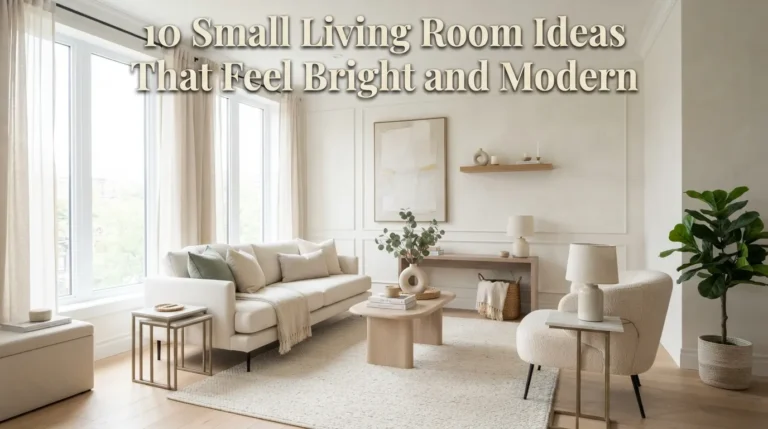
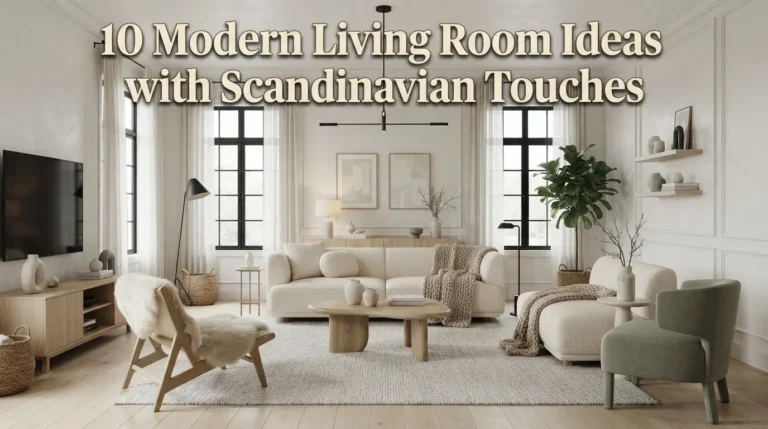
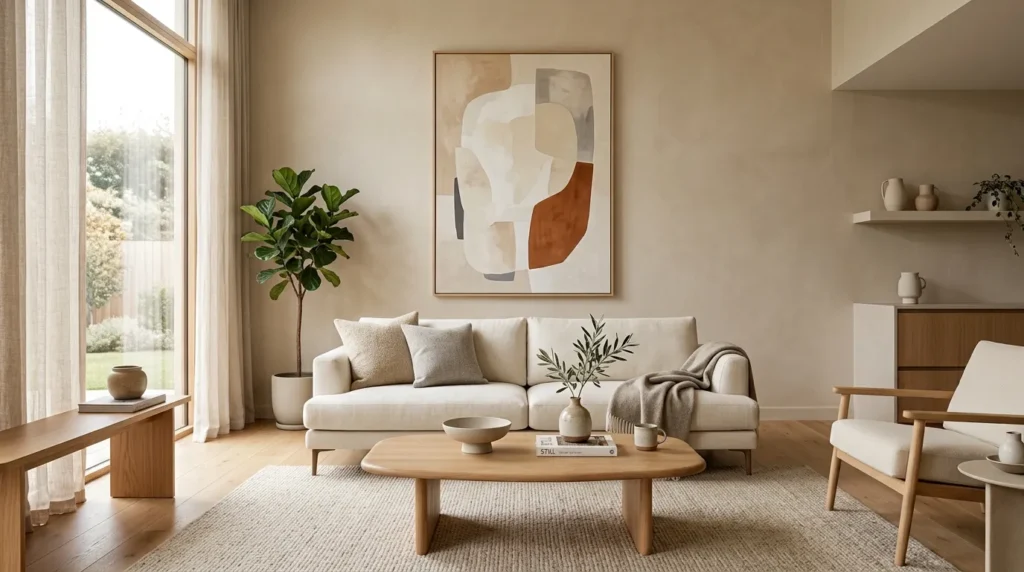
For example, pair a linen sofa with a chunky throw, woven rug, wood coffee table, and ceramic accessories.
Keep the colors related while allowing the textures to vary.
7. Anchor With a Rug
Quick Benefits
- Defines the seating area
- Adds warmth
- Connects furniture
- Improves comfort
- Introduces pattern or texture
Why It Works
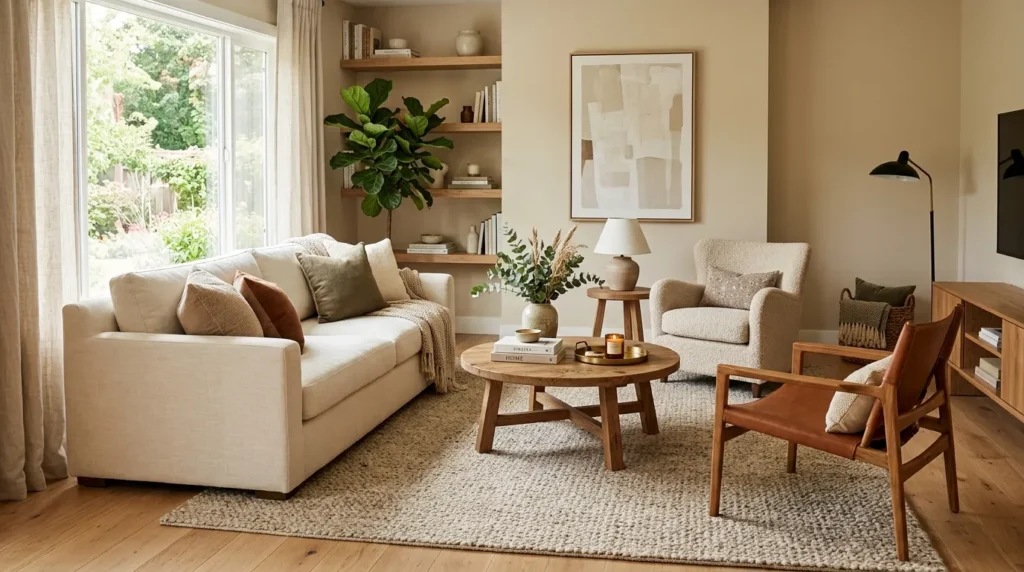
A rug visually connects separate furniture pieces.
Without one, a seating arrangement can sometimes look like individual objects floating around the room.
How To Style It
Choose a rug large enough to relate to the seating arrangement.
Whenever possible, allow at least the front portions of major seating pieces to sit on the rug.
Use a subtle pattern if the room is mostly neutral.
8. Style the Coffee Table
Quick Benefits
- Adds personality
- Creates a focal point
- Makes the room feel finished
- Provides useful storage
- Introduces small-scale texture
Why It Works
The coffee table is naturally positioned at the center of the seating arrangement.
A few carefully chosen objects can make the entire room feel more complete.
How To Style It
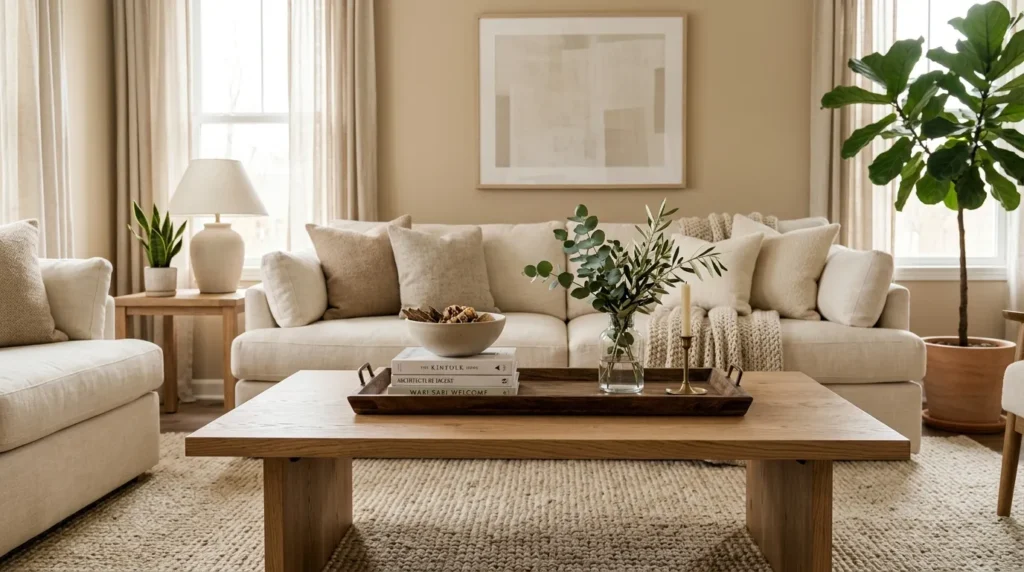
Try a simple formula:
Tray + books + organic object
For example, use a decorative tray, two books, a ceramic bowl, and a small vase.
Leave plenty of empty space.
The goal is styled—not crowded.
9. Add Natural Elements
Quick Benefits
- Adds warmth
- Softens modern rooms
- Brings organic texture
- Creates visual interest
- Works with neutral palettes
Why It Works
Natural materials make a room feel more welcoming.
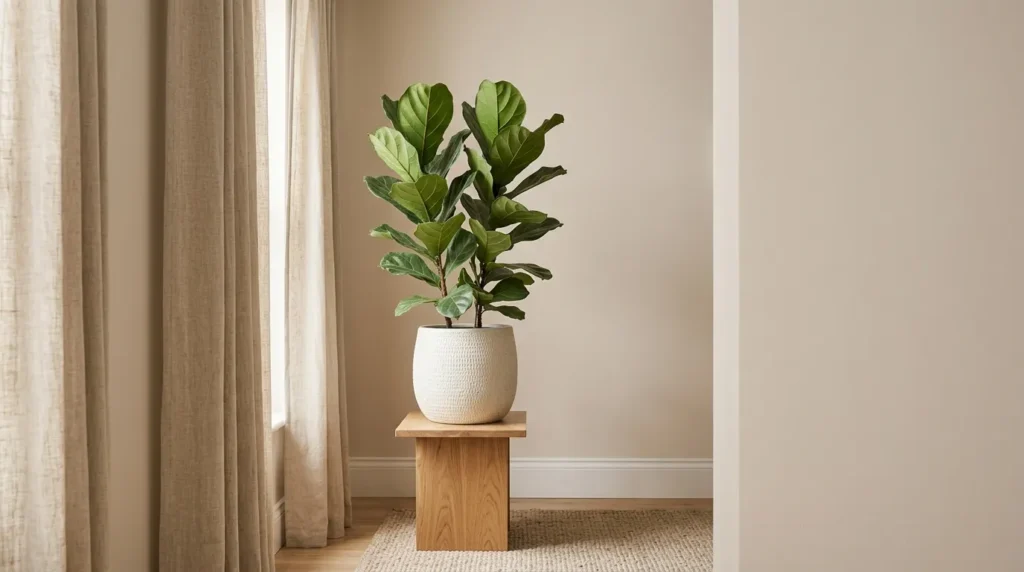
Wood, greenery, stone, woven materials, and dried botanicals can all introduce organic variation.
How To Style It
Add a large indoor plant in an empty corner.
Use wood through furniture or accessories.
Introduce woven baskets for storage.
A few natural materials are usually enough—you don’t need to turn the room into a jungle.
10. Edit the Room
Quick Benefits
- Reduces clutter
- Highlights favorite pieces
- Improves visual balance
- Makes cleaning easier
- Creates a designer-like finish
Why It Works
Professional-looking rooms often aren’t successful because they contain more things.
They’re successful because every visible item has a reason for being there.
How To Style It
Walk around the room and remove anything that doesn’t serve a purpose or contribute visually.
Try temporarily removing several accessories.
Then add back only the pieces you genuinely love.
Leave some empty surfaces and wall space.
That breathing room can make the entire room feel more sophisticated.
How To Create a Designer Look on a Budget
You don’t have to replace everything.
Start with the highest-impact changes.
Rearrange Furniture
Free and often surprisingly effective.
Upgrade Textiles
New pillows, curtains, or a throw can shift the room’s color and texture.
Change Lighting
A beautiful lamp can become both functional lighting and decor.
Reframe Artwork
A better frame can make existing artwork feel completely different.
Add One Large Plant
A substantial plant can fill an awkward corner while adding life.
Declutter
Sometimes the best makeover costs nothing.
How To Choose a Living Room Focal Point
Every room benefits from a visual anchor.
Possible focal points include:
- Fireplace
- Large window
- Artwork
- Statement sofa
- Built-in shelving
- Media wall
- Architectural feature
Choose one primary focal point rather than making everything compete for attention.
If the room already has a strong architectural feature, let it lead.
How To Make a Neutral Living Room Interesting
Neutral doesn’t have to mean boring.
Use contrast through:
Texture: linen, wool, wood, woven materials.
Shape: curved furniture beside straight lines.
Scale: oversized artwork with smaller accessories.
Tone: cream, beige, taupe, brown, gray, and soft black.
Pattern: subtle stripes, checks, organic prints, or understated geometry.
A restrained palette often becomes more interesting when the textures and shapes are varied.
Common Decorating Mistakes
Pushing Everything Against the Walls
This can create an awkward empty center.
Using a Tiny Rug
A small rug can make the entire seating area feel disconnected.
Buying Too Many Accessories
More doesn’t automatically mean more stylish.
Ignoring Lighting
A room can look beautiful during the day but feel flat at night.
Matching Everything
Coordination is more interesting than perfect matching.
Choosing Decor Before Furniture
Large furniture and layout decisions should usually come first.
FAQ
Can I decorate my living room without a designer?
Absolutely. Start with layout, furniture proportions, color, lighting, and texture before spending money on accessories.
How can I make my living room look expensive?
Focus on appropriate scale, layered lighting, quality-looking textiles, cohesive colors, large artwork, and uncluttered surfaces.
What should I decorate first?
Start with the layout and major furniture pieces. Then establish the color palette before adding smaller accessories.
How many colors should a living room have?
There is no strict rule, but a dominant neutral, secondary color, and one or two restrained accents can create an easy-to-manage palette.
How can I make a small living room look bigger?
Keep circulation open, avoid oversized quantities of furniture, use appropriately scaled rugs, incorporate mirrors where suitable, and maintain visual consistency.
How do I make a neutral living room feel cozy?
Layer warm lighting, soft textiles, natural wood, woven materials, greenery, and varying shades of cream, beige, taupe, and brown.
What makes a room look professionally decorated?
Good proportions, thoughtful furniture placement, cohesive colors, layered lighting, varied textures, and intentional editing are some of the biggest contributors.
Conclusion
Decorating a living room without hiring a designer is completely achievable when you focus on the fundamentals.
You don’t need a huge budget or a house full of expensive furniture.
Start with the layout.
Build a cohesive color palette.
Choose furniture that fits the room.
Layer different types of lighting.
Add appropriately scaled artwork.
Mix textures.
Anchor the seating area with a rug.
Then edit until the room feels comfortable rather than crowded.
The goal isn’t to make your living room look like a showroom.
It’s to create a space that feels balanced, welcoming, personal, and intentionally designed.