10 French Style Kitchen Ideas with Soft Neutral Colors
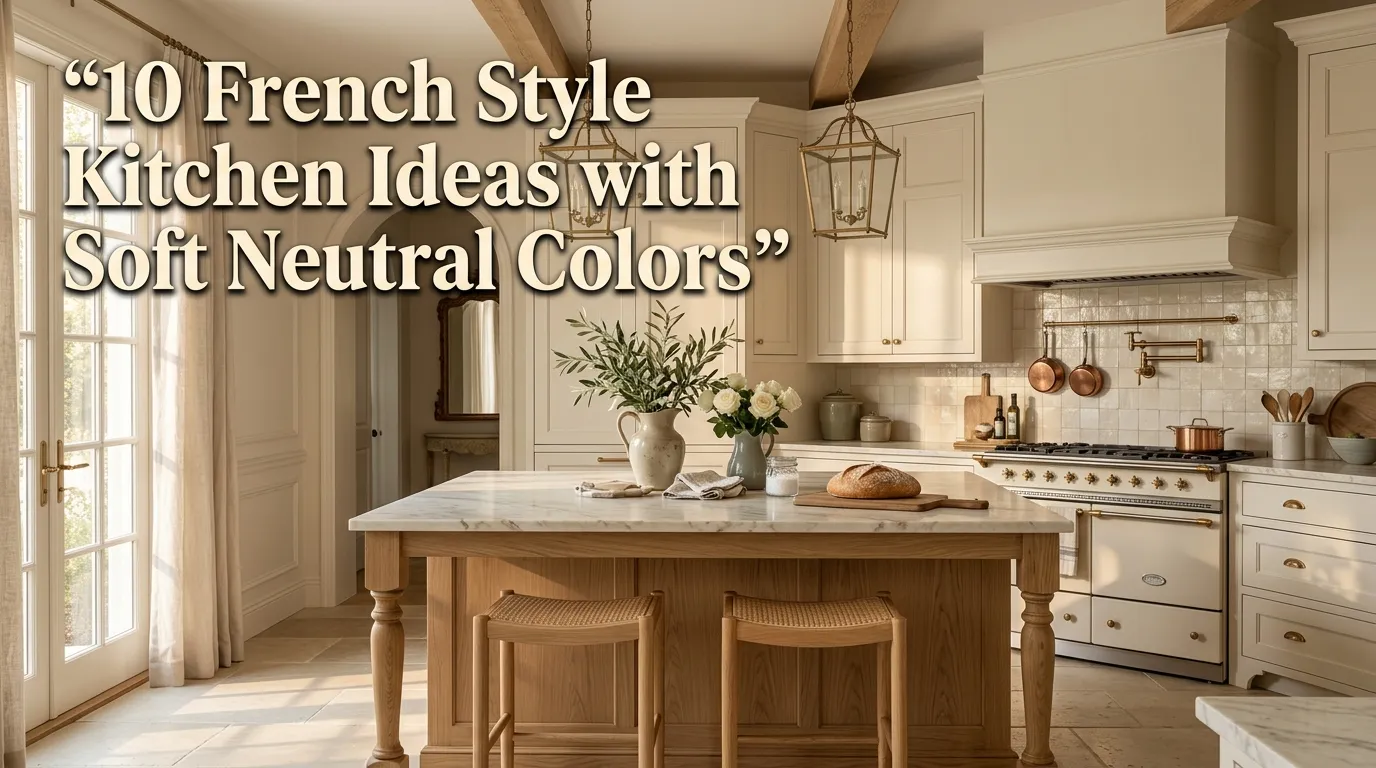
French-style kitchens have a way of feeling elegant without looking overly formal.
They combine classic architectural details, natural materials, soft colors, vintage-inspired accents, and comfortable everyday elements to create spaces that feel timeless rather than trendy.
You don’t need a centuries-old European farmhouse to capture the look.
A modern kitchen can take inspiration from French interiors through creamy cabinetry, aged brass hardware, natural stone, warm wood, decorative lighting, and subtle vintage details.
In my experience, the secret is balance.
Too many ornate elements can make a kitchen feel themed. A restrained combination of traditional details and relaxed materials creates the more effortless French-inspired atmosphere most homeowners want.
Soft neutral colors are especially useful because they allow architectural details and natural materials to become the focus.
Here are 10 French-style kitchen ideas that combine warm neutrals with timeless details for a comfortable, sophisticated look.
Table of Contents
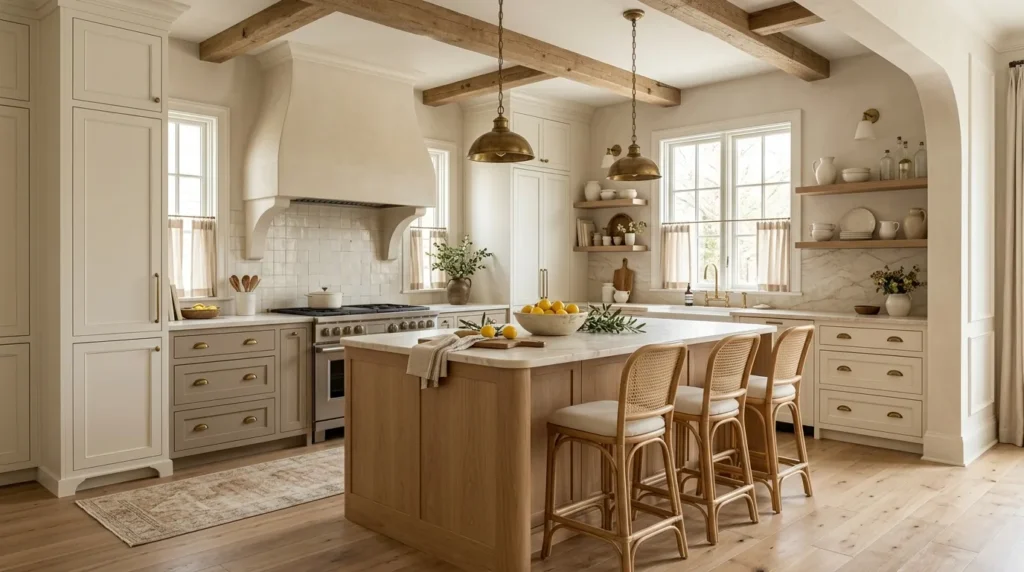
- Cream Cabinetry
- Natural Stone Counters
- Aged Brass Hardware
- Warm Wood Details
- Vintage Pendant Lights
- Open Shelving
- Farmhouse Sink
- Decorative Range Hood
- French-Inspired Island
- Layered Neutral Styling
1. Cream Cabinetry
Quick Benefits
- Creates a warm atmosphere
- Feels timeless
- Works with natural materials
- Makes kitchens feel inviting
- Complements vintage details
Why It Works
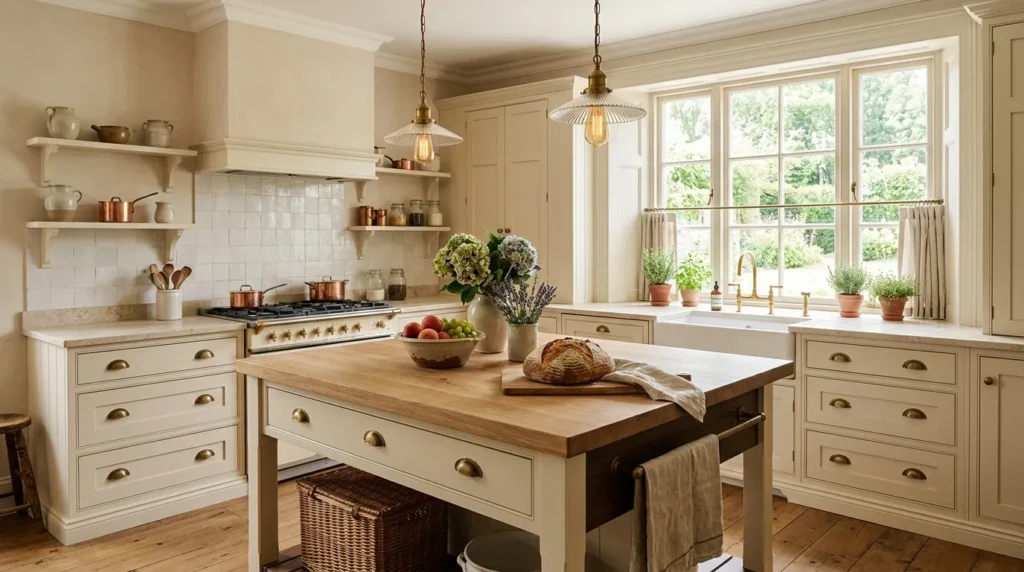
French-inspired kitchens often feel softer than stark contemporary spaces.
Cream and warm ivory cabinetry provide that softness while still keeping the kitchen bright.
They also pair beautifully with wood, stone, brass, and muted textiles.
How To Style It
Choose cabinetry in warm white, cream, ivory, or a gentle beige.
Pair it with simple hardware rather than excessive decorative details.
Use natural countertops and warm flooring to prevent the cabinetry from feeling too flat.
2. Natural Stone Counters
Quick Benefits
- Adds organic texture
- Creates a luxurious appearance
- Works with neutral cabinetry
- Feels timeless
- Provides visual variation
Why It Works
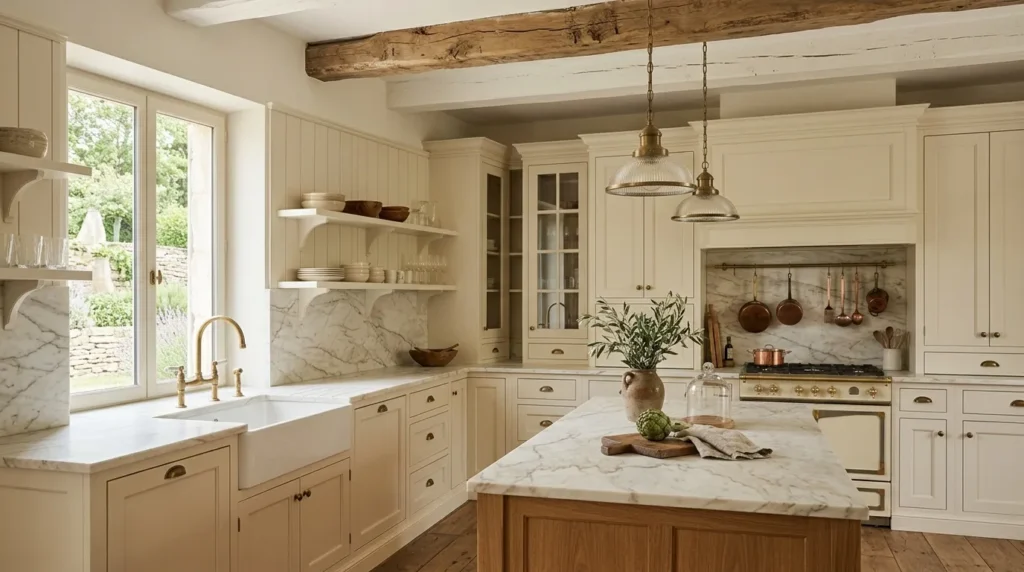
Natural stone brings subtle imperfections and movement into the kitchen.
That variation helps prevent an all-neutral kitchen from looking bland.
Marble-inspired surfaces, limestone tones, and other natural-looking materials can all contribute to a French-inspired palette.
How To Style It
Choose a countertop with gentle veining rather than an extremely dramatic pattern.
Continue the material onto a backsplash when appropriate for a more cohesive appearance.
Balance the stone with simple cabinetry and warm wood accents.
3. Aged Brass Hardware
Quick Benefits
- Adds warmth
- Creates vintage character
- Complements cream cabinetry
- Introduces subtle contrast
- Feels elegant
Why It Works
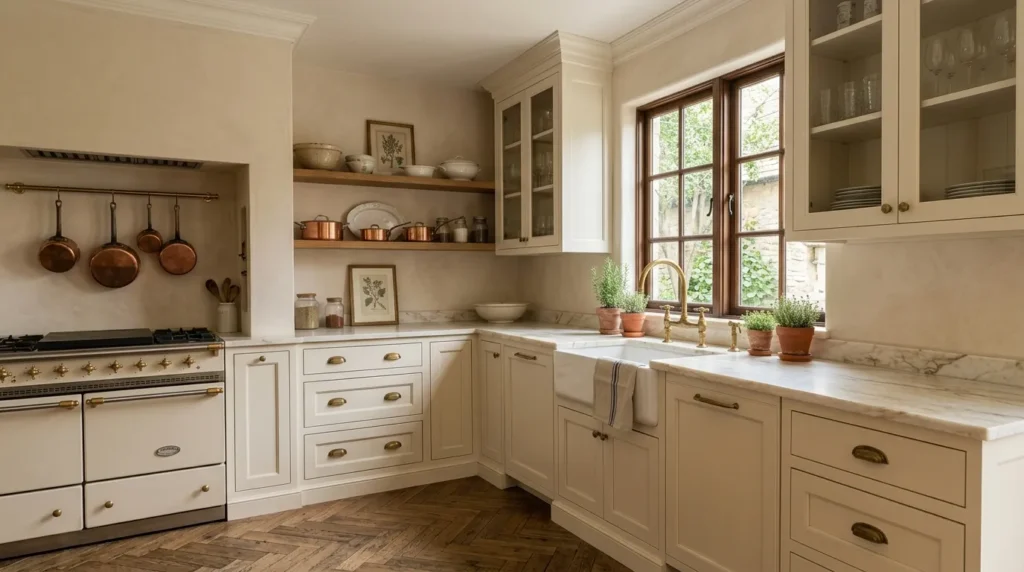
Warm metal finishes can instantly make a neutral kitchen feel more layered.
Aged brass has a softer appearance than highly polished finishes, which works especially well with French-inspired interiors.
How To Style It
Use brass on cabinet pulls, drawer handles, faucets, and selected lighting.
Keep the finish relatively consistent.
Don’t feel obligated to make every metal element match perfectly, but avoid introducing too many competing finishes.
4. Warm Wood Details
Quick Benefits
- Adds natural warmth
- Prevents a sterile appearance
- Creates texture
- Complements neutral colors
- Makes the kitchen feel relaxed
Why It Works
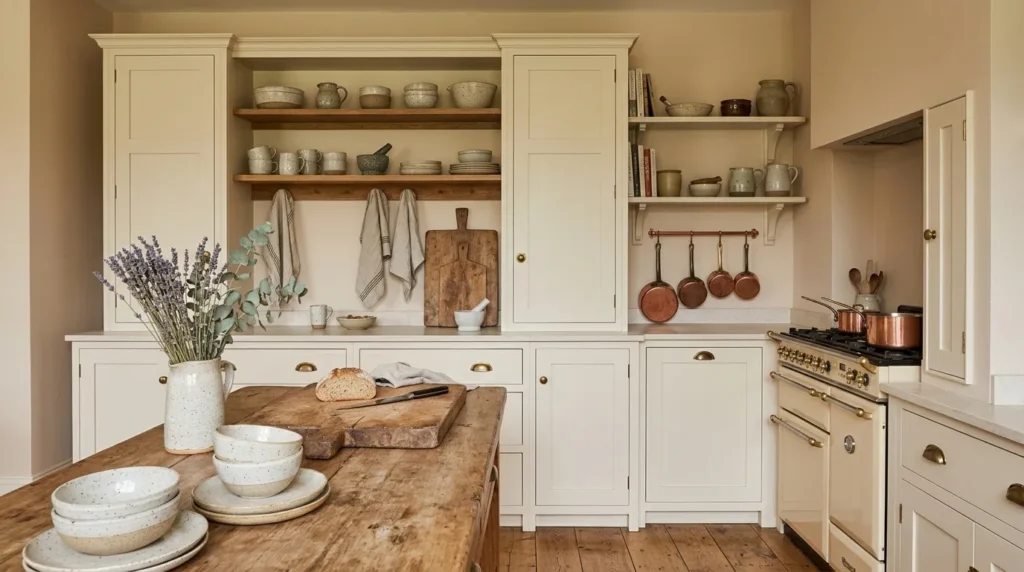
Wood balances painted cabinetry beautifully.
Its natural grain introduces an organic element that makes the kitchen feel more lived-in.
How To Style It
Add wood through flooring, cutting boards, stools, open shelving, beams, or furniture-style cabinetry.
Choose warm or natural wood tones.
Avoid excessive glossy finishes if you’re aiming for a relaxed French atmosphere.
5. Vintage Pendant Lights
Quick Benefits
- Adds personality
- Creates a focal point
- Provides task lighting
- Enhances the vintage feel
- Works above islands
Why It Works
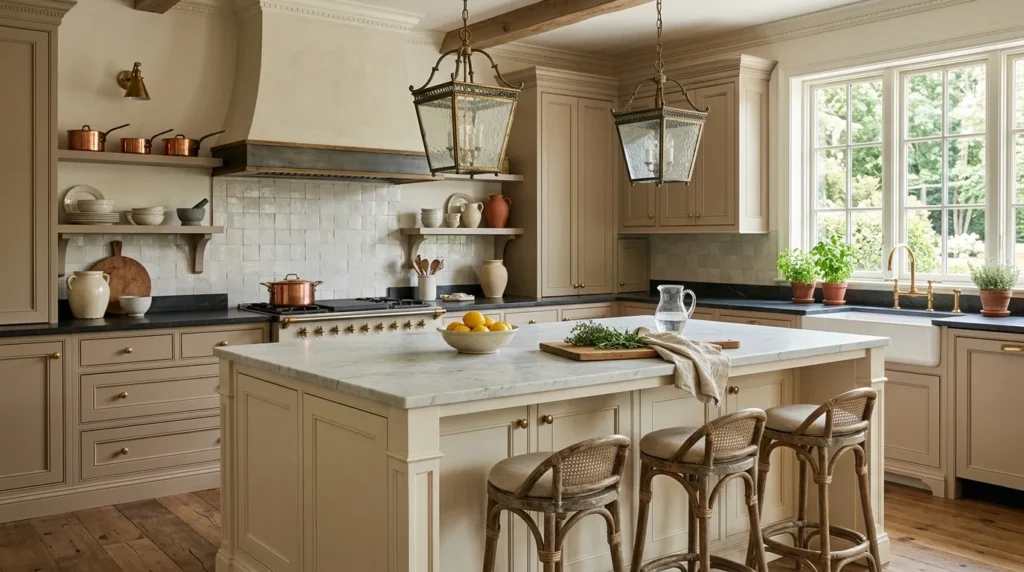
Lighting can dramatically change the character of a kitchen.
Vintage-inspired pendants can make a modern kitchen feel more collected and timeless.
How To Style It
Hang two or three appropriately scaled pendants above a kitchen island.
Look for aged metal, glass, ceramic, or traditional silhouettes.
Keep the design relatively simple if the kitchen already has strong architectural details.
6. Open Shelving
Quick Benefits
- Creates visual openness
- Displays beautiful dishes
- Adds warmth
- Makes everyday items accessible
- Introduces texture
Why It Works
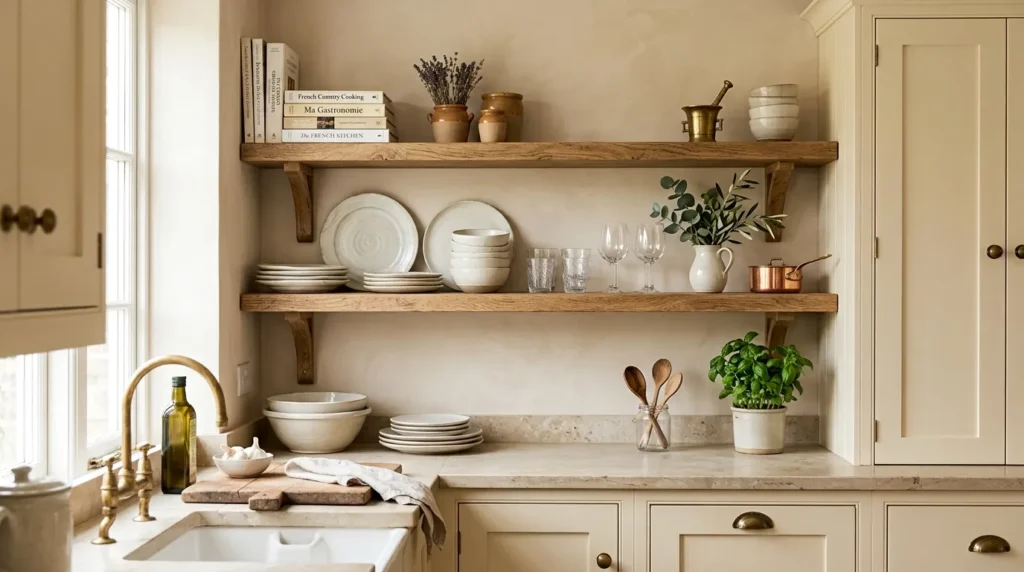
Open shelving gives French-inspired kitchens a relaxed, lived-in quality.
Instead of hiding everything behind cabinetry, carefully selected objects become part of the decor.
How To Style It
Use natural wood shelves or painted shelves that coordinate with the cabinetry.
Display ceramic plates, bowls, glassware, cutting boards, cookbooks, and a few small plants.
Leave empty space between objects.
The goal should look collected rather than crowded.
7. Farmhouse Sink
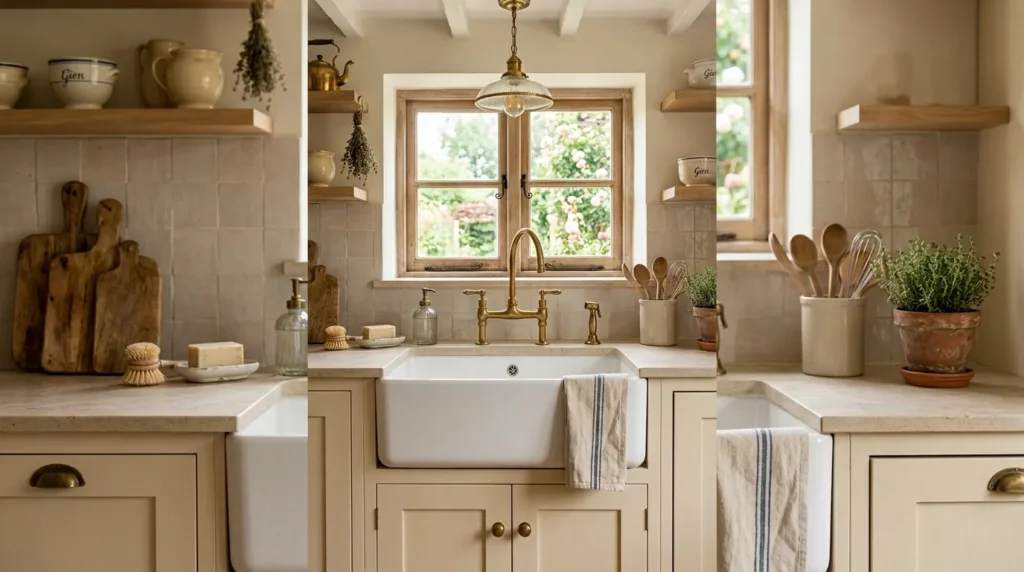
Quick Benefits
- Creates a traditional focal point
- Works beautifully with cream cabinets
- Adds character
- Feels practical
- Complements classic kitchens
Why It Works
A deep apron-front sink can immediately introduce traditional character.
Its simple silhouette works particularly well alongside shaker cabinetry and natural stone.
How To Style It
Pair the sink with a classic bridge-style or traditional-inspired faucet.
Add a simple ceramic container or small potted herb nearby.
Avoid excessive accessories around the sink because this area should remain functional.
8. Decorative Range Hood
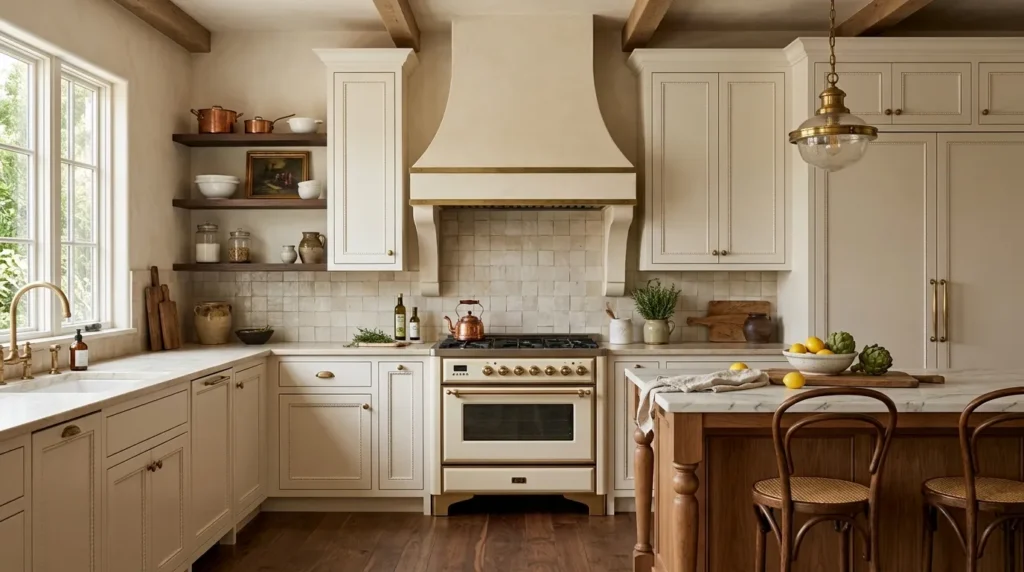
Quick Benefits
- Creates a strong focal point
- Adds architectural character
- Looks custom
- Defines the cooking zone
- Works with traditional kitchens
Why It Works
A range hood can become an architectural feature rather than something purely functional.
A plaster-style, wood-trimmed, or softly shaped hood can give the kitchen a custom European-inspired appearance.
How To Style It
Keep the hood relatively simple.
Use a warm neutral finish.
Balance it with understated cabinetry on either side.
A few open shelves or decorative objects can help frame the cooking area.
9. French-Inspired Island
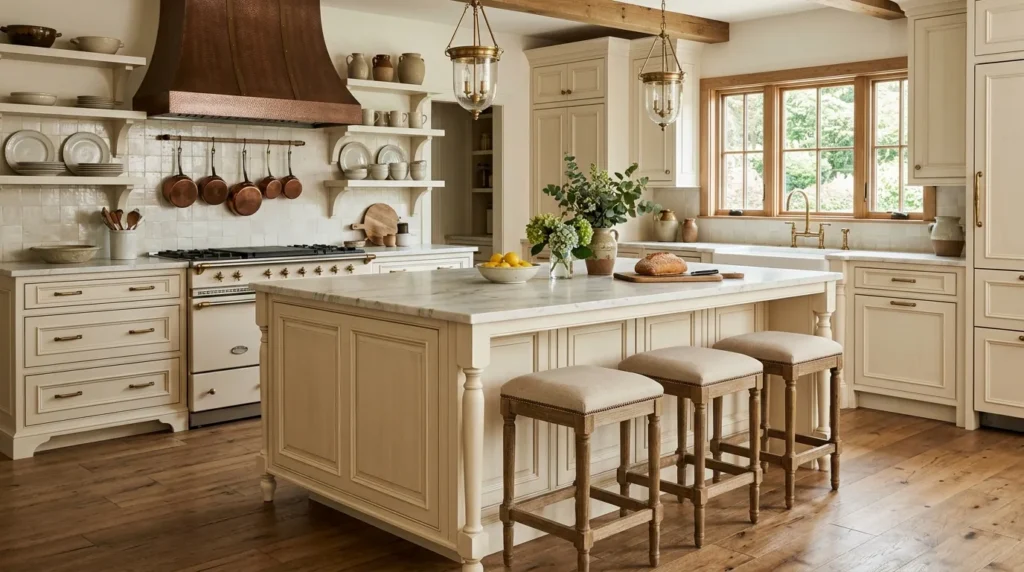
Quick Benefits
- Creates a gathering point
- Adds furniture-like character
- Provides workspace
- Anchors the kitchen
- Works with traditional layouts
Why It Works
French-inspired kitchens often feel more like rooms than purely functional workspaces.
A furniture-style island can reinforce that feeling.
How To Style It
Choose an island with decorative legs, paneled sides, or a contrasting wood finish.
Pair it with comfortable counter stools.
Keep the countertop uncluttered.
Add a simple bowl of fruit or a small arrangement of greenery.
10. Layered Neutral Styling
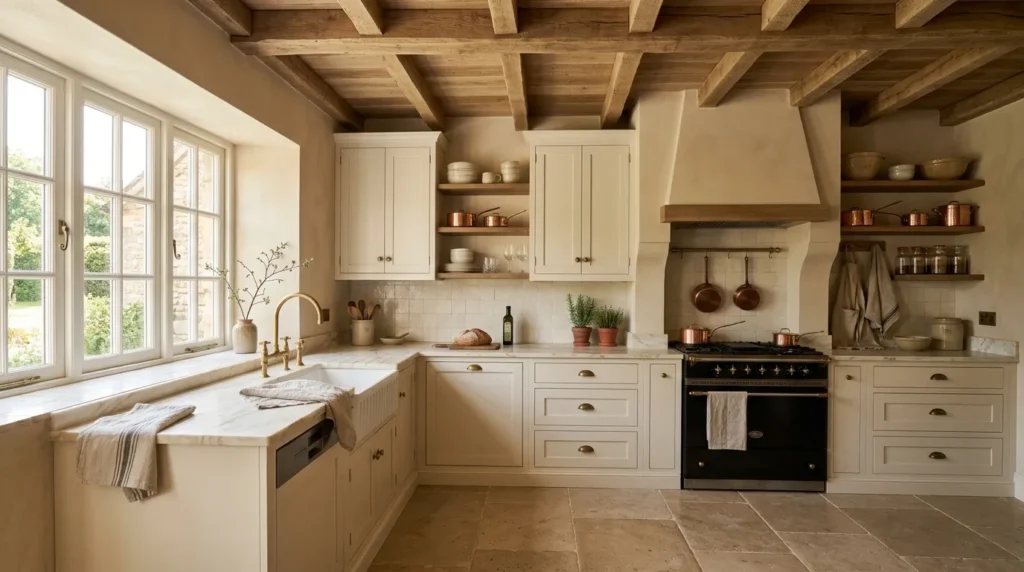
Quick Benefits
- Creates depth
- Prevents blandness
- Feels sophisticated
- Works with multiple styles
- Makes the kitchen feel finished
Why It Works
A neutral kitchen needs variation.
Using several related shades creates depth without introducing visual chaos.
How To Style It
Layer cream cabinetry with beige textiles, warm white ceramics, natural wood, soft stone, and aged brass.
Use slightly different shades rather than trying to match everything perfectly.
This creates the relaxed, collected appearance associated with timeless French interiors.
How To Create a French-Inspired Color Palette
A successful palette doesn’t need many colors.
Try combining:
Warm White + Cream + Beige + Natural Wood + Aged Brass
Or:
Ivory + Taupe + Soft Gray + Limestone + Warm Brass
For a slightly more colorful interpretation, add muted sage or dusty blue as a small accent.
The key is keeping the colors soft and slightly understated.
French Kitchen Materials to Consider
Natural Stone
Adds texture and timeless character.
Wood
Creates warmth.
Ceramic
Introduces handcrafted charm.
Brass
Adds an elegant vintage accent.
Linen
Softens the space through curtains or textiles.
Painted Cabinetry
Provides the classic foundation.
How To Avoid a “Too Themed” French Kitchen
French-inspired doesn’t mean every item needs to look antique.
Instead, combine old-world references with contemporary practicality.
For example:
- Modern appliances + traditional cabinetry
- Simple countertops + vintage lighting
- Contemporary stools + aged brass
- Classic molding + modern storage
- New cabinetry + antique-inspired accessories
This balance creates a kitchen that feels inspired rather than staged.
Common Mistakes
Using Too Much Bright White
Warm whites usually create a softer atmosphere.
Adding Too Many Vintage Pieces
One or two strong vintage-inspired details can be more effective.
Overloading Open Shelves
Leave breathing room.
Choosing Excessively Shiny Finishes
Matte and aged finishes tend to feel more relaxed.
Mixing Too Many Colors
Keep the main palette restrained.
Ignoring Lighting
A beautiful kitchen can still feel cold if the lighting isn’t layered.
FAQ
What colors are best for a French-style kitchen?
Warm white, cream, ivory, beige, taupe, soft gray, muted sage, and natural wood tones work beautifully.
How can I make my kitchen look French without remodeling?
Try changing cabinet hardware, adding vintage-inspired lighting, introducing natural wood accessories, styling open shelving, and using warm textiles and ceramics.
What countertops work with French-style kitchens?
Natural stone and natural-looking surfaces with subtle movement work particularly well with cream and neutral cabinetry.
Does French kitchen design have to be traditional?
No. Modern French-inspired kitchens can combine clean contemporary elements with classic materials and architectural details.
What hardware looks best in a French kitchen?
Aged brass, antique brass, bronze, and other warm finishes can complement the soft neutral palette.
How do I make a neutral French kitchen feel less boring?
Layer different textures and materials through stone, wood, ceramics, metal, textiles, and subtle variations in neutral colors.
Can a small kitchen have French-style decor?
Absolutely. Use cream cabinetry, simple hardware, natural materials, and carefully selected decorative details to create the look without overwhelming the space.
Conclusion
A French-inspired kitchen doesn’t have to be elaborate.
The most beautiful examples often rely on a simple combination of warm neutrals, natural materials, classic architecture, and a few carefully selected details.
Start with cream or ivory cabinetry.
Add natural stone.
Introduce warm wood.
Choose aged brass hardware.
Bring in vintage-inspired lighting and ceramics.
Then layer everything with subtle textures.
The result should feel comfortable, collected, elegant, and timeless—a kitchen that looks beautiful today but won’t feel dated a few years from now.