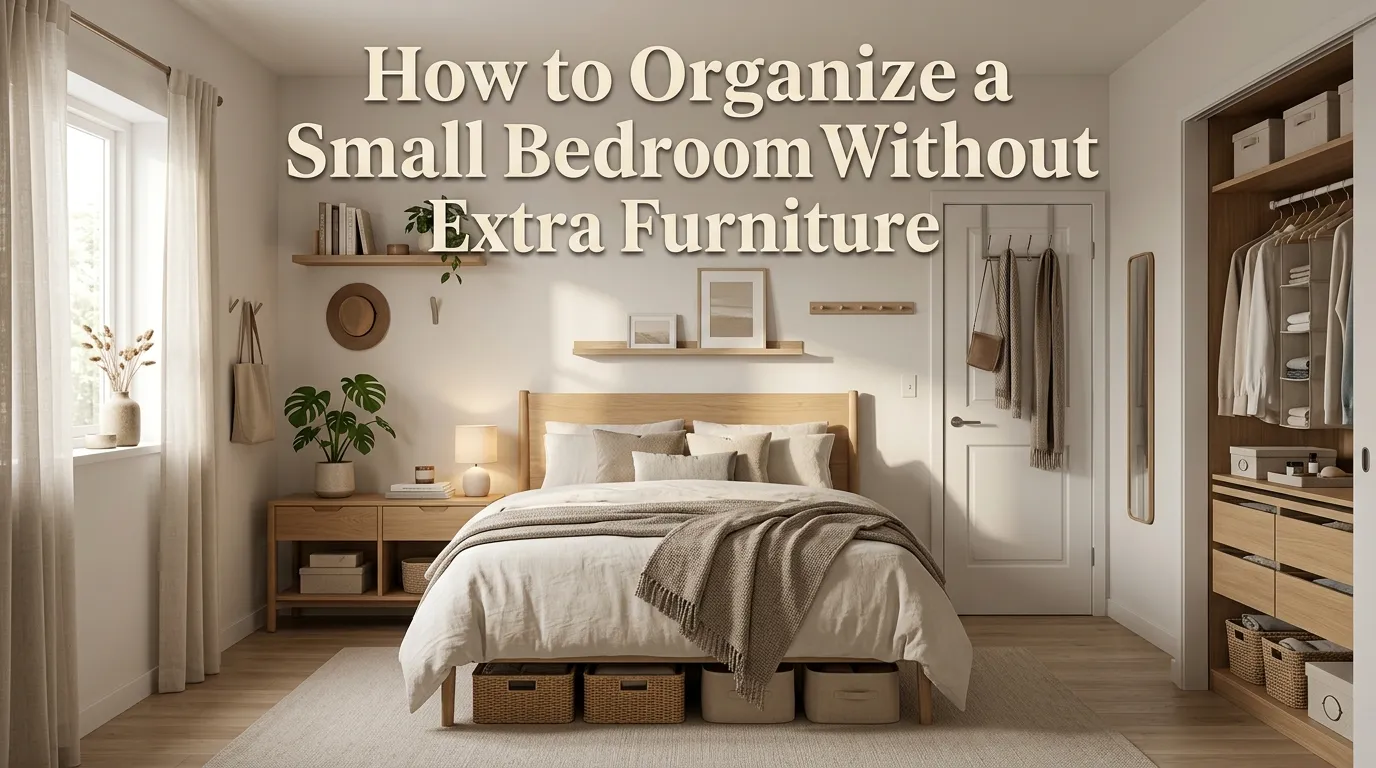
How to Organize a Small Bedroom Without Extra Furniture
A small bedroom can become cluttered surprisingly quickly.
When floor space is limited, the natural instinct is often to buy another shelf, cabinet, nightstand, or storage unit. But adding more furniture isn’t always the best solution. Too many pieces can make a small bedroom feel even tighter.
Instead, look at the storage opportunities you already have.
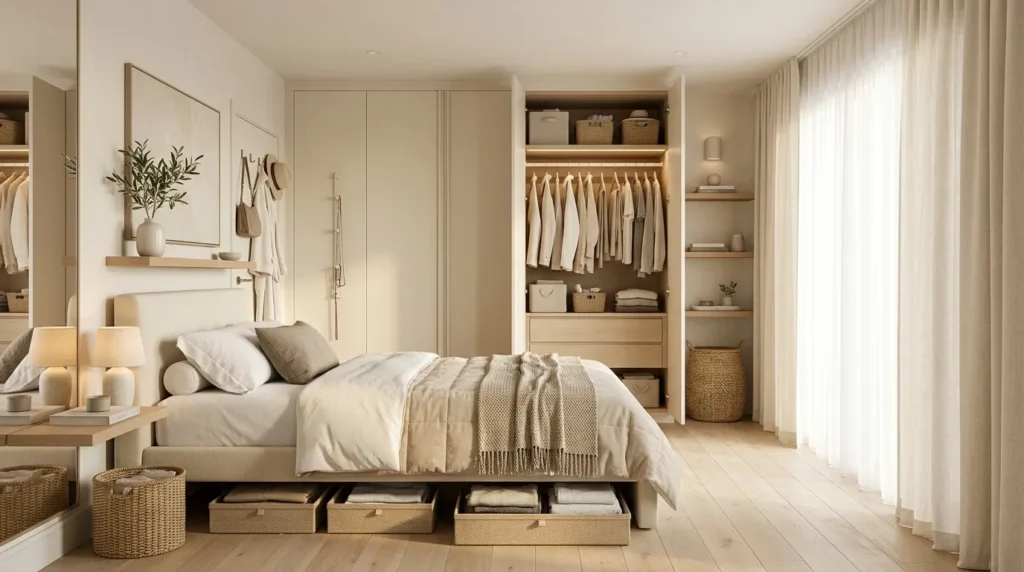
The space underneath the bed, the back of a door, the inside of a closet, the wall above existing furniture, and even unused corners can all become valuable organization zones.
In my experience, the most successful small bedrooms use existing furniture more efficiently rather than adding more furniture.
The goal isn’t to hide everything. It’s to give the things you actually use a logical home while keeping the room visually calm.
Here are 10 practical ways to organize a small bedroom without buying extra furniture.
Table of Contents
- Use Under-Bed Space
- Organize Closet Doors
- Maximize Closet Space
- Use Wall Space
- Declutter Nightstands
- Fold Clothes Vertically
- Use Hidden Corners
- Organize Accessories
- Simplify Bedding
- Create Daily Reset
1. Use Under-Bed Space
Quick Benefits
- Uses overlooked space
- Keeps belongings hidden
- Doesn’t reduce walking space
- Works for seasonal items
- Makes storage more efficient
Why It Works
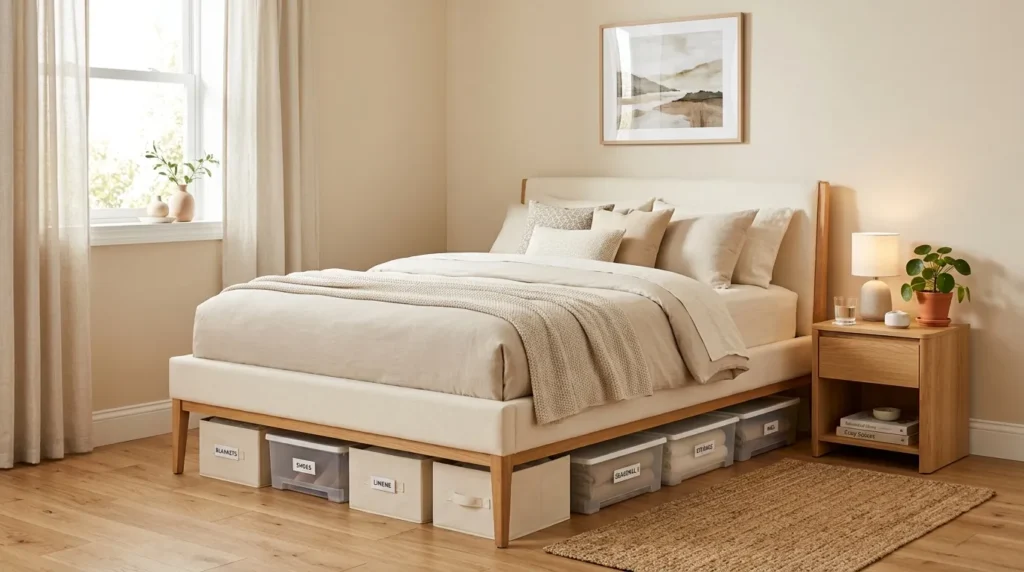
The area underneath a bed is one of the most useful storage zones in a small bedroom.
Instead of allowing dust and random objects to collect there, turn the space into an intentional storage area.
It works particularly well for things you don’t need every day.
How To Style It
Use low-profile storage boxes, fabric containers, or appropriately sized rolling organizers.
Store seasonal clothing, extra bedding, shoes, or rarely used accessories.
Choose containers that are easy to pull out so you don’t have to empty the entire area whenever you need something.
Keep the most frequently used items toward the front.
2. Organize Closet Doors
Quick Benefits
- Adds storage without furniture
- Uses forgotten space
- Keeps small items accessible
- Works in compact rooms
- Great for accessories
Why It Works
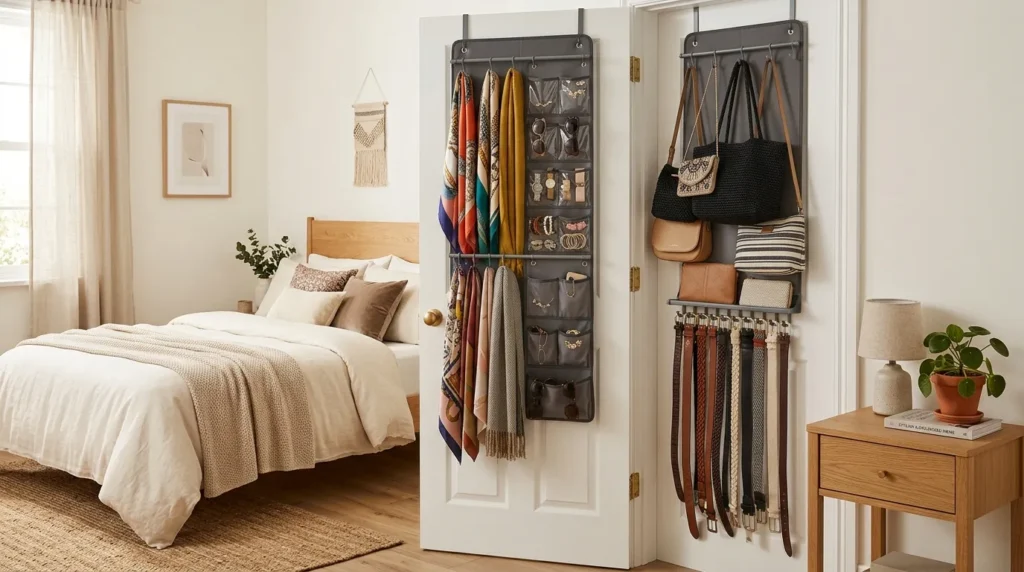
The back of a closet door is essentially unused vertical real estate.
A suitable over-door organizer can create multiple compartments without taking up floor space.
How To Style It
Use the door for lightweight items such as scarves, belts, handbags, accessories, or small beauty supplies.
Avoid overloading hinges or doors with excessive weight.
Choose a slim organizer that doesn’t interfere with the door closing.
Keep frequently used items at eye level.
3. Maximize Closet Space
Quick Benefits
- Creates more usable storage
- Reduces clothing piles
- Makes items easier to find
- Uses existing furniture
- Improves everyday routines
Why It Works
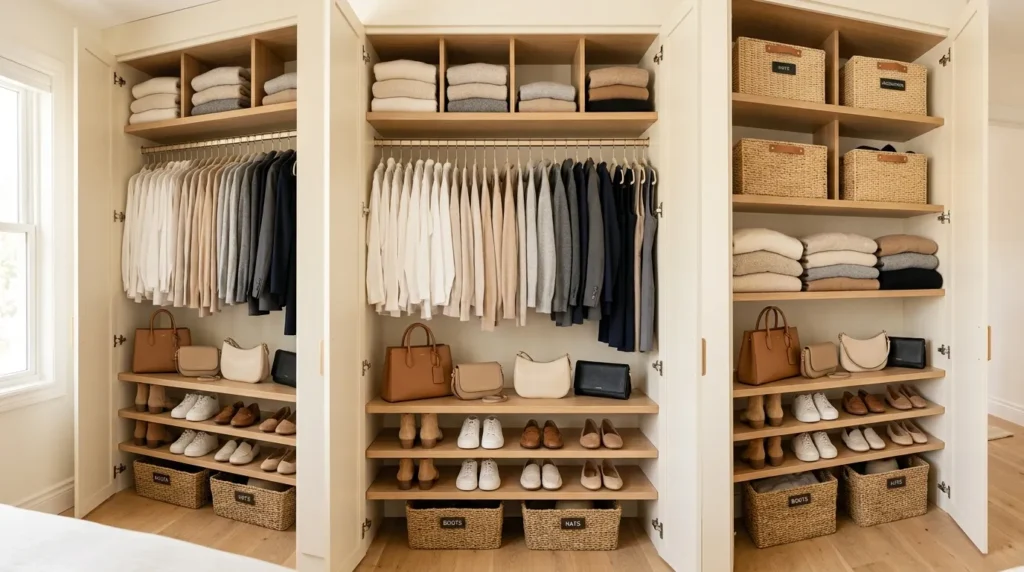
A small closet can hold considerably more when every section is used intentionally.
Instead of simply hanging everything, use the available vertical space and organize clothing by type.
How To Style It
Start by removing clothing you no longer wear.
Group similar items together.
Use slim matching hangers if they work for your wardrobe.
Fold thicker pieces on shelves.
Place less frequently used clothing toward the back or higher areas, while everyday pieces remain easiest to reach.
4. Use Wall Space
Quick Benefits
- Keeps the floor open
- Adds functional storage
- Creates visual interest
- Works in tiny rooms
- Makes use of vertical space
Why It Works
Walls don’t consume walking space.
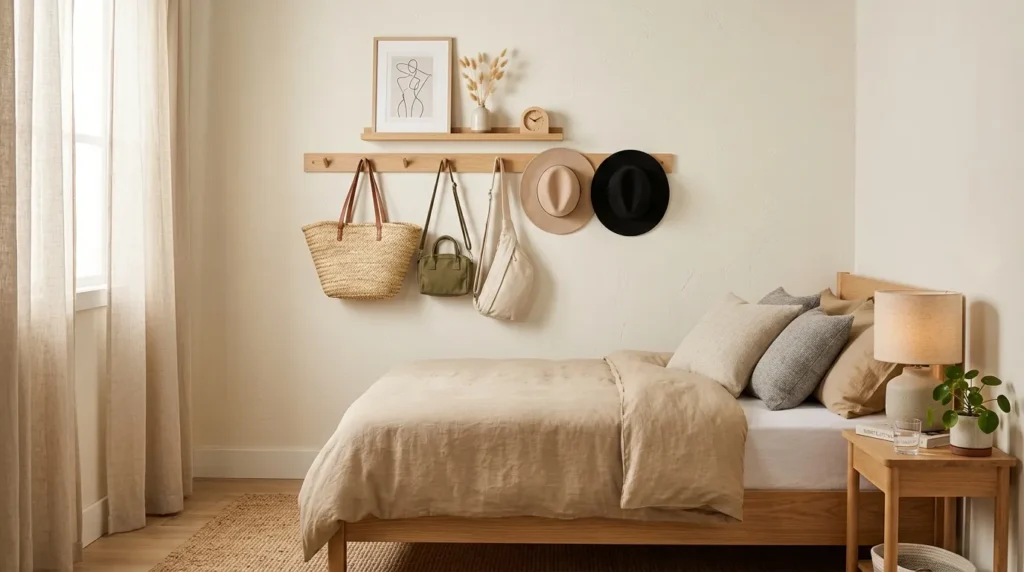
A few carefully chosen wall-mounted solutions can provide useful organization without making the bedroom feel crowded.
How To Style It
Use wall hooks for frequently worn items.
Install a small wall-mounted organizer where appropriate.
Add floating shelves only when you genuinely need them.
You can also use a pegboard-style organization system for lightweight accessories.
Keep the arrangement visually simple.
5. Declutter Nightstands
Quick Benefits
- Creates instant calm
- Makes cleaning easier
- Gives essentials a home
- Reduces visual clutter
- Improves bedtime routines
Why It Works
A crowded nightstand can make a small bedroom feel messy even when the rest of the room is organized.
Most people only need a few things beside the bed.
How To Style It
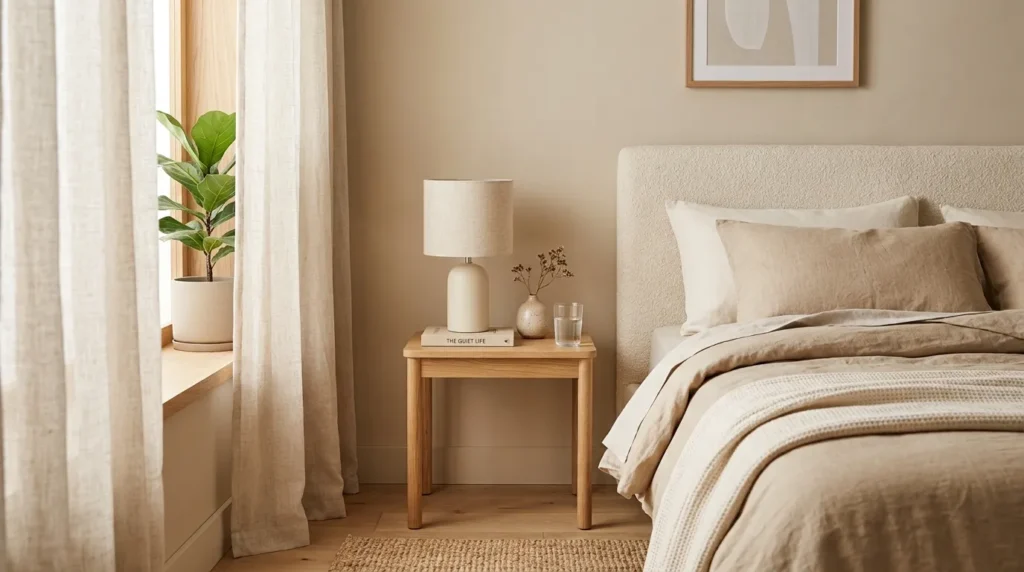
Keep only daily essentials visible.
A small lamp, book, water glass, and one decorative object may be enough.
Use the existing drawer for chargers, medications where appropriate, reading glasses, or other personal necessities.
Remove items that belong elsewhere.
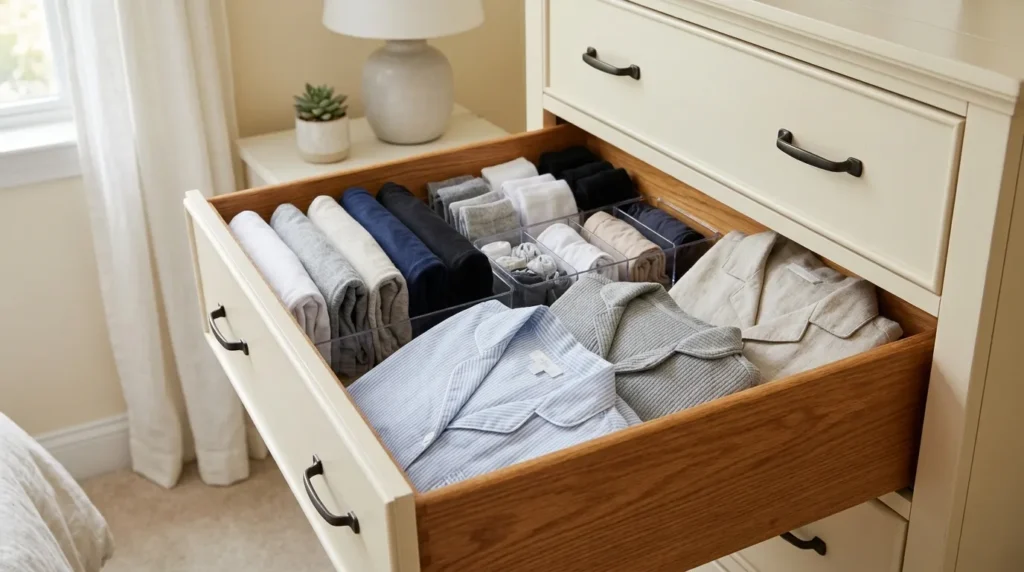
6. Fold Clothes Vertically
Quick Benefits
- Makes drawers easier to use
- Improves visibility
- Prevents clothing piles
- Maximizes drawer capacity
- Reduces searching
Why It Works
When clothes are stacked horizontally, the items underneath can easily disappear.
Vertical folding allows you to see more pieces at once.
How To Style It
Fold shirts, pajamas, workout clothes, and similar items into compact sections.
Arrange them upright rather than stacking everything in one tall pile.
Group similar categories together.
Don’t pack drawers so tightly that removing one item disrupts everything around it.
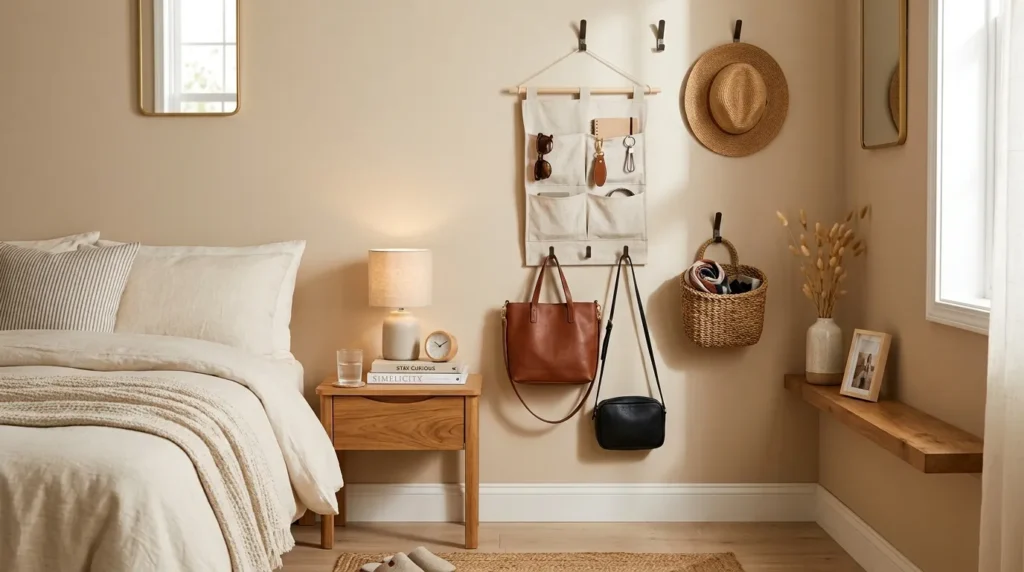
7. Use Hidden Corners
Quick Benefits
- Makes use of awkward areas
- Keeps belongings off the floor
- Creates additional function
- Works without furniture
- Helps maintain open space
Why It Works
Small bedrooms often contain narrow gaps or unused corners that aren’t large enough for furniture but are perfect for small organization solutions.
How To Style It
Look behind the door.
Check the area beside the closet.
Consider the wall beside the bed.
Look above existing furniture.
Use hooks, slim organizers, baskets, or other appropriate solutions rather than filling the corner with another large piece.
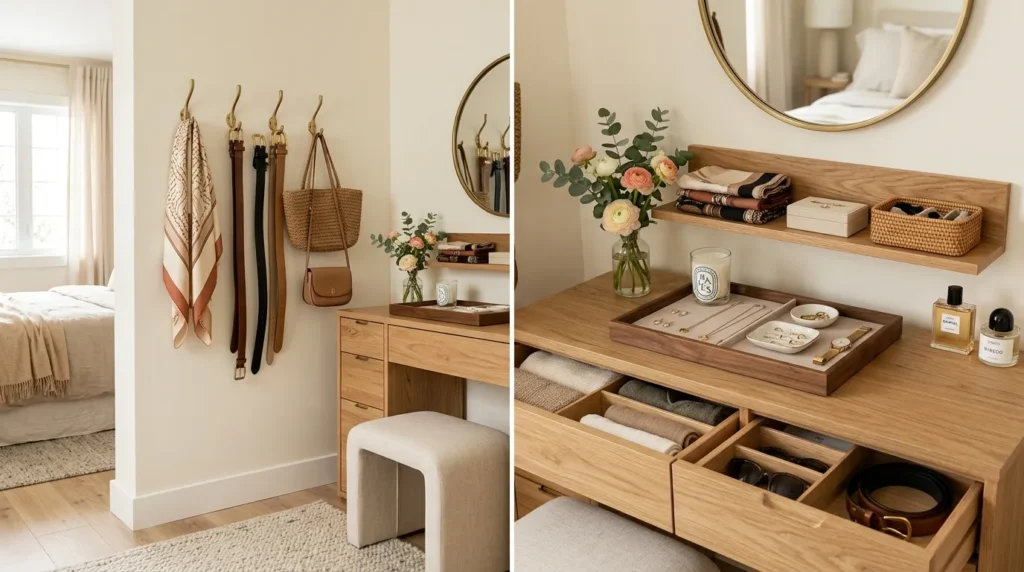
8. Organize Accessories
Quick Benefits
- Prevents tangled items
- Makes getting dressed easier
- Saves drawer space
- Protects smaller belongings
- Reduces visual clutter
Why It Works
Accessories are small, but they can create disproportionate clutter.
Jewelry, belts, scarves, handbags, and hair accessories can quickly spread across surfaces.
How To Style It
Group accessories by type.
Use drawer dividers if you already have drawers available.
Hang scarves and belts on suitable hooks.
Keep frequently worn accessories easy to reach.
Store special-occasion pieces separately so everyday items remain simple to access.
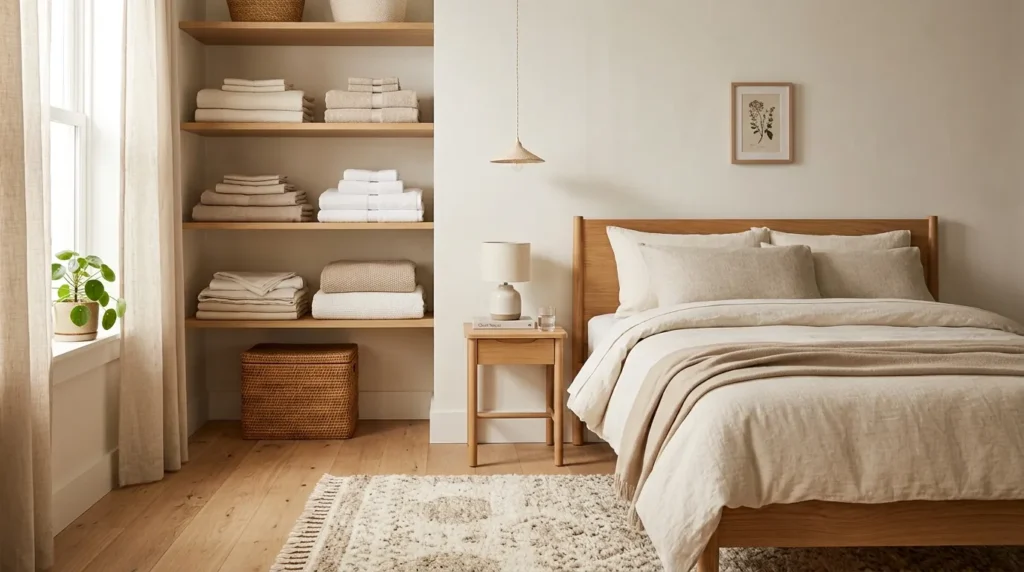
9. Simplify Bedding
Quick Benefits
- Frees storage space
- Reduces clutter
- Makes linen storage easier
- Simplifies laundry
- Keeps the bedroom organized
Why It Works
Extra bedding can take up a surprising amount of storage space.
A small bedroom doesn’t necessarily need multiple sets for every possible situation.
How To Style It
Keep the bedding sets you genuinely use.
Store extra sheets and pillowcases together.
Place seasonal blankets in under-bed storage when they’re not needed.
Use pillowcases to contain matching sheet sets so everything stays together.
10. Create Daily Reset
Quick Benefits
- Prevents clutter buildup
- Takes only a few minutes
- Keeps surfaces clear
- Makes mornings easier
- Maintains organization
Why It Works
The best organization system is one you can maintain.
A small daily reset prevents clothes, accessories, books, and miscellaneous items from gradually taking over the room.
How To Style It
Before going to bed, take a few minutes to:
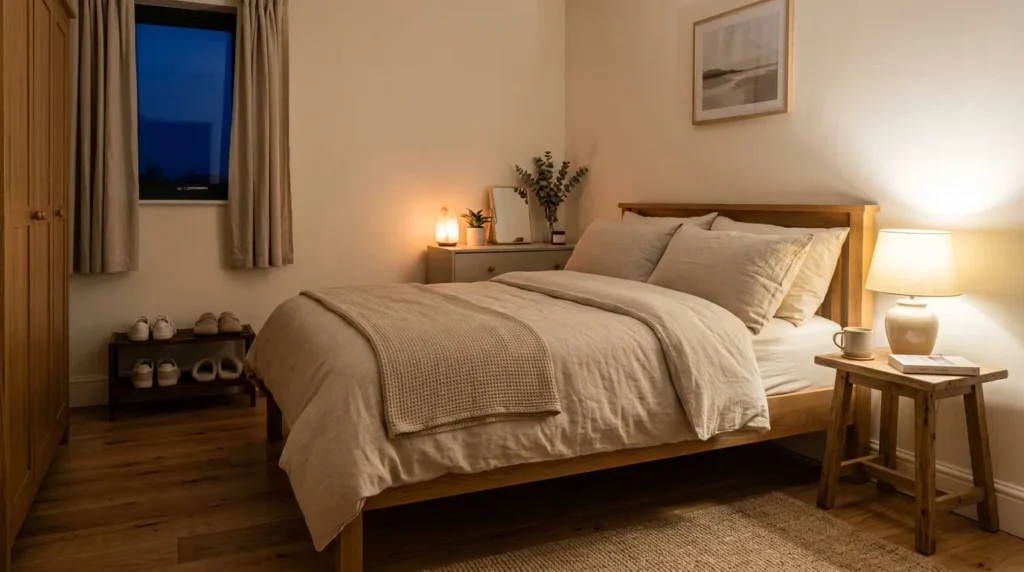
- Return items to their homes
- Put dirty clothes in the hamper
- Clear the nightstand
- Hang or fold clothing
- Put shoes away
- Reset the bed
You don’t need a perfect bedroom every night.
You just need a simple routine that prevents small messes from becoming large ones.
How To Organize a Small Bedroom Closet
Start by removing everything you no longer use.
Then create categories such as:
Everyday clothing
Occasional clothing
Seasonal clothing
Accessories
Shoes
Special items
Keep the pieces you use most often in the easiest-to-reach areas.
Use existing shelves and hanging space efficiently before buying anything new.
If you do need organizers later, choose pieces based on the exact storage problem rather than purchasing containers simply because they look attractive.
How To Make a Small Bedroom Look Less Cluttered
Organization isn’t only about storage.
Visual simplicity matters too.
Try these strategies:
- Keep surfaces mostly clear
- Use a consistent color palette
- Limit visible accessories
- Hide cords where practical
- Choose bedding with simple patterns
- Keep the floor open
- Group similar items together
- Avoid filling every wall
A room can contain everything you need without displaying everything you own.
What to Store Under the Bed
Under-bed storage is best for items that don’t require daily access.
Consider:
- Seasonal clothing
- Extra bedding
- Shoes
- Luggage accessories
- Spare blankets
- Occasion-specific items
Avoid storing anything that could be damaged by moisture, dust, pests, or poor ventilation.
Use appropriate sealed containers when necessary and make sure the area remains clean and dry.
Small Bedroom Organization Mistakes
Adding Too Much Storage Furniture
More furniture can make the room harder to navigate.
Keeping Everything on Display
Visible belongings create visual noise.
Ignoring Vertical Space
Walls and doors can provide valuable organization opportunities.
Overfilling Drawers
Packed drawers become difficult to maintain.
Keeping Clothes You Never Wear
Storage space shouldn’t be dedicated to items that don’t serve your current life.
Creating Complicated Systems
If putting something away takes too many steps, you’re less likely to maintain the system.
FAQ
How can I organize a small bedroom without buying furniture?
Start by maximizing your existing closet, drawers, under-bed space, doors, and walls. Decluttering often creates more usable storage than adding another furniture piece.
How do I organize clothes in a tiny bedroom?
Declutter first, then group clothing by category. Use existing drawers and closet space efficiently, and consider vertical folding for suitable garments.
What should I store under my bed?
Seasonal clothing, extra bedding, shoes, and other less frequently used belongings can work well, provided the area is clean, dry, and suitable for storage.
How do I keep a small bedroom from looking cluttered?
Keep surfaces clear, reduce visible accessories, use vertical storage, maintain an open floor area, and give frequently used belongings designated homes.
Is vertical storage good for a small bedroom?
Yes. Walls, closet doors, and other vertical areas can provide storage without taking up valuable floor space.
How do I organize a small closet?
Remove unused clothing, group similar pieces together, maximize existing hanging and shelf space, and keep frequently used items within easy reach.
How often should I reset a small bedroom?
A short daily reset can prevent clutter from accumulating. A more thorough organization session can be done whenever specific areas begin becoming difficult to maintain.
Conclusion
A small bedroom doesn’t necessarily need more furniture.
It needs better use of the space you already have.
Look underneath the bed.
Use the back of the closet door.
Maximize your existing closet.
Take advantage of vertical walls.
Keep nightstands and surfaces simple.
Organize drawers so you can actually see what you own.
And create a short daily reset that keeps everything manageable.
The biggest transformation often happens when you stop asking, “Where can I fit another storage unit?” and start asking, “What can I remove, reorganize, or store more intelligently?”
With fewer unnecessary belongings and smarter use of existing space, even a very small bedroom can feel calm, functional, and surprisingly spacious.