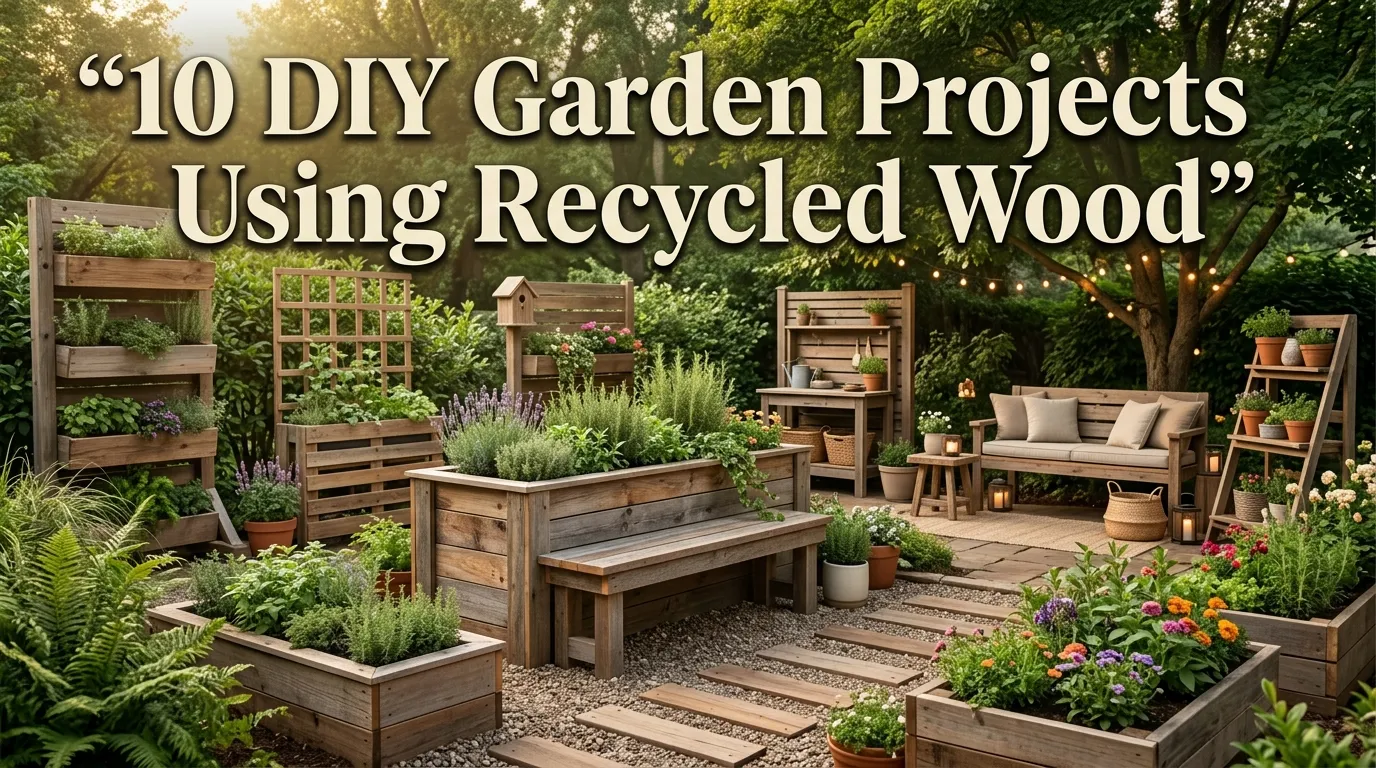
10 DIY Garden Projects Using Recycled Wood
Recycled wood can give a garden something that brand-new materials sometimes can’t: character.
Old boards, reclaimed lumber, weathered fence pieces, wooden crates, and leftover project scraps can become surprisingly beautiful garden features with a little creativity. The natural imperfections—knots, faded grain, small marks, and variations in color—can make outdoor spaces feel warmer and more collected.
The best part is that many projects don’t require advanced woodworking skills.
In my experience, the trick is to start with the wood you already have and design the project around its size and condition rather than trying to force it into a completely different shape.
Before using reclaimed or recycled wood outdoors, inspect it carefully. Avoid pieces with rot, chemical contamination, excessive deterioration, or unknown treatments that may not be appropriate for your intended use. Remove loose nails and splinters, and use suitable outdoor finishes when needed.
Here are 10 creative recycled-wood garden projects that can add function, charm, and personality to your outdoor space.
Table of Contents
- Garden Planter Boxes
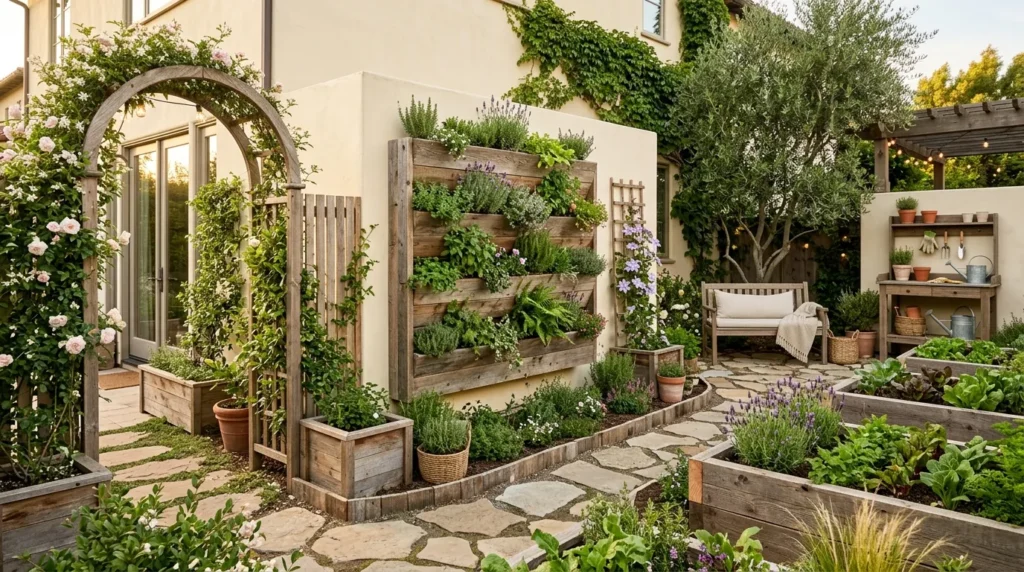
- Vertical Herb Garden
- Rustic Garden Trellis
- Wooden Garden Sign
- Potting Bench
- Raised Garden Beds
- Outdoor Plant Shelf
- Garden Tool Rack
- Compost Bin
- Garden Seating
1. Garden Planter Boxes
Quick Benefits
- Reuses leftover boards
- Adds instant garden structure
- Works in small spaces
- Easy to customize
- Creates a rustic look
Why It Works
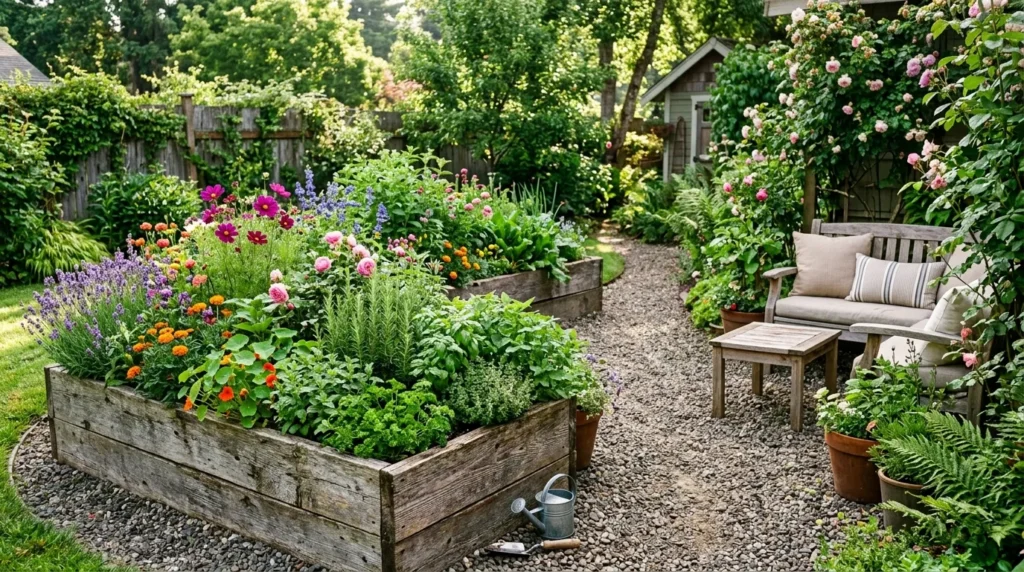
Planter boxes are one of the easiest ways to turn recycled wood into something useful.
Old boards with attractive grain or weathering can create containers that look intentionally rustic rather than perfectly manufactured.
They’re especially helpful when you want to add flowers, herbs, or greenery along a patio, porch, fence, or garden path.
How To Style It
Build a simple rectangular box using appropriately sized outdoor-suitable wood.
Add drainage openings so excess water can escape.
Line the interior appropriately if needed, while still allowing drainage.
For a cohesive garden, make several boxes in slightly different sizes.
Fill them with seasonal flowers, herbs, or foliage plants that suit your local growing conditions.
2. Vertical Herb Garden
Quick Benefits
- Saves floor space
- Reuses small wood pieces
- Makes herbs accessible
- Adds vertical interest
- Works on patios and balconies
Why It Works
Vertical gardening is especially useful when you don’t have much ground space.
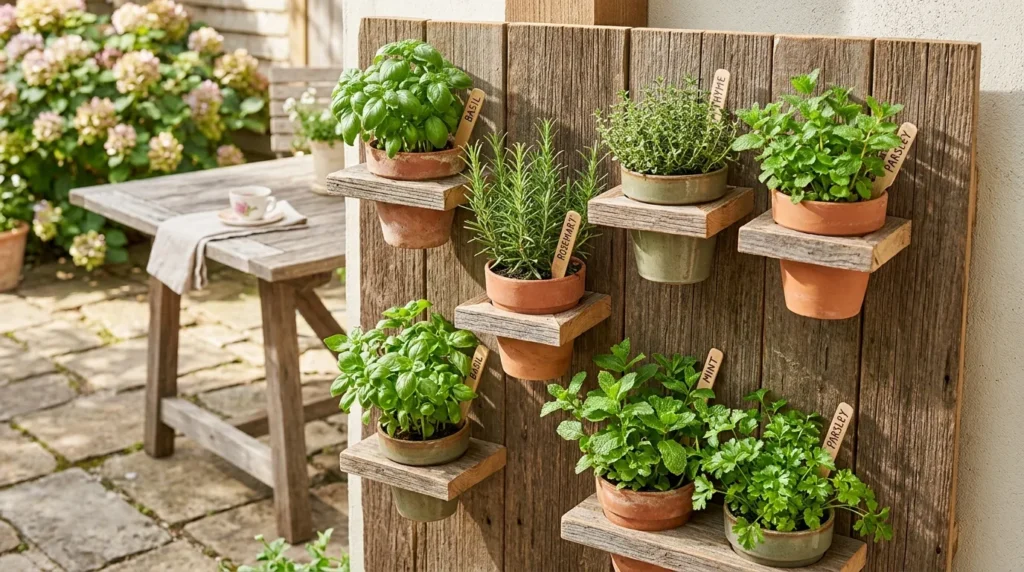
A recycled wooden board can become the foundation for a compact herb-growing station.
It also turns an otherwise plain wall or fence into a functional garden feature.
How To Style It
Use a sturdy board as the backing.
Attach appropriately sized planters or containers securely.
Label each herb with small wooden tags for a charming handmade detail.
Place the garden where the herbs receive the light they need.
Keep watering and drainage in mind when choosing the location.
3. Rustic Garden Trellis
Quick Benefits
- Supports climbing plants
- Adds height
- Creates a focal point
- Uses narrow wood pieces
- Adds rustic character
Why It Works
A trellis can provide both function and architecture.
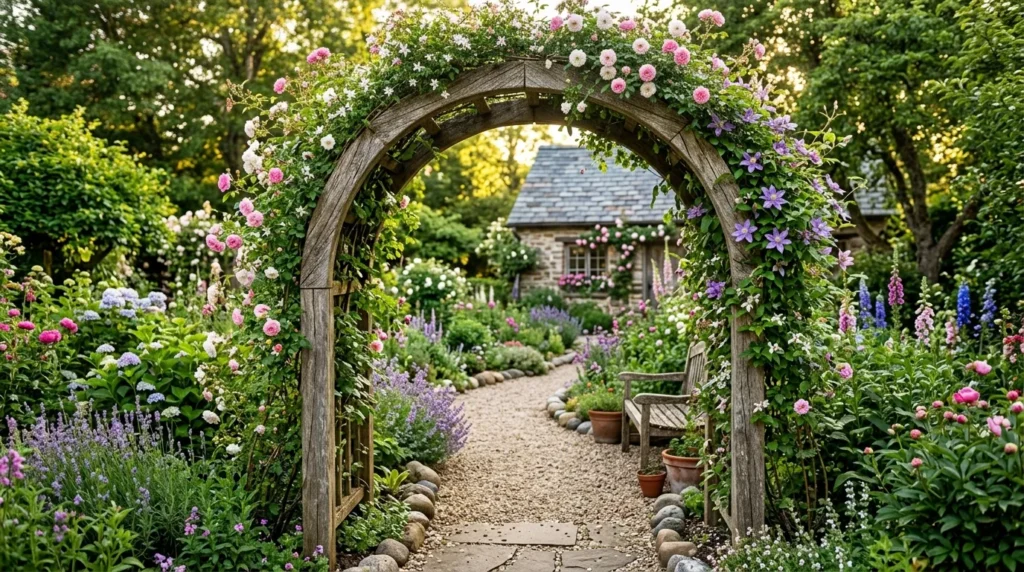
Climbing plants naturally soften the appearance of recycled wood while adding another layer of greenery to the garden.
How To Style It
Use straight reclaimed boards or narrow strips to create a simple grid or geometric pattern.
Secure the structure properly so it can support mature plants and withstand outdoor conditions.
Position it behind climbing flowers, vines, or suitable vegetables.
The weathered wood can become more attractive as the plants gradually cover it.
4. Wooden Garden Sign
Quick Benefits
- Very beginner-friendly
- Uses small scraps
- Adds personality
- Customizable
- Makes a charming accent
Why It Works
You don’t need a large amount of wood to create something memorable.
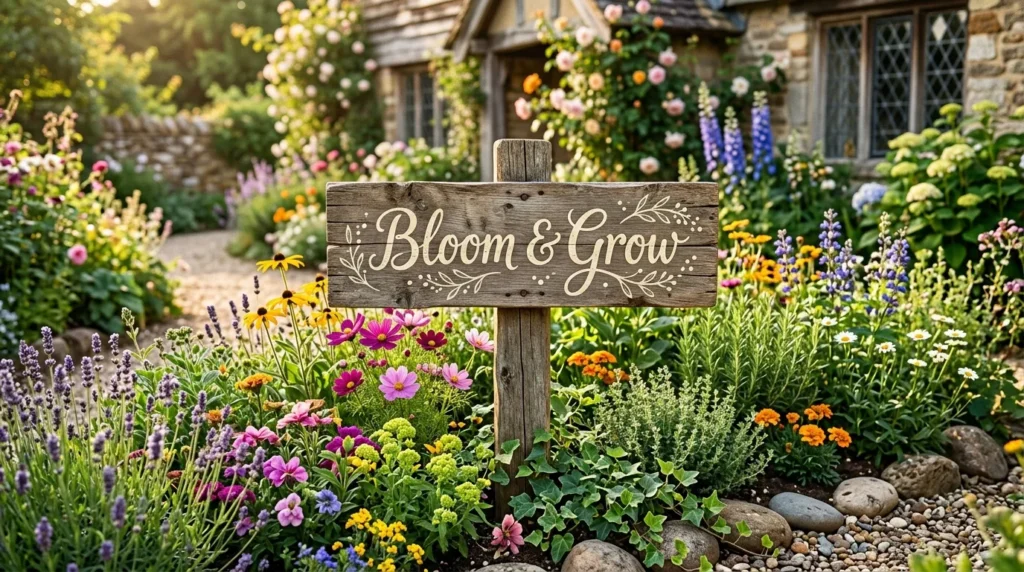
A single weathered board can become a garden sign with a favorite phrase, plant label, or directional message.
How To Style It
Sand rough edges while preserving attractive imperfections.
Paint or stencil a short message.
Try phrases such as:
Garden This Way
Fresh Herbs
Bloom & Grow
Welcome to the Garden
For a more natural look, use a simple finish that allows the wood grain to remain visible.
5. Potting Bench
Quick Benefits
- Creates a dedicated work area
- Reuses larger boards
- Adds garden storage
- Makes planting easier
- Can become a focal point
Why It Works
A potting bench turns an unused corner into a practical gardening station.
Instead of carrying pots, soil, tools, and plants around the yard, you can keep frequently used supplies in one location.
How To Style It
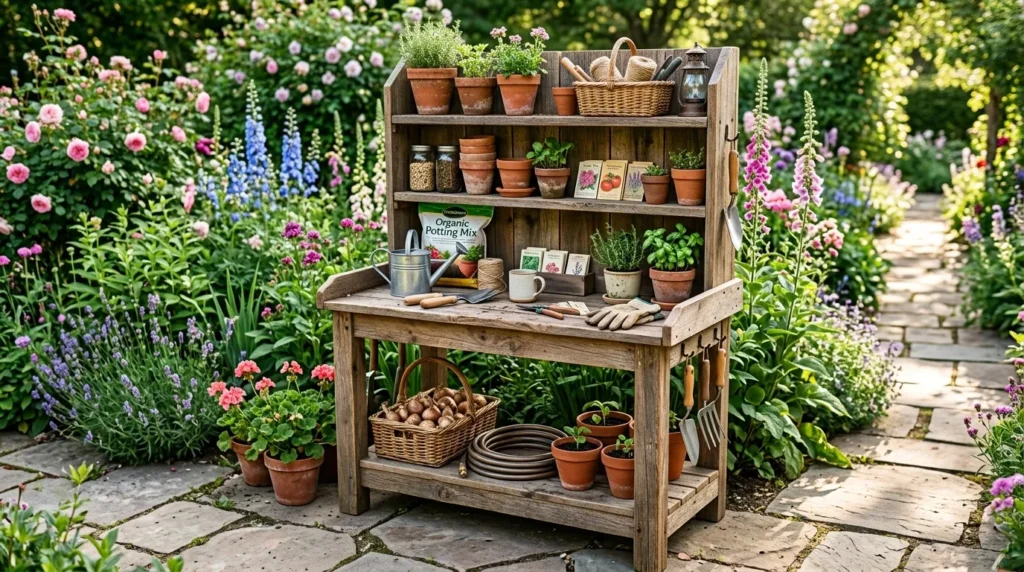
Use reclaimed boards to construct a sturdy work surface.
Add a lower shelf for pots and gardening supplies.
Hooks underneath or along the side can hold lightweight hand tools.
Place the bench near the garden but somewhere that won’t interfere with walking paths.
Keep the finish simple so the recycled wood remains the visual feature.
6. Raised Garden Beds
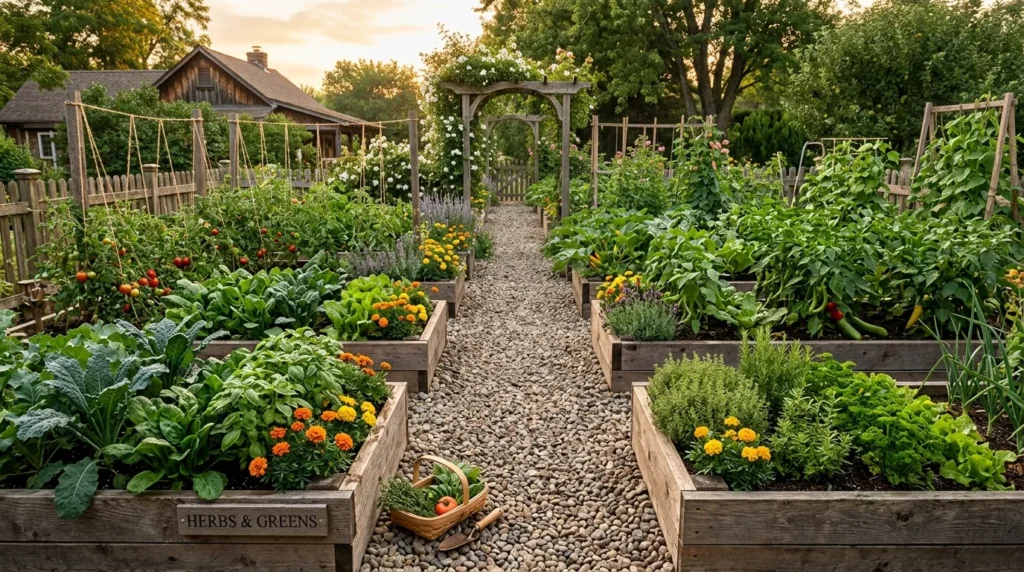
Quick Benefits
- Defines growing areas
- Improves garden organization
- Uses larger wood pieces
- Creates clean borders
- Makes planting easier
Why It Works
Raised beds provide a defined growing space and can make a vegetable or flower garden look much more organized.
Recycled wood is particularly attractive because its natural weathering complements plants.
How To Style It
Use sturdy, appropriate lumber for the structure.
Avoid wood with an unknown history or potentially harmful treatments when growing food.
Position beds where plants receive suitable sunlight.
Keep paths between beds wide enough for comfortable maintenance.
You can create several matching beds for a structured garden layout.
7. Outdoor Plant Shelf
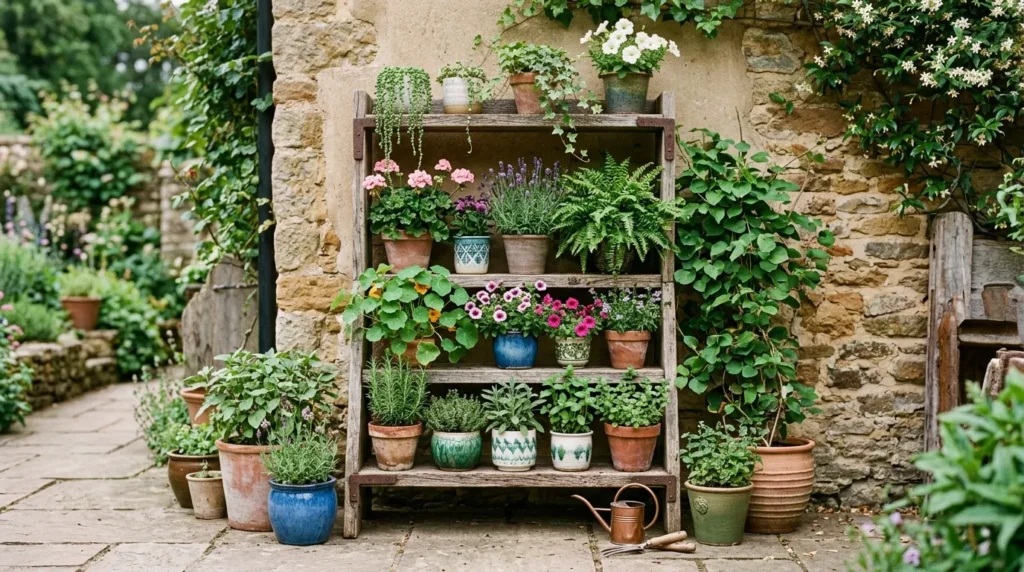
Quick Benefits
- Uses vertical space
- Displays potted plants
- Works in small gardens
- Uses smaller boards
- Creates layers
Why It Works
A simple plant shelf can turn a blank wall, patio edge, or sheltered corner into a mini garden display.
Different plant heights create visual depth without requiring much ground space.
How To Style It
Create two or three shelves using sturdy boards and appropriate supports.
Place larger plants on lower levels and smaller containers higher up.
Mix foliage, flowers, and trailing plants.
Leave enough space between containers so the arrangement doesn’t look overcrowded.
8. Garden Tool Rack
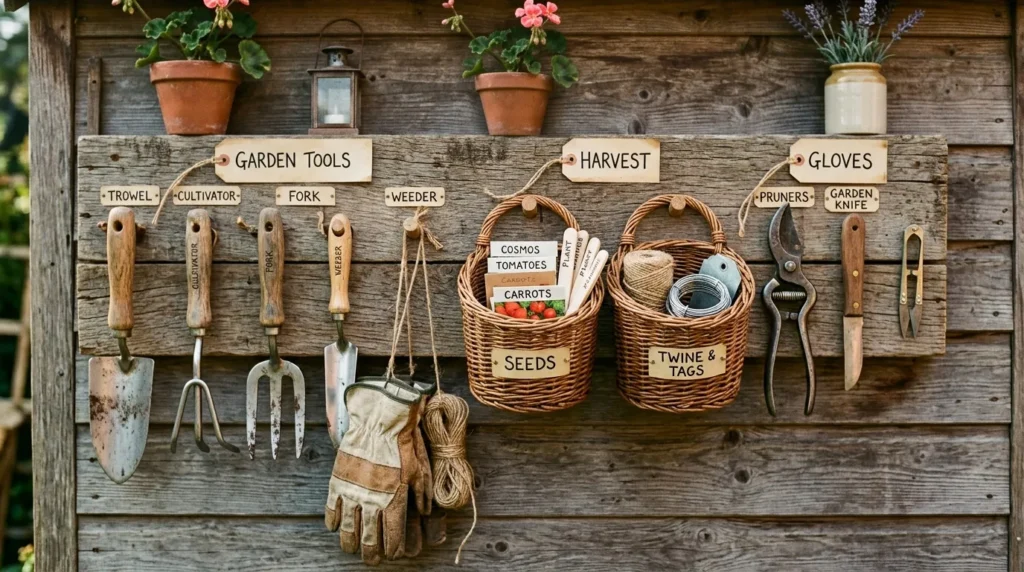
Quick Benefits
- Keeps tools organized
- Uses narrow wood pieces
- Saves storage space
- Makes tools accessible
- Easy to customize
Why It Works
Small gardening tools can quickly become scattered around a shed, garage, or patio.
A recycled wooden rack provides a designated home for frequently used tools.
How To Style It
Attach hooks or suitable holders to a sturdy wooden board.
Mount the rack securely on an appropriate wall or storage structure.
Organize tools by frequency of use.
Keep heavier tools supported properly rather than relying on lightweight hooks.
A simple painted label can make the rack even more functional.
9. Compost Bin
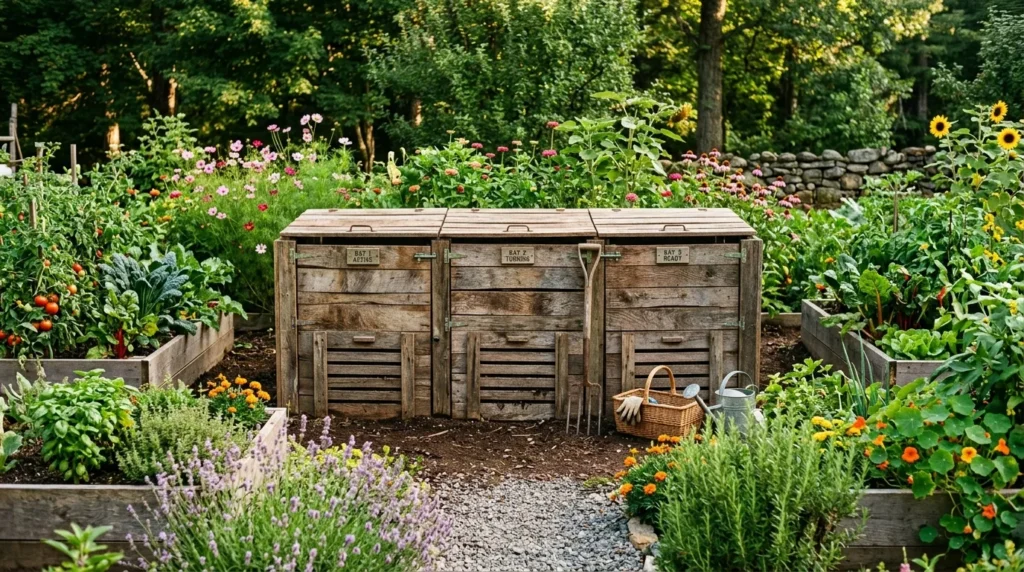
Quick Benefits
- Reuses larger wood pieces
- Creates useful garden material
- Keeps compost contained
- Adds structure
- Supports sustainable gardening
Why It Works
A basic wooden compost enclosure can turn kitchen and garden scraps into valuable compost when managed correctly.
The open structure can also allow appropriate airflow.
How To Style It
Use sturdy untreated or otherwise suitable wood.
Build a simple enclosure with enough ventilation.
Position it somewhere convenient but not directly against a building if moisture or pests could become an issue.
Keep the compost balanced with suitable green and brown materials.
Avoid adding materials that aren’t appropriate for home composting.
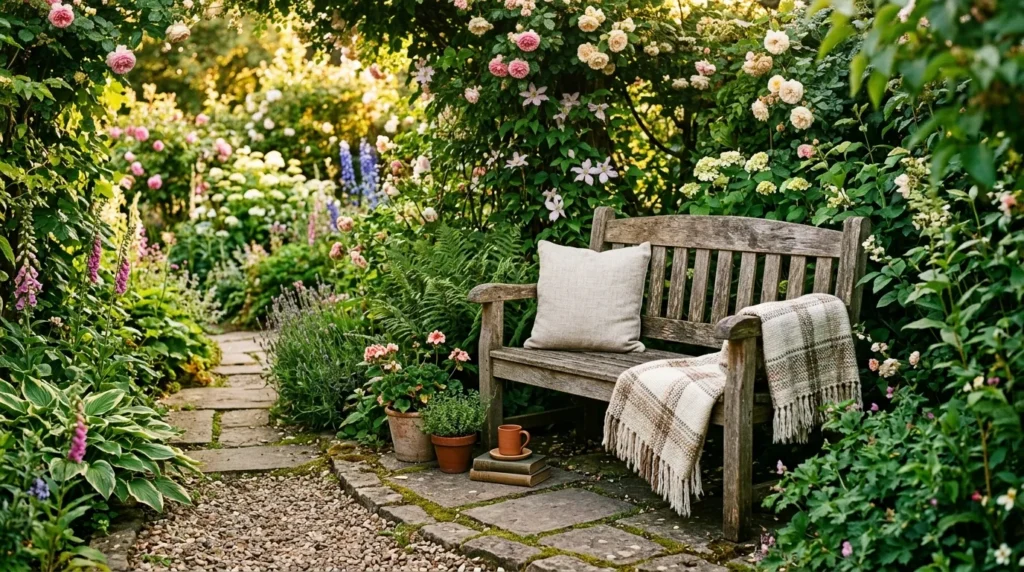
10. Garden Seating
Quick Benefits
- Creates a relaxing destination
- Reuses sturdy boards
- Adds character
- Makes the garden more functional
- Can be customized
Why It Works
A garden becomes much more enjoyable when there’s somewhere comfortable to sit and appreciate it.
Recycled wood can create a simple bench with a handmade appearance that complements plants beautifully.
How To Style It
Use structurally sound wood and build a stable frame.
Sand surfaces thoroughly to reduce splinters.
Add outdoor cushions for comfort.
Place the bench beneath a tree, beside flowering plants, or along a garden path.
Keep the surrounding area relatively open so the bench feels like an intentional destination rather than something squeezed into a corner.
How To Prepare Recycled Wood for Garden Projects
Before starting any project, inspect every board.
Look for:
- Rot
- Mold
- Excessive splitting
- Insect damage
- Loose nails
- Sharp edges
- Unknown chemical treatments
- Structural weakness
Remove old nails and hardware carefully.
Clean the wood appropriately and allow it to dry completely.
Sand areas that could cause splinters.
If you’re growing edible plants, be especially cautious about the history and treatment of reclaimed wood.
When in doubt, use recycled wood for decorative structures rather than direct contact with edible growing media.
How To Make Recycled Wood Look More Expensive
You don’t have to make reclaimed wood look brand new.
Its imperfections are part of its charm.
Instead, focus on presentation.
Keep the Design Simple
Clean lines can make rustic materials feel sophisticated.
Repeat Materials
Use the same wood tone across planters, signs, and garden structures.
Add Greenery
Plants naturally soften weathered surfaces.
Use Consistent Containers
Matching pots can make a collection of recycled-wood projects feel intentional.
Add Small Details
Simple labels, hardware, or subtle outdoor lighting can elevate the finished look.
Best Garden Styles for Recycled Wood
Recycled wood works particularly well with:
Cottage Garden
Combine weathered wood with abundant flowers and informal planting.
Rustic Garden
Pair reclaimed boards with stone, gravel, and natural materials.
Modern Farmhouse
Use simple wooden structures with clean-lined planters.
Organic Modern
Combine warm wood with neutral containers and restrained greenery.
Vegetable Garden
Use sturdy wood to create practical growing areas and tool organization.
Common Mistakes to Avoid
Using Unknown Treated Wood
Not all reclaimed wood is appropriate for garden use.
Ignoring Drainage
Planters need adequate drainage to prevent waterlogged roots.
Leaving Splinters
Sand surfaces that people may touch.
Building Without Stability
Outdoor structures need to withstand wind, rain, plant weight, and everyday use.
Overcomplicating the Design
Simple projects often look more attractive when the natural wood is allowed to stand out.
Forgetting Maintenance
Outdoor wood can weather over time. Inspect projects periodically and repair or refinish them when necessary.
FAQ
What can I make from recycled wood for my garden?
You can create planter boxes, herb gardens, trellises, garden signs, potting benches, raised beds, plant shelves, tool racks, compost bins, and simple garden seating.
Is recycled wood safe for garden projects?
It depends on the wood’s history and condition. Avoid wood with unknown chemical treatments, significant deterioration, or contamination, especially when it will contact edible growing media.
Can I use old pallets for garden projects?
Some pallets may be suitable for decorative projects, but you should identify their markings and history before using them. Avoid pallets that are chemically treated, contaminated, or otherwise unsuitable for the intended project.
How do I protect recycled wood outdoors?
Use a suitable exterior wood finish when appropriate, keep wood from sitting constantly in standing water, and inspect it periodically for deterioration.
Can recycled wood be used for raised garden beds?
Yes, when the wood is structurally sound and appropriate for garden use. For edible crops, be particularly careful about the wood’s treatment and previous use.
How do I make old wood look attractive?
Clean it, remove loose hardware, sand hazardous edges, and preserve attractive natural weathering. Simple designs often showcase reclaimed wood best.
What is the easiest recycled wood garden project?
A small garden sign, simple planter box, or basic plant shelf can be a good starting point for beginners.
Conclusion
Recycled wood can turn an ordinary garden into a space filled with warmth, texture, and personality.
You don’t need expensive materials or advanced woodworking skills to get started.
An old board can become a planter.
A few sturdy pieces can become a trellis.
A weathered plank can become a garden sign.
Larger pieces can become a potting bench, raised bed, or garden seat.
The key is to work with the character of the wood rather than trying to hide it.
Choose safe, structurally sound materials, keep the designs practical, and let plants provide the finishing touch.
The result can be a garden that feels personal, useful, and beautifully collected—without looking like everything came straight from a garden center.